
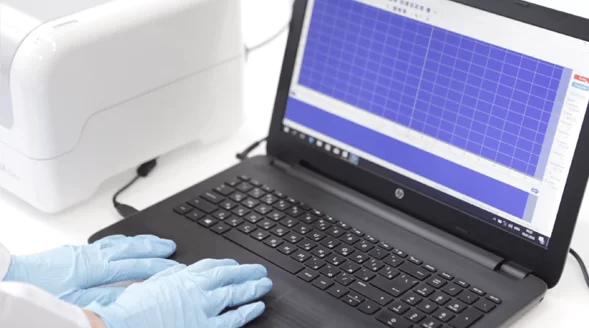
ElvaX Basic: Entry-Level PIN Detector S-U
Understanding Silicon PIN Detector Technology
Silicon PIN detectors represent proven, established X-ray detection technology deployed successfully across thousands of analytical systems worldwide. The three-layer silicon structure—P-type (positive charge carriers), Intrinsic (undoped), and N-type (negative charge carriers)—creates depletion regions where incident X-ray photons generate electron-hole pairs proportional to photon energies. Applied voltage sweeps charge carriers to electrodes producing electrical pulses. Signal processing electronics convert pulses into energy measurements revealing elemental composition.
PIN detector technology achieves energy resolution typically 180-200 eV at manganese Kα—performance adequate for routine elemental analysis distinguishing adjacent periodic table elements. While superior silicon drift detectors achieve 125-145 eV resolution, PIN performance suffices for most commercial applications where cost efficiency justifies moderate resolution trade-offs.
The proven reliability of PIN technology reflects decades of field deployment. Millions of PIN detectors operate successfully in handheld, benchtop, and laboratory systems worldwide. The established technology demonstrates predictable performance, straightforward calibration procedures, and accessible maintenance. Organizations choosing PIN detectors benefit from mature, well-understood technology lacking surprises or unexpected performance issues.
Entry-Level Positioning Benefits
Accessible Cost Structure
ElvaX Basic entry-level positioning emphasizes cost accessibility enabling organizations to implement analytical capability with limited budgets. PIN detector systems cost substantially less than advanced silicon drift detector platforms. The cost savings enable analytical investment where premium equipment budgets prove unaffordable—educational institutions, small laboratories, startups, or organizations emphasizing value over ultimate performance.
The financial accessibility proves particularly valuable for organizations evaluating analytical capability feasibility. Entry-level systems provide actual operational experience determining whether more comprehensive analytical investment warrants justification through demonstrated business value. The pilot approach reduces financial risk while providing proof-of-concept demonstrating tangible benefits.
Proven Reliability and Support
Established PIN technology provides confidence in predictable performance without learning curve typical with cutting-edge innovations. Extensive user base provides accumulated experience, established application methods, and troubleshooting knowledge readily accessible through application literature and user communities. The maturity eliminates surprises and delivers straightforward operation.
ElvaX manufacturer support for entry-level systems includes calibration services, technical assistance, and maintenance ensuring long-term reliability. The comprehensive backing protects equipment investment despite lower price point.
S-U Elemental Range Explanation
Sulfur Detection Significance
Sulfur (atomic number 16) represents the lower end of ElvaX Basic's elemental range—a meaningful boundary distinguishing entry-level from light-element-specialized systems. Sulfur fluorescent X-rays occur at 2.31 keV (Kα), requiring optimization for low-energy photon detection. PIN detectors reliably detect sulfur in favorable matrices, though sensitivity trails advanced detectors.
Sulfur analysis addresses important applications. Sulfur content verification in steels affects mechanical properties and corrosion resistance. Petroleum products undergo sulfur measurement ensuring regulatory compliance. Geological samples reveal sulfur indicating specific mineralization or deposit types. Chemical processes monitor sulfur content affecting product quality. Trace sulfur contamination screening identifies impurities affecting material performance.
Uranium Detection Capability
Uranium (atomic number 92) represents the elemental range upper limit—essentially complete coverage of commercially significant elements. Uranium fluorescent X-rays occur at high energies (98+ keV) readily detected through standard PIN detector configurations. Uranium quantification addresses radioactive ore evaluation, nuclear materials verification, and environmental uranium contamination screening.
The S-U range encompasses major industrial elements—iron, copper, zinc, lead, chromium, nickel, molybdenum—plus numerous specialty metals, geological indicators, and contamination elements. This comprehensive coverage enables diverse applications from routine quality control through specialized research.
Detection Limits and Precision
PIN detector systems achieve detection limits typically 1-100 parts per million depending on element and matrix—performance supporting major component quantification and trace contamination screening. The sensitivity proves adequate for routine quality control applications where ultra-trace detection remains unnecessary.
Precision reaches 0.1-0.5% relative standard deviation for major elements under controlled conditions—sufficient for specification verification and process control. Repeated measurements demonstrate reproducibility and measurement reliability supporting quality assurance confidence.
Practical Applications
Manufacturing Quality Control
Production facilities employ ElvaX Basic for incoming material verification, in-process testing, and finished product certification. The cost-effective platform enables comprehensive quality control supporting lean manufacturing without premium equipment investment. Rapid non-destructive testing confirms material compliance preventing downstream processing errors.
Stainless steel verification, aluminum alloy identification, copper composition testing, and brass characterization all proceed reliably with PIN detector capability. The straightforward operation enables operator proficiency development without extensive training requirements.
Academic and Research Applications
Educational institutions utilize entry-level XRF for materials science education, student research projects, and laboratory demonstrations. The accessible cost structure enables broader academic access to analytical technology than premium systems allow. Students gain practical XRF experience on proven reliable platforms.
Research laboratories employ ElvaX Basic for materials characterization supporting diverse investigations. The multi-element analysis capability supports hypothesis testing and material evaluation across scientific disciplines.
Environmental and Regulatory Testing
Environmental laboratories screen contaminated materials for regulatory metals—lead, cadmium, mercury, arsenic—requiring monitoring. Cost-effective analytical capability enables comprehensive environmental surveys impossible through expensive laboratory outsourcing. Pin detector sensitivity proves adequate for regulatory threshold screening.
Soil contamination assessment, water quality monitoring, and waste characterization benefit from affordable in-house analytical capability. Rapid feedback supports remediation planning and regulatory compliance verification.
Geological and Mining Applications
Field geology and mining operations employ portable PIN detector systems for rapid ore grade assessment. The cost-effective capability enables geological surveys and exploration support previously constrained by analytical budgets. Mining-related element analysis including copper, zinc, lead, gold, and uranium receives adequate sensitivity for exploration and grade control.
Technical Specifications and Performance
Elemental Coverage S-U Range
Comprehensive elemental detection from sulfur (Z=16) through uranium (Z=92) covers over 75 commercially significant elements. Simultaneous multi-element measurement detects 15-30 elements per sample depending on measurement parameters and matrix complexity. The comprehensive coverage enables complete sample characterization from single measurements.
Count Rate and Analysis Speed
PIN detectors typically handle 10,000-30,000 counts per second—adequate throughput for routine applications. Analysis completion times typically 2-10 minutes per sample for comprehensive multi-element quantification. The analysis speed proves acceptable for quality control operations, research investigations, and geological screening applications.
Energy Resolution Performance
PIN detector energy resolution of 180-200 eV at manganese Kα proves adequate for distinguishing adjacent periodic table elements. Closely-spaced peaks like chromium and manganese, or molybdenum and tungsten, separate reliably enabling accurate quantification. The resolution suffices for routine alloy identification and compositional analysis.
Advantages of Entry-Level PIN Technology
Proven Reliability and Predictable Performance
Decades of PIN detector deployment provide confidence in technology maturity and predictable performance. Established application protocols, troubleshooting procedures, and maintenance practices address any issues effectively. The proven technology lacks surprises or unexpected performance failures challenging advanced innovations.
Cost-Effective Analytical Capability
Entry-level PIN systems cost substantially less than advanced SDD configurations. The financial accessibility enables analytical implementation where premium equipment budgets prove prohibitive. Lower capital investment enables broader analytical access across organizations previously constrained by equipment costs.
Straightforward Operation and Maintenance
PIN detectors require simpler maintenance and calibration procedures compared to advanced detectors. Thermoelectric cooling versus complex thermal management systems, direct energy measurement versus sophisticated algorithms—simpler architecture enables intuitive operation accessible to less-specialized operators.
Adequate Performance for Routine Applications
For the majority of commercial quality control, environmental screening, and research applications, PIN detector performance proves entirely adequate. The perceived limitations of entry-level systems rarely manifest as practical constraints in real-world operations. Most applications require accurate composition measurement, not ultimate trace sensitivity or energy resolution approaching research-grade capability.
Limitations and Appropriate Applications
Resolution Trade-offs
PIN detector energy resolution of 180-200 eV trails advanced SDD's 125-145 eV. For complex spectra containing numerous closely-spaced peaks, PIN resolution may show limitations. Applications requiring ultimate spectral separation justify SDD investment.
Count Rate Constraints
PIN detector throughput of 10,000-30,000 CPS limits analysis speed compared to SDD's 100,000-500,000 CPS capability. High-throughput applications processing thousands of daily samples may prefer faster systems despite higher costs.
Light Element Sensitivity
Light element detection (sulfur and below) shows reduced sensitivity in PIN systems compared to SDD. Applications emphasizing light element analysis justify specialized detector investment.
Conclusion
ElvaX Basic entry-level XRF platform delivers cost-effective elemental analysis through proven silicon PIN detector technology covering sulfur through uranium range. The established technology combines proven reliability, straightforward operation, affordable pricing, and adequate performance for countless applications across manufacturing quality control, environmental testing, research, geological analysis, and educational institutions.
The entry-level positioning makes analytical capability accessible where premium equipment budgets prove prohibitive. Organizations gain analytical capability enabling quality assurance, regulatory compliance verification, and materials characterization supporting competitive operations without excessive capital investment.
For organizations prioritizing cost-effective analytical implementation over ultimate performance specifications, ElvaX Basic PIN detector systems represent proven solutions delivering sufficient capability for routine quality control and analytical requirements. The combination of established reliability, accessible cost structure, comprehensive elemental coverage, and manufacturer support creates effective analytical investment supporting operational excellence and informed decision-making across diverse industries and applications.
Related posts
-
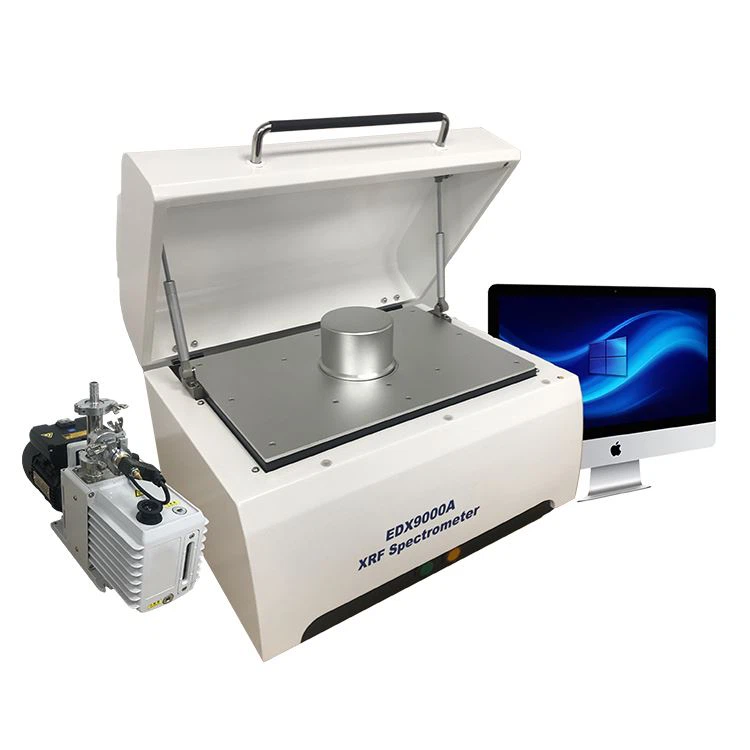 ElvaX XRF Spectrometer: Professional Metal Testing
Professional metal testing demands precision, reliability, and versatility supporting critical quality control,...Einzelheiten
ElvaX XRF Spectrometer: Professional Metal Testing
Professional metal testing demands precision, reliability, and versatility supporting critical quality control,...Einzelheiten -
 ElvaX Geo: Mining Ore Analysis Cl-U Elements
Mining exploration and ore characterization demand rapid, accurate elemental analysis of geological samples revealing...Einzelheiten
ElvaX Geo: Mining Ore Analysis Cl-U Elements
Mining exploration and ore characterization demand rapid, accurate elemental analysis of geological samples revealing...Einzelheiten -
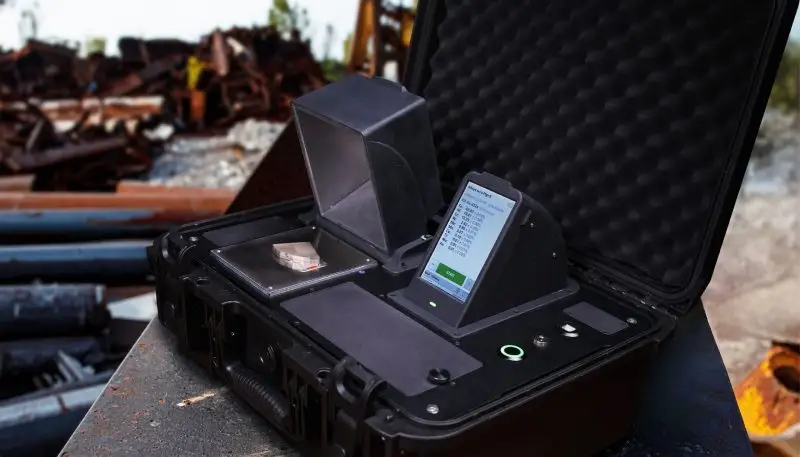 ElvaX Mobile: Portable Liquids & Powders Testing
Material characterization extends far beyond solid metals—liquids, powders, and prepared samples represent critical...Einzelheiten
ElvaX Mobile: Portable Liquids & Powders Testing
Material characterization extends far beyond solid metals—liquids, powders, and prepared samples represent critical...Einzelheiten -
 ElvaX Pro: Professional 60kV Na-U Accuracy
The ElvaX Pro represents a breakthrough in benchtop X-ray fluorescence (XRF) analysis technology, delivering...Einzelheiten
ElvaX Pro: Professional 60kV Na-U Accuracy
The ElvaX Pro represents a breakthrough in benchtop X-ray fluorescence (XRF) analysis technology, delivering...Einzelheiten -
 ElvaX Plus: Benchtop Light Elements Helium
Accurate elemental analysis forms the foundation of quality control, materials research, and regulatory compliance...Einzelheiten
ElvaX Plus: Benchtop Light Elements Helium
Accurate elemental analysis forms the foundation of quality control, materials research, and regulatory compliance...Einzelheiten