
ElvaX RoHS tester (RoHS/WEEE compliance)
Understanding RoHS and WEEE Regulations
What RoHS Restricts
The RoHS directive limits ten specific hazardous substances in electrical and electronic equipment:
Heavy Metals:
- Lead (Pb) - Maximum 0.1% (1000 ppm)
- Mercury (Hg) - Maximum 0.1% (1000 ppm)
- Cadmium (Cd) - Maximum 0.01% (100 ppm)
- Hexavalent Chromium (Cr VI) - Maximum 0.1% (1000 ppm)
Brominated Flame Retardants:
- Polybrominated biphenyls (PBB) - Maximum 0.1% (1000 ppm)
- Polybrominated diphenyl ethers (PBDE) - Maximum 0.1% (1000 ppm)
Phthalates (Added in RoHS 3):
- Bis(2-ethylhexyl) phthalate (DEHP)
- Butyl benzyl phthalate (BBP)
- Dibutyl phthalate (DBP)
- Diisobutyl phthalate (DIBP)
Each at maximum 0.1% (1000 ppm) in homogeneous materials.
Why Compliance Matters
Non-compliance carries severe consequences:
- Market Access Denial: Products failing RoHS testing cannot be sold in EU markets, representing over 500 million consumers
- Legal Liability: Manufacturers face fines, product recalls, and legal action
- Reputation Damage: Compliance failures destroy customer trust and brand value
- Supply Chain Disruption: Non-compliant components force production delays and redesigns
- Environmental Responsibility: Meeting RoHS standards protects ecosystems and human health
The cost of non-compliance far exceeds investment in proper testing equipment.
Why XRF Technology Excels for RoHS Testing
Non-Destructive Analysis
Unlike chemical testing methods that destroy samples, XRF analysis leaves products completely intact. This non-destructive approach enables:
- 100% Screening Capability: Test every product, not just statistical samples, without affecting shipment inventory
- Finished Product Testing: Verify compliance on assembled electronics without disassembly
- Supplier Verification: Screen incoming components without rendering them unusable
- Cost Savings: Eliminate the expense of sacrificing products for destructive testing
For high-value electronics or low-volume specialty products, non-destructive testing represents the only economically viable compliance approach.
Speed and Efficiency
The ElvaX RoHS analyzer delivers results in tens of seconds per test point. This exceptional speed provides:
- Real-Time Decision Making: Identify non-compliant materials immediately, preventing production of rejected products
- High Throughput: Screen hundreds of components daily without becoming a production bottleneck
- Rapid Supplier Response: Quickly verify corrective actions from suppliers who shipped non-compliant materials
- Cost-Effective Operations: Minimize labor costs associated with compliance testing
Traditional laboratory testing requiring sample preparation, chemical digestion, and instrumental analysis can take days. XRF testing takes seconds.
No Sample Preparation Required
The ElvaX RoHS analyzer tests materials directly in their manufactured form:
- No grinding, dissolving, or chemical treatment
- No specialized sample preparation equipment
- No hazardous waste generation
- No trained chemists required for routine screening
Simply position the component, close the analyzer, and receive results. This simplicity democratizes compliance testing, making it accessible to quality control personnel without advanced analytical chemistry training.
ElvaX RoHS Analyzer: Specialized Features for Compliance Testing
Automatic Chlorine Correction
One of the ElvaX RoHS analyzer's most innovative features is automatic chlorine correction calibration. This specialized function addresses a critical challenge in plastics testing.
Many plastics, particularly polyvinyl chloride (PVC), contain high chlorine concentrations. Chlorine fluorescence can interfere with accurate measurement of restricted heavy metals, potentially causing false positives or inaccurate quantification.
The ElvaX RoHS system automatically compensates for chlorine content, enabling accurate heavy metal determination across diverse plastic types:
- PVC (polyvinyl chloride)
- PE (polyethylene)
- PP (polypropylene)
- ABS (acrylonitrile butadiene styrene)
- Unknown or mixed plastic formulations
This automatic correction eliminates the need for multiple calibrations for different plastic types, dramatically simplifying testing workflows and reducing potential operator errors.
Automatic Thickness Correction
Material thickness significantly affects XRF analysis results. Thin materials may not provide sufficient depth for accurate measurement, while variations in thickness can skew quantification.
The ElvaX RoHS analyzer incorporates automatic thickness correction, ensuring accurate results regardless of component geometry:
- Thin plastic films and coatings
- Standard molded plastic components
- Thick structural elements
- Irregular shapes and surfaces
This intelligent correction maintains measurement accuracy across the full range of components encountered in electronics manufacturing.
High Sensitivity for Regulatory Limits
RoHS compliance requires detecting substances at parts-per-million concentrations. The ElvaX RoHS analyzer achieves detection limits of 30 to 150 ppm for restricted elements—well below regulatory thresholds.
This sensitivity provides:
- Confident Pass/Fail Decisions: Clear margin between measurement uncertainty and regulatory limits
- Early Warning Capability: Identify trending concentrations approaching limits before violations occur
- Supplier Quality Monitoring: Track compliance consistency across multiple shipments
The analyzer's measurement uncertainty of 10-50 ppm ensures reliable compliance verification.
Comprehensive Testing Workflow
Material Identification
RoHS compliance assessment follows a systematic approach:
- Step 1: Identify Homogeneous Materials - Recognize distinct materials within products (solder, plastic casings, metal contacts, wire insulation, printed circuit boards, etc.)
- Step 2: Screen Each Material - Use XRF to rapidly test each homogeneous material for restricted substances
- Step 3: Document Results - Record measurements and pass/fail determinations for compliance documentation
- Step 4: Investigate Exceedances - Materials exceeding screening levels require confirmatory laboratory testing
Typical Testing Applications
The ElvaX RoHS analyzer screens diverse materials found in electronics:
Plastics and Polymers:
- Equipment housings and casings
- Wire and cable insulation
- Switches and connectors
- Internal mounting components
- Packaging materials
Metals and Alloys:
- Solder joints (lead-free verification)
- Electrical contacts
- Metal housings and shields
- Fasteners and hardware
- Connector pins and terminals
Coatings and Finishes:
- Painted surfaces
- Chrome plating
- Protective coatings
- Decorative finishes
Circuit Board Components:
- Component leads
- PCB substrates
- Surface mount devices
- Through-hole components
Operational Advantages
Compact Benchtop Design
Fits easily in QC labs or production areas.
Intuitive User Interface
Minimal training required — clear prompts, automatic protocols, simple pass/fail display.
Autonomous Operation
Works independently or integrates with LIMS.
Cost-Effective Compliance
Reduces external lab testing ($50–200/sample) to in-house screening + confirmatory testing only when needed.
Preventing Costly Failures
Avoids production delays, recalls, market bans and reputation damage.
Integration with Quality Systems
Generates auditable reports with sample info, results, calibration status and pass/fail.
Beyond RoHS
Supports REACH SVHC screening, product safety, e-waste analysis, counterfeit detection.
Conclusion: Compliance Made Practical
ElvaX RoHS analyzer combines powerful XRF technology with specialized features (chlorine & thickness correction) to make compliance fast, reliable and cost-effective. It delivers:
- Regulatory confidence
- Regulatory confidence
- Operational efficiency
- Risk mitigation
- Supply chain control
- Full documentation
<span style="font-size:
Related posts
-
 ElvaX XRF Spectrometer: Professional Metal Testing
Professional metal testing demands precision, reliability, and versatility supporting critical quality control,...Einzelheiten
ElvaX XRF Spectrometer: Professional Metal Testing
Professional metal testing demands precision, reliability, and versatility supporting critical quality control,...Einzelheiten -
 ElvaX Geo: Mining Ore Analysis Cl-U Elements
Mining exploration and ore characterization demand rapid, accurate elemental analysis of geological samples revealing...Einzelheiten
ElvaX Geo: Mining Ore Analysis Cl-U Elements
Mining exploration and ore characterization demand rapid, accurate elemental analysis of geological samples revealing...Einzelheiten -
 ElvaX Mobile: Portable Liquids & Powders Testing
Material characterization extends far beyond solid metals—liquids, powders, and prepared samples represent critical...Einzelheiten
ElvaX Mobile: Portable Liquids & Powders Testing
Material characterization extends far beyond solid metals—liquids, powders, and prepared samples represent critical...Einzelheiten -
 ElvaX Basic: Entry-Level PIN Detector S-U
Cost-effective X-ray fluorescence analysis need not compromise capability when properly engineered for specific...Einzelheiten
ElvaX Basic: Entry-Level PIN Detector S-U
Cost-effective X-ray fluorescence analysis need not compromise capability when properly engineered for specific...Einzelheiten -
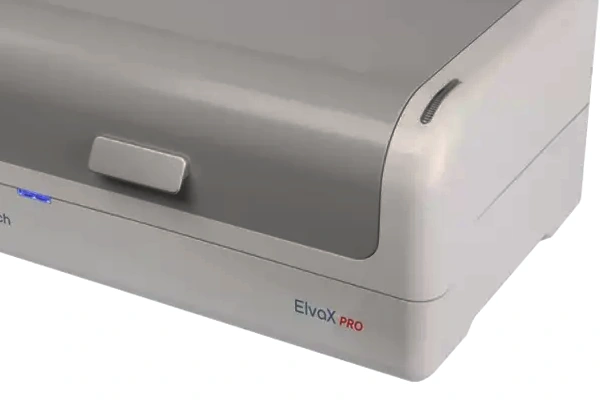 ElvaX Pro: Professional 60kV Na-U Accuracy
The ElvaX Pro represents a breakthrough in benchtop X-ray fluorescence (XRF) analysis technology, delivering...Einzelheiten
ElvaX Pro: Professional 60kV Na-U Accuracy
The ElvaX Pro represents a breakthrough in benchtop X-ray fluorescence (XRF) analysis technology, delivering...Einzelheiten