
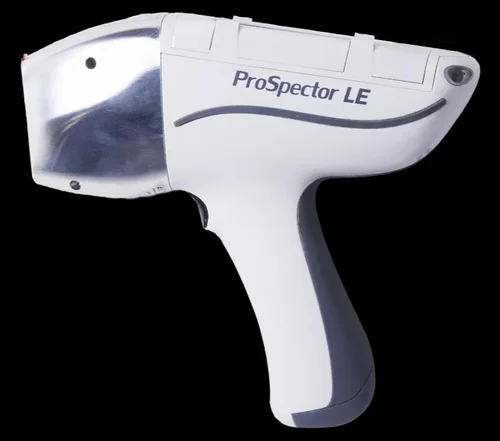
ProSpector 2 vs 3: Complete Comparison Guide
Speed and Performance: The Game-Changing Difference
The most dramatic advancement in the ProSpector 3 centers on analysis speed, with the Basic version delivering results up to 10 times faster than the ProSpector 2 Basic. This revolutionary improvement stems from enhanced detector technology and optimized electronic processing that maintains the proprietary Dynamically Adaptive Shaping (DAS) Digital Pulse Processor while achieving counting rates exceeding 500,000 counts per second. The ProSpector 3 stands as the world's fastest portable XRF analyzer, offering more than twice the speed of any competing handheld instrument.
This speed advantage translates directly to operational productivity. The ProSpector 3 completes measurements in seconds that would require tens of seconds on the ProSpector 2, enabling significantly higher sample throughput without sacrificing accuracy. For scrap metal sorting operations processing thousands of items daily, this performance leap can double or triple the number of samples analyzed per shift. Quality control laboratories benefit from faster turnaround times that accelerate production workflows and reduce bottlenecks.
The triple increase in analysis speed compared to the previous generation doesn't compromise precision. The ProSpector 3 maintains excellent measurement reproducibility while delivering results faster, providing the best of both worlds for demanding applications. Both models utilize the Fast SDD detector with 25 mm² active area and sub-140 eV energy resolution, but the ProSpector 3 optimizes signal processing to extract maximum performance from this hardware.
Display Technology and Ergonomics
The ProSpector 3 features the largest touchscreen among portable XRF analyzers, providing superior visibility and ease of operation. The 4.3-inch display incorporates automatic image rotation functionality that adjusts screen orientation when the analyzer moves between horizontal and vertical positions. This intelligent feature ensures optimal viewing regardless of testing orientation, eliminating the need for manual rotation adjustments during field measurements.
The unique folding display design represents another significant ergonomic improvement. This innovative hinge mechanism allows convenient operation on laboratory stands without requiring connection to external computers, transforming the handheld analyzer into a benchtop instrument when needed. The ProSpector 2 also features a 4.3-inch display with folding capability, but the ProSpector 3 implementation offers enhanced durability and smoother operation.
Size and weight considerations favor the ProSpector 3, which measures just 236 × 193 × 68 mm and weighs only 1.05 kg including battery. This makes it the world's smallest and lightest handheld XRF analyzer, reducing operator fatigue during extended field campaigns or repetitive testing sessions. The compact dimensions facilitate access to confined spaces and awkward testing angles impossible with larger instruments. While the ProSpector 2 maintains portability, the ProSpector 3 pushes ergonomic boundaries further.
Camera and Documentation Capabilities
The ProSpector 3 includes an integrated camera as a standard feature, marking a significant advantage over the ProSpector 2 where camera functionality was optional. Built-in photographic documentation enables automatic capture of sample images linked to measurement results, creating comprehensive test records that improve traceability and quality assurance. This feature proves invaluable for inspection reports, regulatory compliance documentation, and customer certifications.[
The camera serves practical operational purposes beyond documentation. Visual confirmation of measurement location ensures operators test intended areas, particularly important when analyzing small components or specific zones within larger assemblies. The image capture timestamps and geotags photographs when GPS connectivity is available, enabling precise location tracking for field surveys and environmental assessments.
For applications requiring pinpoint accuracy such as solder joint analysis or inclusion testing, the camera provides visual targeting that improves measurement repeatability. Operators can review captured images to verify consistent sample positioning across multiple tests. The ProSpector 2 LE model offered optional CCD camera capability, but the standard integration in ProSpector 3 eliminates additional accessory costs and simplifies operation.
Connectivity and Data Management
Wireless connectivity represents another differentiating feature, with the ProSpector 3 incorporating Wi-Fi capability that the ProSpector 2 lacks. This modern connectivity option enables seamless data transfer to cloud storage, direct email report transmission, and real-time synchronization with laboratory information management systems. Wi-Fi connectivity eliminates the need for physical cable connections when downloading results or updating software, streamlining data workflows.
Both analyzers support USB and Bluetooth connectivity for traditional data transfer methods. Bluetooth enables wireless connection to smartphones, tablets, and computers for remote display viewing and control. USB connectivity provides high-speed data transfer and firmware updates while also serving as the charging interface. The combination of multiple connectivity options ensures compatibility with diverse IT infrastructures and field communication requirements.
The ProSpector 3's enhanced connectivity facilitates collaborative workflows where multiple field technicians transmit results to centralized databases in real-time. Project managers can monitor testing progress remotely, track productivity metrics, and identify potential issues before teams return from field sites. This connectivity advantage becomes increasingly important as industries embrace digital transformation and Internet of Things (IoT) integration in quality control processes.
Software Interface and User Experience
Both the ProSpector 2 and ProSpector 3 share compatibility with ElvaX desktop spectrometer software, allowing handheld analyzers to function as laboratory-class instruments when connected to computers running advanced analysis routines. This software compatibility provides upgrade flexibility and reduces training requirements for organizations operating multiple Elvatech instruments. Users leverage the same analytical methods and calibrations across handheld and benchtop platforms.
The ProSpector 3 features an updated software interface with improved intuitiveness that reduces the learning curve for new operators. If you've worked with ProSpector 2, the transition to ProSpector 3 involves zero learning curve due to familiar navigation logic and consistent menu structures. However, the ProSpector 3 interface incorporates refinements based on user feedback that enhance efficiency for experienced operators while maintaining accessibility for beginners.
Both models support extensive calibration libraries covering metals, alloys, minerals, soils, and specialized applications including RoHS compliance testing and precious metal verification. Pass/Fail functionality enables rapid compliance screening against specification databases, immediately flagging out-of-specification materials. Customization options allow users to develop proprietary calibrations optimized for unique sample matrices and specific analytical requirements.
Accuracy and Analytical Performance
Both the ProSpector 2 and ProSpector 3 deliver exceptional accuracy through powerful hardware and unique software algorithms developed by Elvatech. The proprietary DAS (Dynamically Adaptive Shaping) digital pulse processing technology combined with Fast SDD detectors provides the highest precision and accuracy across wide concentration ranges. Energy resolution below 140 eV at 5.9 keV enables clear separation of overlapping spectral peaks in complex multi-element matrices.
Calibration stability represents a shared strength of both generations. The digiX-40 digital X-ray source eliminates drift issues associated with analog tube supplies, maintaining consistent excitation over the instrument lifetime. Automatic temperature and barometric pressure corrections compensate for environmental variations, ensuring reproducible results regardless of ambient conditions. This long-term stability means neither instrument requires frequent recalibration, reducing operational downtime and maintenance costs.
Detection limits and sensitivity remain comparable between ProSpector 2 and ProSpector 3 when using equivalent measurement times. However, the ProSpector 3's superior speed allows operators to achieve the same precision in significantly less time or achieve better precision within the same measurement duration. This flexibility enables optimizing the speed-versus-accuracy trade-off based on specific application requirements and operational priorities.
Model Variants and Configuration Options
The ProSpector 3 line includes three model variants: Basic, Advanced, and Max, each targeting different application complexity levels. The ProSpector 3 Basic features a tungsten X-ray tube optimized for general-purpose analysis of metals and alloys, making it ideal for quality control and scrap sorting operations. Its straightforward single-filter configuration simplifies operation while providing excellent performance for routine materials.
The ProSpector 3 Advanced incorporates a rhodium X-ray tube and enhanced SDD detector enabling analysis of both heavy and light elements including magnesium and aluminum. Automatic filter switching adapts to different materials, minimizing background noise and improving accuracy for complex samples. Dual collimators allow analysis of large uniform samples and precise targeting of small areas like solder joints. This versatility suits building materials analysis, ore characterization, and complex alloy verification.
The ProSpector 3 Max represents the flagship configuration with the largest SDD detector in the lineup, capable of analyzing elements as light as sodium. Its exceptional sensitivity handles materials with low element concentrations including rare earth elements, multi-layer coatings, pharmaceuticals, and food samples. The Max model delivers ultimate performance for the most demanding applications requiring maximum detection capabilities.
The ProSpector 2 offered similar variant differentiation with standard and LE (Light Element) models. The ProSpector 2 LE featured rhodium tube technology and automatic filter changing comparable to the ProSpector 3 Advanced, while the standard ProSpector 2 focused on routine metal analysis applications.
Application Suitability Comparison
Both the ProSpector 2 and ProSpector 3 excel across diverse applications including alloy analysis, metal scrap sorting, precious metal testing, mining exploration, environmental monitoring, and RoHS compliance screening. The core analytical capabilities remain strong in both generations for these established use cases. Industries including metallurgy, jewelry, recycling, aerospace, electronics manufacturing, and geological surveying benefit from either instrument.
The ProSpector 3's superior speed provides the most dramatic advantages in high-throughput scenarios. Scrap yards processing hundreds or thousands of items daily see proportional productivity increases, enabling the same workforce to handle greater volumes or freeing personnel for other tasks. Receiving inspection departments verifying incoming material shipments complete screening faster, reducing bottlenecks that delay production.
Field applications benefit from the ProSpector 3's reduced size and weight, particularly during extended surveys requiring handheld operation for hours. Geological exploration teams covering large areas appreciate the ergonomic improvements that reduce fatigue. The integrated camera proves especially valuable for environmental site assessments requiring photographic documentation of each sampling point.
For organizations with moderate testing volumes and established workflows optimized around ProSpector 2 capabilities, upgrading may not be immediately necessary. The ProSpector 2 remains a reliable workhorse delivering accurate results that meet most analytical requirements. However, operations constrained by throughput limitations or seeking competitive advantages through faster turnaround times should seriously consider the ProSpector 3's performance benefits.
Price and Value Considerations
The ProSpector 3 represents the latest generation technology with premium features commanding higher initial acquisition costs compared to ProSpector 2 models. The price premium reflects significant engineering advances including the faster processing electronics, larger display, integrated camera, Wi-Fi connectivity, and optimized mechanical design. Organizations must evaluate whether these enhancements justify the incremental investment based on their specific operational needs.[
Return on investment calculations should consider productivity gains from increased sample throughput. If the ProSpector 3's 10x speed advantage enables analyzing 500 samples per day versus 50 with older technology, the economic benefit can be substantial. Labor cost savings, increased capacity, and faster customer service response may recover the higher initial cost within months for high-volume operations.
The ProSpector 2 continues offering excellent value for applications where speed doesn't represent the primary bottleneck. Organizations with limited budgets or moderate testing volumes can achieve reliable analytical results at lower acquisition costs. Some vendors may offer attractive pricing on remaining ProSpector 2 inventory as the market transitions to ProSpector 3, creating value opportunities for cost-conscious buyers.
Conclusion
The ProSpector 3 represents a substantial evolutionary leap over the ProSpector 2, delivering up to 10x faster analysis speed, enhanced ergonomics, and expanded connectivity that address modern industry requirements. The world's fastest portable XRF counting rate exceeding 500,000 cps, combined with the largest touchscreen display and smallest lightest form factor, establishes the ProSpector 3 as the benchmark for handheld elemental analysis. The integrated camera and Wi-Fi connectivity add documentation and data management capabilities increasingly essential in digitally connected quality systems.
The ProSpector 2 remains a proven reliable instrument delivering accurate analytical results for diverse applications. Its established track record, familiar operation, and continued support make it suitable for organizations prioritizing stability and value over cutting-edge performance. If you've worked with ProSpector 2, you understand its capabilities and limitations, making it a known quantity with zero surprises.
For operations demanding maximum productivity, fastest possible results, and future-ready connectivity, the ProSpector 3 represents the clear choice. The speed advantage alone justifies investment for high-throughput applications where sample processing time directly impacts business capacity. Organizations seeking competitive advantages through technology leadership should prioritize ProSpector 3 adoption.
Budget-conscious buyers or those with moderate testing volumes may find the ProSpector 2 adequate for current needs while recognizing eventual migration to newer technology as prices moderate. Both instruments share Elvatech's commitment to accuracy, stability, and analytical excellence, ensuring quality results regardless of which generation you choose. Evaluate your specific throughput requirements, ergonomic priorities, connectivity needs, and budget constraints to determine which ProSpector model delivers optimal value for your analytical applications.
Related posts
-
 How to Choose Handheld XRF Metal Analyzer
Selecting the right handheld XRF metal analyzer requires careful consideration of your specific application...Einzelheiten
How to Choose Handheld XRF Metal Analyzer
Selecting the right handheld XRF metal analyzer requires careful consideration of your specific application...Einzelheiten -
 XRF Analyzer Selection and Comparison: Complete Resource Guide
Choosing the right XRF analyzer represents one of the most critical investment decisions for organizations requiring...Einzelheiten
XRF Analyzer Selection and Comparison: Complete Resource Guide
Choosing the right XRF analyzer represents one of the most critical investment decisions for organizations requiring...Einzelheiten