

XRF Detector: Metal Element Composition Scanner
Understanding XRF Detector Function
XRF detectors perform the essential task of capturing characteristic X-ray fluorescence emitted when primary X-rays excite atoms in metal samples. Each element produces fluorescent X-rays at specific, unique energies—iron at 6.40 keV, chromium at 5.41 keV, nickel at 7.48 keV, molybdenum at 17.48 keV. These elemental fingerprints enable positive identification when detectors measure fluorescent X-ray energies with sufficient precision to distinguish closely-spaced peaks.
The detector converts incoming X-ray photons into electrical signals proportional to photon energies. This energy-to-signal conversion enables spectral analysis—plotting signal intensity versus energy creates characteristic peaks identifying present elements. Peak heights indicate element concentrations—taller peaks represent higher abundances, smaller peaks show minor constituents or trace elements. The detector's ability to accurately measure both energy and intensity determines overall scanner performance.
Modern XRF detectors achieve remarkable capabilities—energy resolution around 125-145 eV clearly separates adjacent elemental peaks in complex alloy spectra containing 20-40 simultaneous elements. Count rate capabilities exceeding 100,000-500,000 photons per second enable rapid data accumulation supporting seconds-scale metal composition analysis. Detection limits reach parts-per-million levels for many elements enabling trace contamination screening and minor alloy constituent verification.
Silicon PIN Detector Technology
Construction and Operation
Silicon PIN (p-type/intrinsic/n-type) detectors represent established, proven technology widely used in XRF metal composition scanners. The three-layer silicon structure creates a depletion region where X-ray interactions generate electron-hole pairs proportional to incident photon energies. Applied voltage sweeps charge carriers to electrodes producing electrical pulses that signal processing electronics convert into energy measurements.
PIN detectors achieve energy resolution typically 180-200 eV at manganese Kα—performance adequate for most metal composition scanning applications. The moderate resolution clearly distinguishes major elemental peaks in ferrous and non-ferrous alloys. Stainless steel analysis measuring iron, chromium, nickel, molybdenum, and manganese proceeds reliably. Aluminum alloy testing detecting aluminum, magnesium, silicon, copper, and zinc receives acceptable performance.
PIN Detector Advantages
Cost-effectiveness represents the primary PIN detector advantage—simpler construction and mature manufacturing enable affordable pricing supporting entry-level XRF scanners and budget-conscious applications. Organizations requiring basic metal composition verification without demanding ultimate performance benefit from PIN detector economics.
Proven reliability supports long-term operation. Decades of PIN detector deployment demonstrate robust field performance with minimal maintenance requirements. The established technology offers predictable performance and straightforward operation accessible to users without extensive technical backgrounds.
Adequate sensitivity for routine applications—major and minor element detection at concentrations above 0.1% proceeds reliably. Stainless steel grade identification, aluminum alloy verification, copper composition testing, and basic PMI applications receive satisfactory analytical performance meeting operational requirements without premium detector investment.
PIN Detector Limitations
Lower count rate capability compared to advanced detectors limits measurement speed. PIN detectors typically handle 10,000-30,000 counts per second—adequate for routine testing but constraining for high-throughput applications requiring fastest possible analysis. The count rate limitation extends measurement times when ultimate precision or trace element detection requires extensive data accumulation.
Moderate energy resolution of 180-200 eV may struggle with closely-spaced elemental peaks in complex alloys or overlapping spectral features. Distinguishing adjacent elements like arsenic and lead, separating tantalum from tungsten, or resolving rare earth elements requires better resolution than PIN detectors consistently provide.
Silicon Drift Detector Technology
Advanced SDD Design
Silicon drift detectors represent next-generation XRF detector technology delivering superior performance through innovative electrode design enabling rapid charge collection. Concentric ring electrodes create electric fields drifting charge carriers toward small central collection anodes. This design achieves minimal electronic noise, exceptional energy resolution, and ultra-fast signal processing supporting the highest-performance metal composition scanners.
SDD energy resolution reaches 125-145 eV at manganese Kα—approximately 40 eV better than PIN detectors. This enhanced resolution clearly separates closely-spaced elemental peaks in complex alloys, reduces spectral overlap improving quantification accuracy, and enables confident detection of adjacent elements that PIN detectors may struggle to distinguish. The superior resolution proves particularly valuable for specialty alloys containing numerous constituents or applications requiring trace element detection.
Revolutionary Count Rate Performance
SDD count rate capability exceeds 100,000-500,000 counts per second—approximately 10x higher than PIN detectors. This exceptional throughput enables dramatically faster metal composition analysis. Grade identification completes in 1-2 seconds versus 3-5 seconds with PIN. Comprehensive quantitative analysis finishes in 10-20 seconds versus 30-60 seconds. The speed advantage multiplies throughout high-volume operations—scrap sorting, manufacturing quality control, or comprehensive PMI programs testing thousands of components.
Higher count rates also improve precision for given measurement times. More detected photons yield better counting statistics, reducing measurement uncertainty and improving analytical confidence. Applications requiring certification-quality results or precise minor element quantification benefit from SDD throughput delivering superior data quality within practical time frames.
Enhanced Detection Capabilities
SDD baseline noise remains minimal even during high-speed operation—a critical advantage for trace element detection. Lower noise improves signal-to-noise ratios enhancing sensitivity for minor constituents and contamination screening. Detection limits reach parts-per-million levels for many elements supporting regulatory compliance testing, trace contamination screening, and minor alloy constituent verification impossible with higher-noise detectors.
Temperature stability proves superior in SDDs through thermoelectric cooling maintaining optimal detector temperature. Stable thermal conditions ensure consistent energy calibration and reproducible performance across varying ambient temperatures encountered in field operations. The thermal management supports reliable analytical quality whether testing in air-conditioned laboratories or extreme outdoor environments.
Detector Selection for Applications
Routine Metal Composition Scanning
Basic metal verification applications—distinguishing steel from stainless from aluminum, identifying major alloy families, or screening mixed materials—function adequately with PIN detector scanners. The cost-effective technology provides sufficient performance for operations prioritizing budget constraints over ultimate speed or sensitivity. Scrap yards performing preliminary sorting, small manufacturing operations conducting basic incoming inspection, or field testing requiring affordable portable systems benefit from PIN detector economics.
High-Throughput Operations
Applications demanding maximum testing speed—high-volume scrap sorting processing hundreds of pieces hourly, automated production line quality control testing continuous material streams, or rapid screening programs surveying large inventories—require SDD detector performance. The 10x count rate advantage delivers proportional productivity improvements. Sorting operations testing 500 pieces per shift with PIN systems scale to 1000+ pieces with SDD scanners. The throughput enhancement often justifies SDD premium investment through operational efficiency gains.
Precision Quality Control
Demanding applications requiring ultimate accuracy—aerospace component verification, pharmaceutical equipment qualification, nuclear materials testing, or certification applications generating official documentation—benefit from SDD superior resolution and low noise. The enhanced performance enables confident detection of closely-spaced elements, precise quantification of minor constituents within narrow specification tolerances, and trace element verification meeting stringent regulatory requirements.
Complex Alloy Analysis
Specialty materials containing numerous alloying elements—nickel superalloys, tool steels, titanium aerospace grades, or high-entropy alloys—challenge detector capabilities through spectral complexity. SDD resolution clearly separates closely-spaced peaks in crowded spectra enabling accurate multi-element quantification. The superior performance prevents peak overlap misidentifications and improves concentration accuracy for elements present at similar levels.
Detector Performance Specifications
Energy Resolution
Energy resolution quantifies detector ability to distinguish X-rays at slightly different energies. Specified in electron volts (eV) at reference lines like manganese Kα at 5.90 keV, lower numbers indicate better performance. PIN detectors achieve 180-200 eV. Standard SDDs reach 145-160 eV. Premium SDDs attain 125-140 eV. The 40-60 eV improvement separating SDD from PIN translates to significantly clearer peak separation in metal composition spectra.
Count Rate Capability
Maximum count rate defines photons per second the detector processes without saturation or significant dead-time losses. PIN detectors handle 10,000-30,000 cps. Standard SDDs process 100,000-200,000 cps. Advanced SDDs exceed 500,000 cps. The count rate determines measurement speed—higher capabilities accumulate required photon counts faster, enabling shorter analysis times or better precision within fixed durations.
Detection Efficiency
Detector efficiency describes what fraction of incident X-rays actually generate detectable signals. Silicon detectors achieve near 100% efficiency for X-rays in the 4-20 keV range covering most metal composition analysis. Efficiency decreases for very low energies (below 2 keV) where atmospheric absorption and window attenuation reduce X-ray transmission, and for very high energies (above 25 keV) where photons penetrate silicon without adequate interaction probability.
Emerging Detector Technologies
Advanced silicon drift detector designs continue improving performance. Larger active areas—from 25 mm² to 50 mm² or beyond—capture more fluorescent X-rays improving sensitivity and count rates. Novel electrode geometries optimize charge collection speed and noise performance. Enhanced cooling systems maintain even more stable operating conditions supporting ultimate energy resolution.
Alternative detector materials under development promise extended capabilities. Compound semiconductors like cadmium zinc telluride (CZT) or silicon carbide (SiC) may enable room-temperature operation eliminating thermoelectric cooling, or extend detectable energy ranges for specialized applications. These emerging technologies may further enhance XRF metal composition scanning in future generations.
Conclusion
XRF detectors represent the technological foundation determining metal element composition scanner capabilities—from basic PIN detectors providing cost-effective routine analysis to advanced silicon drift detectors delivering ultimate speed, resolution, and sensitivity. The detector choice profoundly impacts analytical performance: SDD systems achieving 1-2 second grade identification versus 3-5 seconds with PIN, 125-145 eV resolution clearly separating complex spectra versus 180-200 eV moderate performance, and 100,000-500,000 cps throughput enabling high-volume testing versus 10,000-30,000 cps limiting speed.
Understanding detector technology empowers informed XRF scanner selection matching capabilities to application requirements. Routine metal verification functions adequately with affordable PIN detector systems. High-throughput operations, precision quality control, or complex alloy analysis justify SDD premium investment through superior speed, resolution, and sensitivity. The detector ultimately determines whether composition scanners deliver adequate screening capability or professional-grade analytical performance.
For organizations evaluating XRF metal composition scanners, detector technology represents the critical specification determining operational success. Match detector capabilities—energy resolution, count rate, detection limits—to actual testing requirements ensuring selected systems deliver required performance supporting quality assurance, operational efficiency, and analytical confidence across metal industries where composition scanning drives material verification and specification compliance.
Related posts
-
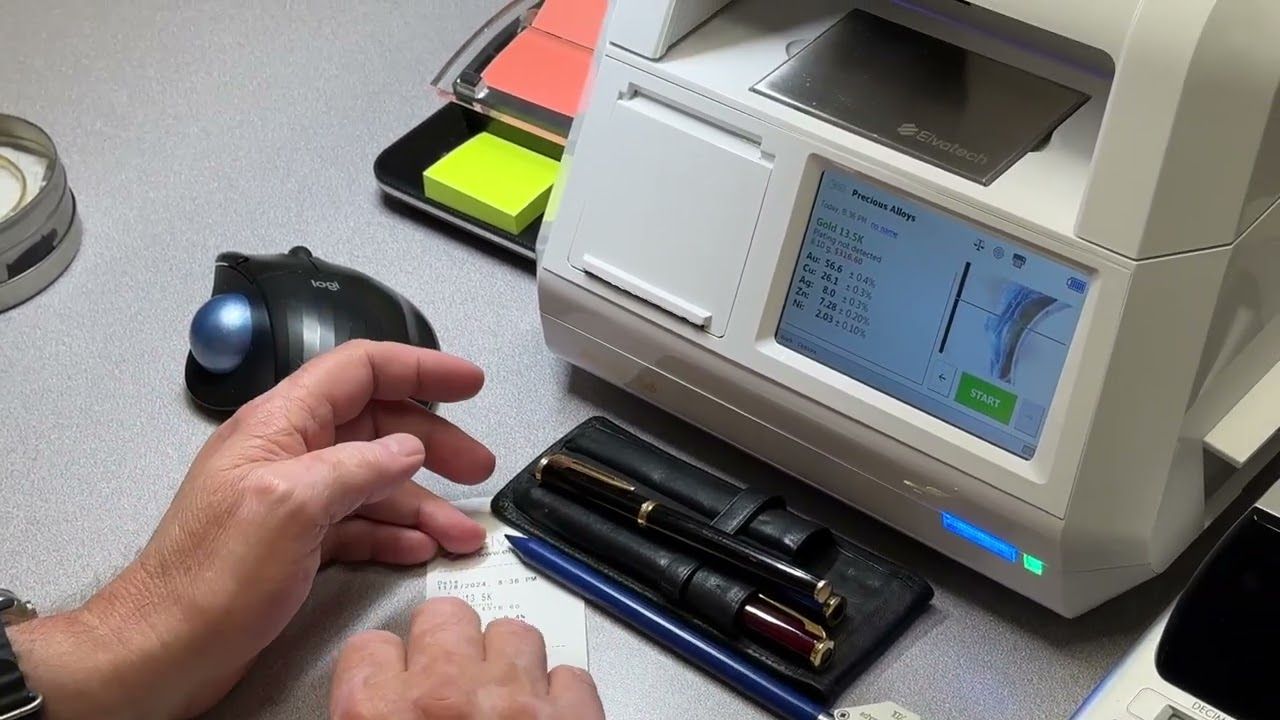 Metal Analyzer: ElvaX XRF Composition Testing
Metal composition determines every critical property from strength to corrosion resistance, weldability to...Einzelheiten
Metal Analyzer: ElvaX XRF Composition Testing
Metal composition determines every critical property from strength to corrosion resistance, weldability to...Einzelheiten -
 XRF Metal Analyzer: Precise Alloy Composition
Precision defines quality in metal industries where compositional accuracy separates specification compliance from...Einzelheiten
XRF Metal Analyzer: Precise Alloy Composition
Precision defines quality in metal industries where compositional accuracy separates specification compliance from...Einzelheiten -
 XRF Metal Analyser: Metal Product Testing
Metal product quality depends on verified composition meeting specifications throughout manufacturing—from raw...Einzelheiten
XRF Metal Analyser: Metal Product Testing
Metal product quality depends on verified composition meeting specifications throughout manufacturing—from raw...Einzelheiten -
 Handheld Precious Metal Analyzer: Gold Silver Testing
Gold and silver authenticity verification demands instant, accurate purity determination without damaging valuable...Einzelheiten
Handheld Precious Metal Analyzer: Gold Silver Testing
Gold and silver authenticity verification demands instant, accurate purity determination without damaging valuable...Einzelheiten -
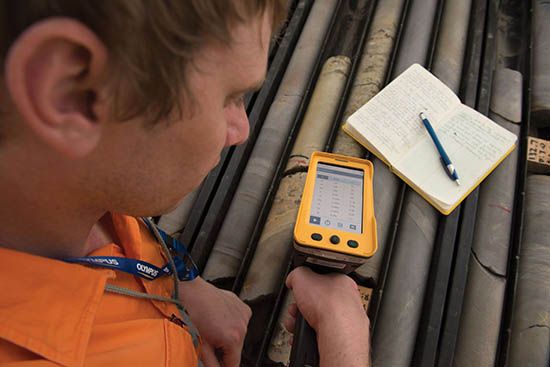 Handheld XRF: ElvaX ProSpector Metal Tester
Metal testing demands speed, accuracy, and portability in environments where laboratory analysis creates...Einzelheiten
Handheld XRF: ElvaX ProSpector Metal Tester
Metal testing demands speed, accuracy, and portability in environments where laboratory analysis creates...Einzelheiten