

Car Catalyst Analysis
Why XRF Stands Out for Catalytic Converter Testing
X-ray fluorescence (XRF) technology has become a cornerstone for fast, precise assessment of PGM content in used converters. It enables recyclers to:
-
Quickly quantify Pt, Pd, and Rh levels — often in seconds to minutes — rather than hours or days required by traditional lab methods like ICP-OES.
-
Sort incoming material efficiently to group similar types, estimate scrap value accurately, and negotiate fair purchase/sale prices.
-
Minimize sample preparation: for optimal results, converters are typically disassembled, the honeycomb core ground into a fine powder (e.g., <100–75 μm particle size), homogenized, and sometimes pressed into pellets. Handheld units can even handle direct or minimally prepped samples for rapid screening, though grinding improves homogeneity and accuracy for final valuation.
XRF's non-destructive nature preserves material value, while its portability (especially handheld models) supports on-site or yard-based testing. It delivers quantitative results for key PGMs alongside other elements like cerium (Ce), zirconium (Zr), lead (Pb), or substrate components that influence matrix corrections.
Practical Benefits in Recycling Operations
The speed and ease of XRF make it ideal for daily workflows in catalyst buying, processing, and resale. Recyclers can perform immediate checks to avoid overpaying for low-content units or under-valuing high-grade ones. Combined with simple user training, this tool boosts throughput, reduces errors from visual guessing, and supports sustainable practices by maximizing PGM recovery rates.
While XRF excels at elemental quantification, it focuses on surface-to-near-surface composition (though ground samples provide bulk representation), and results benefit from proper calibration accounting for matrix variations (ceramic vs. metallic substrates). For ultimate precision in high-stakes batches, some operations cross-verify with lab techniques, but XRF remains the frontline choice for efficiency and cost-effectiveness in the catalytic converter recycling industry.
Related posts
-
 RoHS and WEEE Compliance Testing
Across the European Union, industries involved in manufacturing — particularly those producing electrical and...Einzelheiten
RoHS and WEEE Compliance Testing
Across the European Union, industries involved in manufacturing — particularly those producing electrical and...Einzelheiten -
 Cement analysis
The chemical composition of cement directly determines its performance as a binder material. Elemental analysis of...Einzelheiten
Cement analysis
The chemical composition of cement directly determines its performance as a binder material. Elemental analysis of...Einzelheiten -
 ElvaX Geo: Mining Exploration Spectrometer
The ElvaX Geo is a cutting-edge portable XRF (X-ray fluorescence) spectrometer specifically engineered for mining...Einzelheiten
ElvaX Geo: Mining Exploration Spectrometer
The ElvaX Geo is a cutting-edge portable XRF (X-ray fluorescence) spectrometer specifically engineered for mining...Einzelheiten -
 Precious Metals: ElvaX Jewelry Lab Testing
The ElvaX Jewelry Lab represents the next generation of benchtop XRF (X-ray fluorescence) analyzers specifically...Einzelheiten
Precious Metals: ElvaX Jewelry Lab Testing
The ElvaX Jewelry Lab represents the next generation of benchtop XRF (X-ray fluorescence) analyzers specifically...Einzelheiten -
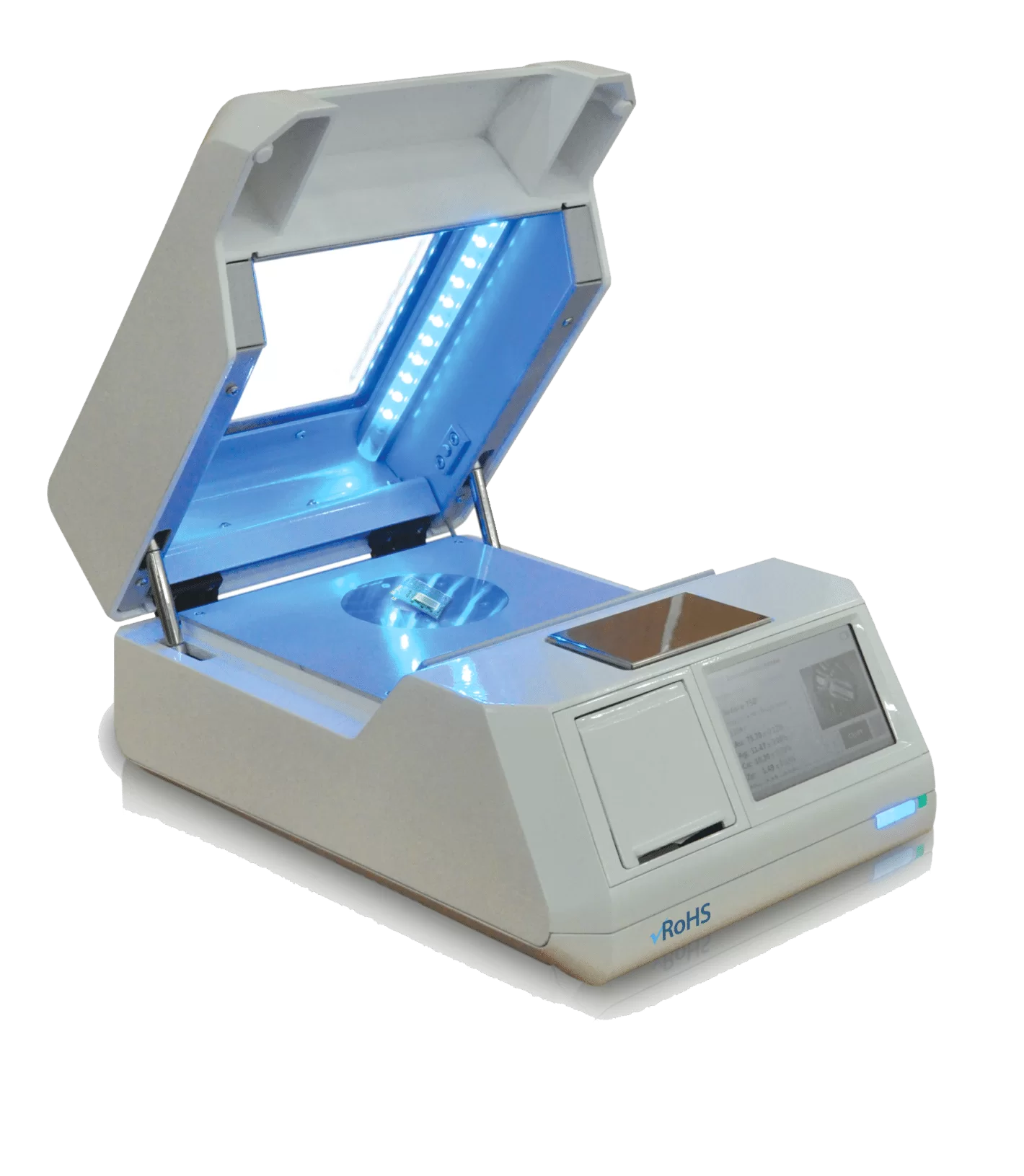 RoHS Testing: ElvaX RoHS Spectrometer
The ElvaX RoHS spectrometer represents a specialized analytical solution for manufacturers navigating the complex...Einzelheiten
RoHS Testing: ElvaX RoHS Spectrometer
The ElvaX RoHS spectrometer represents a specialized analytical solution for manufacturers navigating the complex...Einzelheiten