
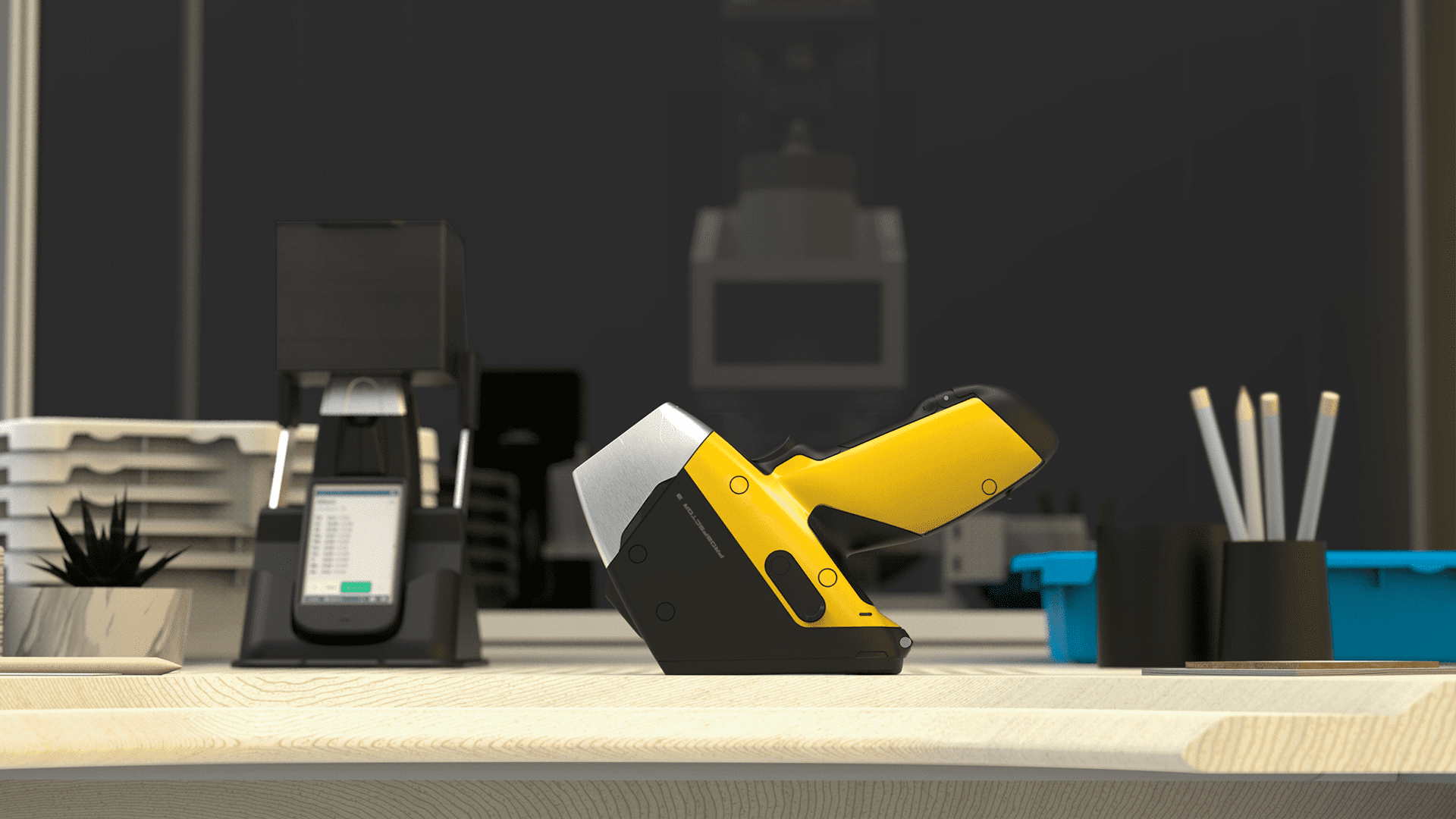
ProSpector Non-Destructive Alloy Analysis
Understanding Non-Destructive Analysis Advantage
Alloy composition determines fundamental properties—strength, corrosion resistance, conductivity, weldability, and performance characteristics critical across applications. Traditional analysis methods required destructive sampling: drilling metal coupons, cutting material samples, dissolving portions in acids, performing wet chemistry analysis. These destructive procedures consumed materials, damaged products, and created waste. Organizations faced impossible choices—verify composition and destroy samples or accept unverified material quality.
ProSpector's non-destructive X-ray fluorescence eliminates this false choice. X-rays penetrate surfaces, excite atoms causing characteristic fluorescent emission, and exit without altering materials. Tested items remain pristine, ready for use or sale immediately after analysis. The complete preservation proves invaluable where even minor surface marks reduce value significantly—jewelry, rare coins, precious artifacts, finished products, installed equipment.
The non-destructive approach enables testing materials impossible to sample destructively—expensive aerospace components, irreplaceable artifacts, limited-quantity specimens, or finished goods requiring perfect condition for customer acceptance. ProSpector analysis preserves material value while delivering complete compositional verification.
How ProSpector Non-Destructive Analysis Works
X-Ray Fluorescence Spectroscopy Principle
ProSpector employs X-ray fluorescence—physics-based technology measuring characteristic X-ray emissions from elements. The analyzer's X-ray source generates high-energy photons striking metal samples. These primary X-rays excite atoms displacing inner-shell electrons. As outer electrons cascade down filling vacancies, they emit fluorescent X-rays at element-specific energies unique to each element.
Advanced silicon drift detectors capture fluorescent emissions with exceptional energy resolution around 125-145 eV. The detector measures fluorescent energies creating spectral signatures identifying present elements. Peak heights indicate concentrations. Sophisticated algorithms convert spectral data into precise elemental percentages and alloy grade identifications within seconds.
The entire process—X-ray excitation, fluorescent emission, detection, analysis—completes in seconds. X-rays penetrate shallow surfaces exciting atoms but don't damage crystal structure or alter materials. Materials emerge from testing completely unchanged, ready for immediate use, sale, or installation.
Measurement Depth and Penetration
X-ray penetration depth varies by element and X-ray energy but typically reaches 10-100 micrometers—sufficient to analyze surface composition without significant subsurface influence. This characteristic proves advantageous: surface composition analysis works reliably for solid materials while maintaining complete non-destructive nature. Thin coatings, plated surfaces, and surface treatments receive analysis without substrate interference.
The limited penetration depth enables surface-specific measurement—critical for analyzing coatings, surface treatments, or detecting gold plating over base metals. Organizations can distinguish solid precious metals from plated imitations through compositional depth profiling without material consumption.
Non-Destructive Benefits Across Industries
Jewelry Retail and Authentication
Jewelry retailers employ ProSpector for customer service and inventory verification without compromising item value. Customers bringing precious jewelry for authentication receive instant karat determination with complete material preservation. Estate jewelry evaluation proceeds non-destructively—unmarked pieces, worn stamps, questionable compositions undergo testing without damage compromising value.
Retail inventory verification prevents costly errors—testing confirms gold purity before displaying or selling, ensuring customer satisfaction and protecting business reputation. The non-destructive testing allows complete verification without consumer risk that destructive sampling creates.
Precious Metal Trading and Investment
Investment dealers, banks, and collectors employ ProSpector for bullion verification confirming advertised purity matches composition. Gold bars, silver ingots, platinum coins undergo instant authentication without surface damage reducing collector premiums or investment value. Rare coins and collectible bullion maintain uncirculated condition through non-destructive testing preserving full numismatic value.
The preservation proves critical for numismatic premiums—rare coins command substantial prices above precious metal content value. Even microscopic surface scratches reduce collector value substantially. Non-destructive testing protects these premiums while confirming authenticity and purity.
Aerospace Component Verification
Aerospace manufacturing demands rigorous material verification where destructive sampling would compromise expensive components or safety-critical applications. ProSpector's non-destructive testing verifies titanium alloys, aluminum grades, nickel superalloys, and specialty materials throughout manufacturing and maintenance without damaging components. Critical parts undergo testing preserving full functionality for installation or use.
Maintenance operations test components during aircraft inspections, verifying replacement parts match original specifications without destructive sampling. Field-replaceable units return to inventory after verification rather than requiring scrapping due to sampling damage.
Construction and Infrastructure PMI
Positive material identification verifies piping, vessels, and structural components match specifications without damaging installed materials. Non-destructive testing prevents surface scarring that could compromise corrosion resistance, aesthetics, or structural integrity. Engineers verify material compliance protecting infrastructure safety and longevity.
The non-destructive approach enables comprehensive verification without requiring removal or sample extraction—testing occurs directly on installed components preserving material condition throughout facility lifetimes.
Manufacturing Quality Control
Production facilities integrate ProSpector testing throughout manufacturing workflows. Incoming material verification confirms supplier deliveries before processing. In-process testing verifies correct alloy selection during fabrication. Final inspection certifies finished products. The non-destructive testing enables comprehensive verification without consuming materials or damaging products reducing yields.
Finished products undergo verification maintaining perfect condition for customer delivery. The preservation proves critical for high-value components where quality verification cannot compromise finished goods.
Advantages Over Destructive Methods
Complete Material Preservation
Destructive methods—drilling samples, cutting coupons, acid dissolution, fire assay—consume materials, create waste, and damage products beyond testing. ProSpector's non-destructive testing preserves every analyzed item completely. Tested materials proceed directly to use, sale, installation, or inventory without loss or waste.
Immediate Testing Availability
Laboratory-dependent destructive analysis requires sample collection, transportation, laboratory processing, and multi-day turnaround. ProSpector delivers instant on-site results within seconds enabling immediate decisions. No sample transport delays. No laboratory queues. No waiting for results. The immediacy transforms operational efficiency.
Cost Elimination for Destructive Testing
Destructive laboratory analysis charges hundreds per sample. Fire assay—ultimate accuracy but complete sample destruction—costs $200-500 per test. Wet chemistry analysis for trace elements costs $100-300 per element. ProSpector testing costs only operator time and minor instrument consumables—essentially free per measurement compared to laboratory fees. High-volume testing achieves dramatic cost reduction.
Organizations testing thousands of samples annually realize substantial savings through eliminated laboratory costs. The economic advantage alone justifies equipment investment.
Comprehensive Testing Feasibility
Destructive testing costs constrain operations to minimum necessary sampling—often statistical approaches accepting some material error risk. Non-destructive testing costs enable comprehensive verification—testing every component, every batch, every shipment. The feasible comprehensive coverage dramatically improves quality assurance confidence preventing errors destructive sampling approaches miss through incomplete verification.
Documentation and Traceability
ProSpector's integrated cameras document tested materials photographically. GPS integration tags test locations. Comprehensive data storage records all measurements. The documentation creates complete traceability linking material certifications to specific components supporting quality system requirements and regulatory compliance.
Sample Types Suitable for Non-Destructive Analysis
Solid Metal Components
Direct metal surfaces—bars, plates, pipes, castings, forgings—analyze reliably without preparation. Simple cleaning removes surface contamination enabling testing. Finished products, machined components, welded assemblies test non-destructively confirming material compliance.
Precious Metal Items
Gold jewelry, silver items, platinum pieces, coins, and artifacts undergo authentication without damage. The non-destructive capability makes precious metal analysis ideal application for ProSpector technology.
Coated and Plated Materials
Electroplated components, painted surfaces, and coated materials receive analysis revealing layered compositions. ProSpector detects plating thickness and substrate composition distinguishing solid precious metals from plated imitations.
Installed Equipment
Piping systems, pressure vessels, valves, and structures in place undergo testing without removal or disassembly. The non-destructive approach enables verification throughout facility lifetimes without disruption or material damage.
Limitations and Considerations
Surface Analysis Focus
ProSpector analyzes surface composition—typically 10-100 micrometers depth. Materials with heterogeneous internal composition may show different surface results than bulk properties. Understanding material characteristics guides proper interpretation.
Sample Size Requirements
Minimum sample sizes accommodate handheld analyzer geometry. Very small specimens may present positioning challenges. Understanding sample requirements ensures successful testing.
Environmental Conditions
Temperature extremes, humidity, and vibration affect measurement stability. Optimal testing occurs in controlled conditions, though field operation remains feasible with proper technique.
Conclusion
ProSpector's non-destructive X-ray fluorescence analysis transforms alloy verification through complete material preservation enabling instant compositional analysis without damaging, marking, or consuming tested items. The revolutionary capability eliminates impossible choices between verification and value preservation that destructive methods create.
From jewelry authentication maintaining precious metal value, through aerospace component verification preserving critical functionality, to construction PMI ensuring infrastructure integrity, to manufacturing quality control preventing costly errors, ProSpector non-destructive analysis delivers verified composition confirmation while maintaining complete material value and integrity.
The combination of non-destructive preservation, instant on-site results, eliminated laboratory costs, and comprehensive testing feasibility creates unprecedented value for organizations where material value and analytical certainty both matter critically. For professionals requiring alloy composition verification without sacrificing material integrity or value, ProSpector non-destructive analysis represents proven technology supporting quality assurance, regulatory compliance, and operational excellence across industries worldwide where tested materials continue serving their intended purposes immediately after verification.
Related posts
-
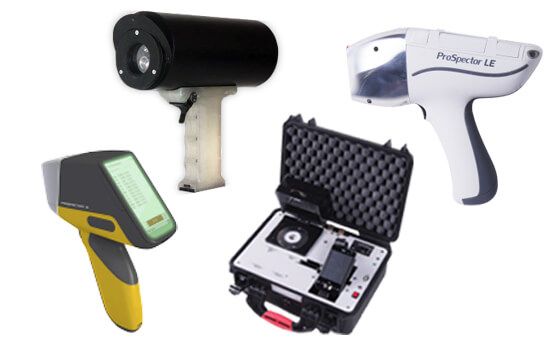 ProSpector Handheld XRF: Complete Analyzer Lineup
Handheld metal analysis demands portable instruments delivering laboratory-quality elemental composition in seconds...Einzelheiten
ProSpector Handheld XRF: Complete Analyzer Lineup
Handheld metal analysis demands portable instruments delivering laboratory-quality elemental composition in seconds...Einzelheiten -
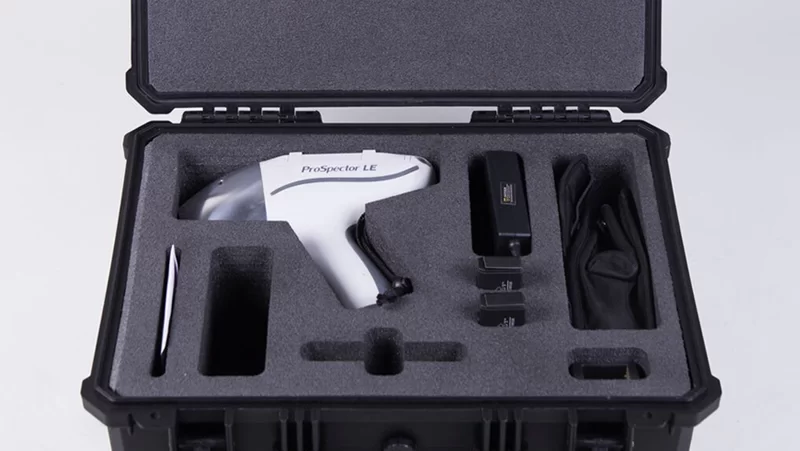 ProSpector 2 XRF: High CPS Portable Metal Analysis
Count rate speed fundamentally determines portable metal analyzer capability—high-performance detectors processing...Einzelheiten
ProSpector 2 XRF: High CPS Portable Metal Analysis
Count rate speed fundamentally determines portable metal analyzer capability—high-performance detectors processing...Einzelheiten -
 ProSpector 3: Fastest Handheld XRF >500k CPS
Speed represents the ultimate competitive advantage in portable metal analysis—instruments processing more X-ray...Einzelheiten
ProSpector 3: Fastest Handheld XRF >500k CPS
Speed represents the ultimate competitive advantage in portable metal analysis—instruments processing more X-ray...Einzelheiten -
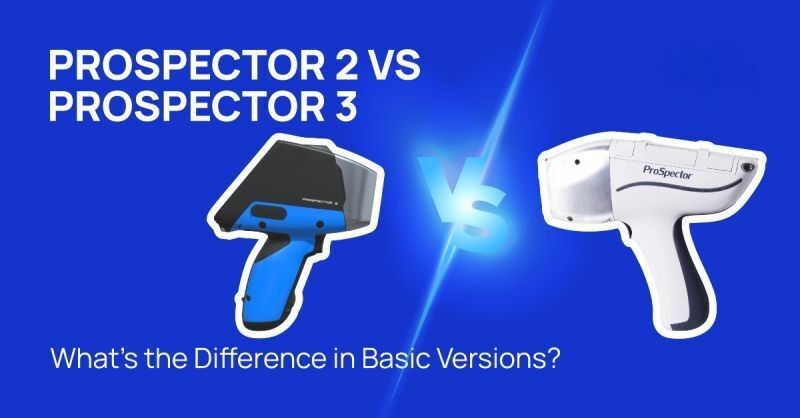 ProSpector 2 vs 3: Speed & Accuracy Comparison
Selecting an optimal handheld XRF analyzer requires understanding how competing models balance speed and accuracy...Einzelheiten
ProSpector 2 vs 3: Speed & Accuracy Comparison
Selecting an optimal handheld XRF analyzer requires understanding how competing models balance speed and accuracy...Einzelheiten -
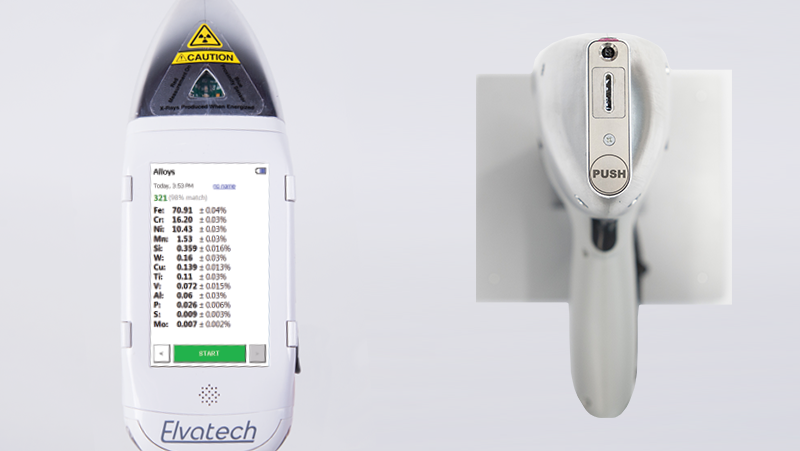 ProSpector Line: Professional Handheld XRF Analyzers
The ProSpector line represents the pinnacle of portable X-ray fluorescence technology, combining laboratory-grade...Einzelheiten
ProSpector Line: Professional Handheld XRF Analyzers
The ProSpector line represents the pinnacle of portable X-ray fluorescence technology, combining laboratory-grade...Einzelheiten