
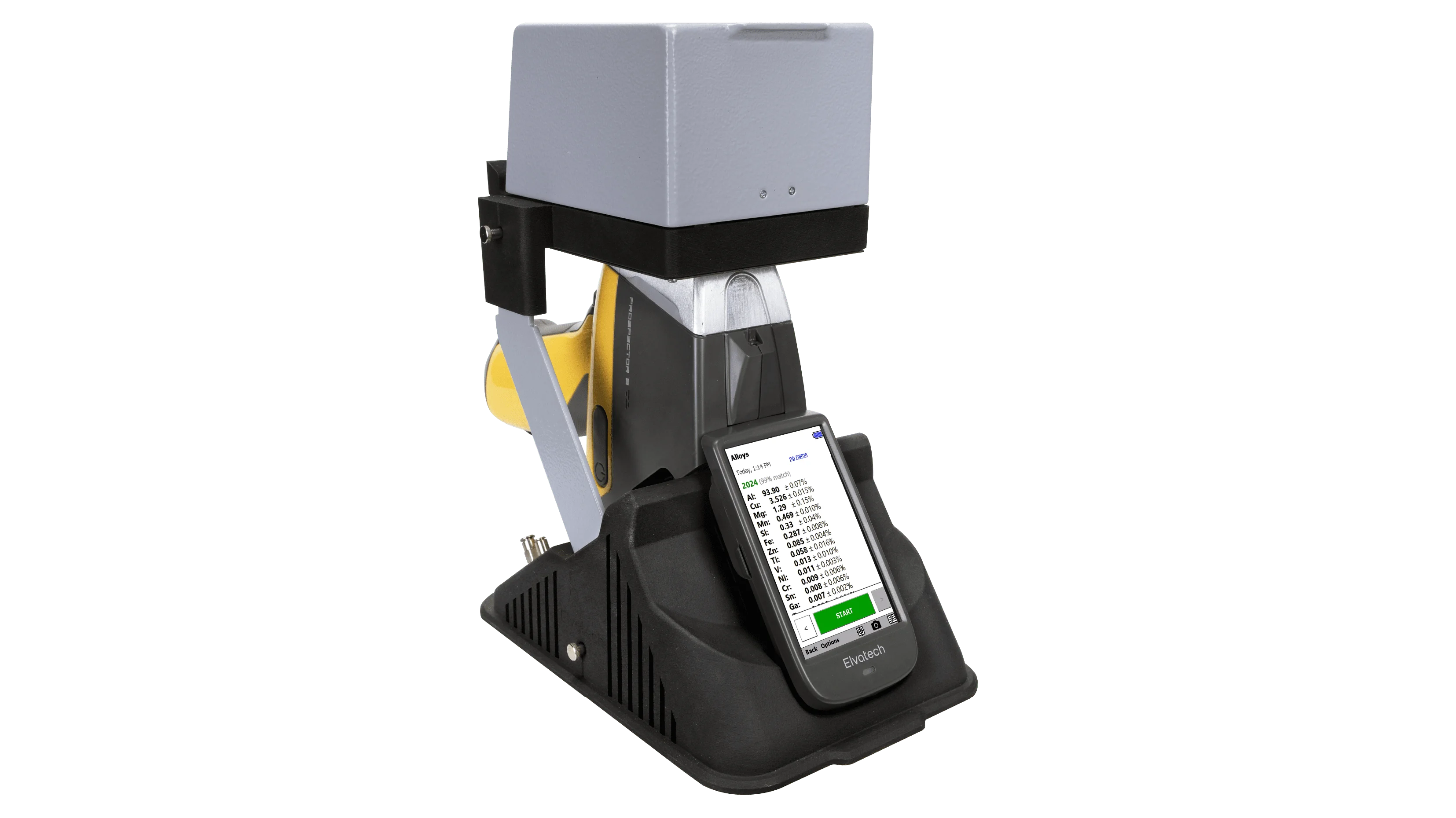
ProSpector Line: Professional Handheld XRF Analyzers
What You'll Find in This Section
This comprehensive guide explores the complete ProSpector family of handheld XRF analyzers, introducing you to the technology, capabilities, and applications that make these instruments the choice of professionals worldwide. You'll discover detailed comparisons between ProSpector 2 and ProSpector 3 models, understand the revolutionary speed and accuracy advantages that set these analyzers apart, and learn how non-destructive analysis transforms quality control and material verification workflows. Each topic links to in-depth articles covering technical specifications, operational features, application examples, and best practices specific to ProSpector technology and methodology
ProSpector Technology Foundation
The ProSpector series utilizes advanced Energy Dispersive X-Ray Fluorescence technology enhanced by proprietary innovations that deliver unprecedented performance in portable instruments. At the core lies Dynamically Adaptive Shaping digital pulse processing developed exclusively , enabling count rates and signal processing speeds that exceed conventional handheld analyzers by factors of four to ten. Fast Silicon Drift Detector technology with large active areas captures maximum signal while minimizing measurement time, delivering laboratory-quality results in seconds rather than minutes.
The digital digiX-40 X-ray source provides automatic temperature and barometric corrections that maintain calibration stability across varying environmental conditions, eliminating the need for frequent recalibration that plagues competitive instruments. This combination of advanced detection, intelligent signal processing, and stable excitation creates a platform capable of analyzing elements from light magnesium through heavy uranium with exceptional precision, accuracy, and detection limits previously achievable only with benchtop laboratory equipment.
ProSpector 2 - Proven Performance
The ProSpector 2 represents the time-tested foundation of the handheld XRF lineup, delivering proven reliability and accuracy that has established Elvatech's reputation for excellence in portable analysis. This robust analyzer combines powerful hardware with unique software algorithms to provide ultimate precision for elemental analysis across a wide range of materials including metals, alloys, precious metals, soils, mining samples, catalysts, and plastics.
Operating at count rates exceeding 500,000 CPS, the ProSpector 2 achieves measurement speeds that dramatically accelerate workflows compared to conventional portable analyzers. Extended battery life exceeding 10 hours supports full-day field operations without recharging interruptions, while shockproof and waterproof construction withstands harsh industrial and environmental conditions. The extensive editable alloy library enables immediate grade identification for thousands of metals, supporting positive material identification across ferrous and non-ferrous applications.
ProSpector 3 - Next Generation Excellence
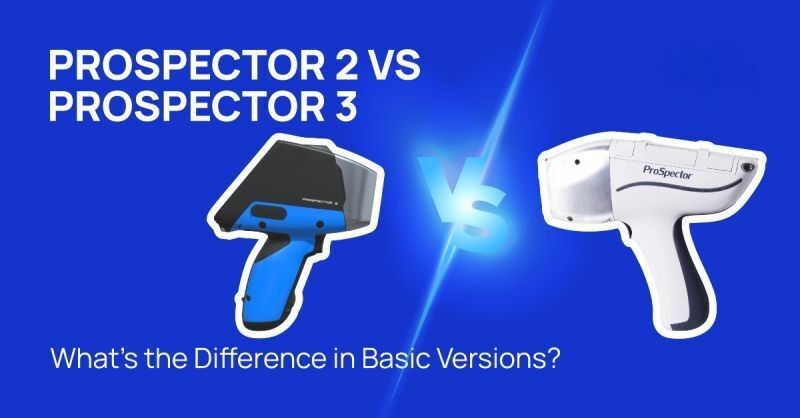
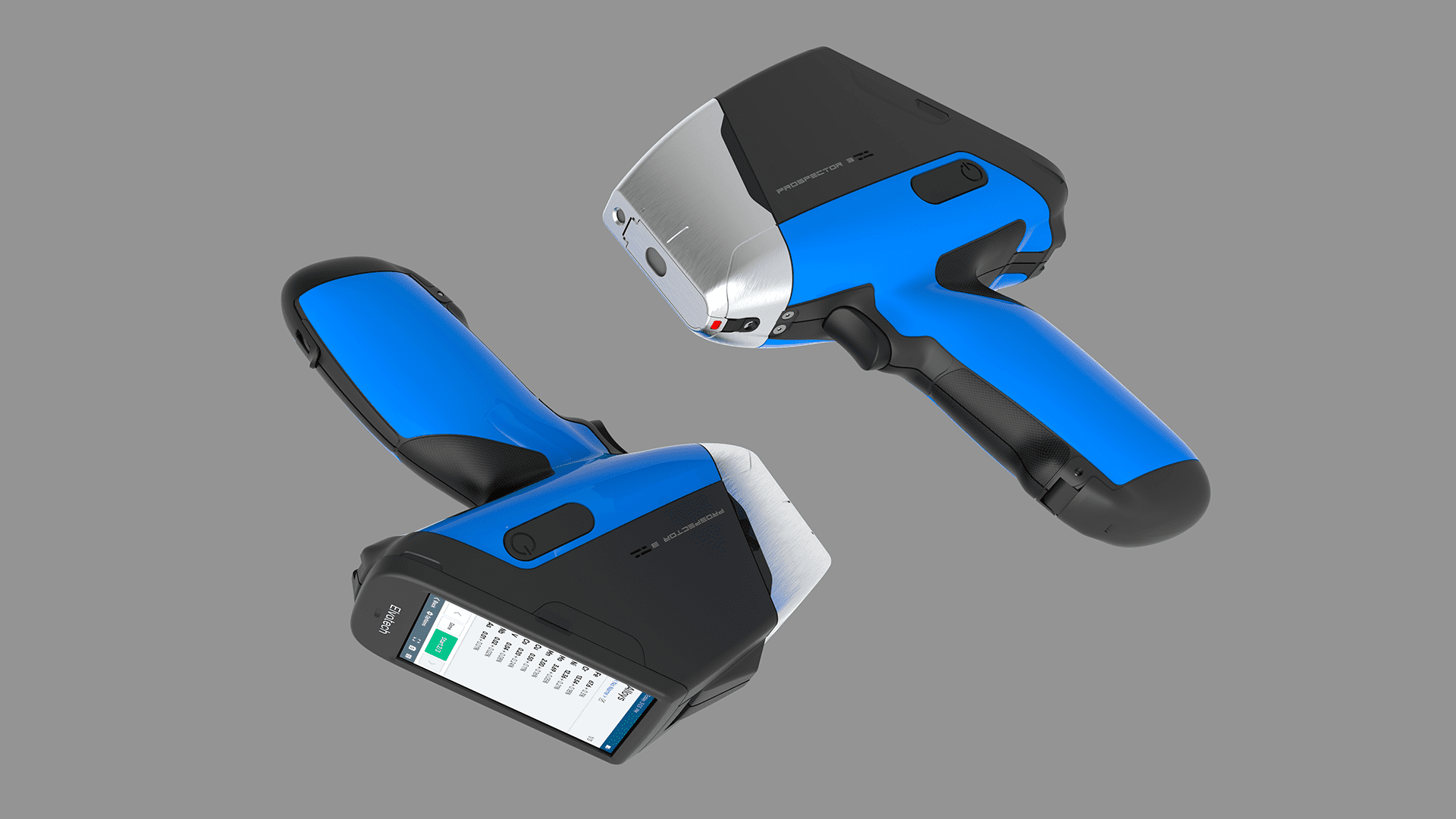
The ProSpector 3 represents revolutionary advancement in handheld XRF technology, setting new benchmarks for speed, precision, and capability that fundamentally transform portable analysis expectations. This next-generation analyzer operates four times faster than comparable instruments thanks to enhanced Dynamically Adaptive Shaping technology, delivering twice better precision and twice lower detection limits compared to industry standards. At just 1.1 kg, the ProSpector 3 weighs 1.5 times less than competitive analyzers while measuring only 236mm in length, making it the smallest and lightest professional XRF gun on the market.
The folding display design enables laboratory stand operation without computer connection, effectively transforming the handheld analyzer into a benchtop instrument when needed. Full compatibility with ElvaX desktop spectrometer software expands capabilities beyond typical portable analyzer limitations, supporting advanced calibration development, comprehensive data management, and sophisticated reporting. Enhanced light element capabilities provide 40% improvement in detecting and quantifying elements like magnesium, aluminum, and silicon that challenge conventional handheld XRF technology.
The ProSpector 3 lineup includes three configurations - Basic, Advanced, and Max - each optimized for specific application requirements and budget considerations while sharing the revolutionary speed and ergonomic advantages of the platform.
Complete ProSpector Lineup Overview
Understanding the complete ProSpector family requires recognizing how different models address varying analytical requirements, application focuses, and operational scenarios. The lineup spans from entry-level configurations providing essential capabilities for routine quality control through ultimate performance systems handling the most demanding analytical challenges including rare earth elements, multi-layer coatings, and trace element detection in complex matrices.
Each analyzer shares core technology advantages including Dynamically Adaptive Shaping signal processing, Fast SDD detectors, digital X-ray sources with automatic corrections, and intuitive software interfaces. This commonality ensures operational familiarity across the product line while enabling appropriate selection based on specific needs for elemental range, detection limits, measurement speed, and specialized capabilities like small spot analysis or automated filter selection.
ProSpector 2 vs 3 - Performance Comparison
Choosing between ProSpector 2 and ProSpector 3 requires understanding the significant performance differences that justify investment decisions based on application requirements and workflow demands. The ProSpector 3 delivers measurement speeds up to 10 times faster than ProSpector 2 in basic configurations, with even greater advantages in advanced models featuring automatic filter optimization. This speed advantage directly translates to higher sample throughput, enabling operators to analyze more materials in less time while achieving superior statistical precision through enhanced count rates.
Detection limits and measurement precision show marked improvement in ProSpector 3, particularly for light elements and trace concentrations where the enhanced detector and optimized excitation provide decisive advantages. The compact, lightweight design of ProSpector 3 significantly reduces operator fatigue during extended field sessions, while the folding display and stand compatibility create operational flexibility impossible with ProSpector 2 configuration. However, ProSpector 2 remains highly competitive for standard alloy analysis and applications where ultimate speed and light element performance provide limited incremental value relative to cost considerations.
Non-Destructive Alloy Analysis Excellence
The defining advantage of ProSpector technology lies in completely non-destructive analysis that preserves sample integrity while delivering accurate elemental composition and alloy identification. Unlike destructive testing methods requiring sample consumption or chemical analysis demanding surface preparation, ProSpector analyzers provide instant results by simply placing the measurement window against the material of interest. This non-destructive capability enables 100% inspection programs where every component or batch receives verification rather than statistical sampling limited by destructive testing costs.
Applications span positive material identification for alloy verification, scrap sorting and recycling optimization, quality control in metal fabrication and manufacturing, incoming material inspection preventing costly mix-ups, and compliance verification ensuring products meet specifications. The combination of comprehensive alloy libraries, pass/fail functionality, and automated grade identification simplifies operations while maintaining rigorous quality standards. Real-time results enable immediate decision-making for material acceptance, sorting, or rejection without delays associated with laboratory testing.
Key Features Across the ProSpector Line
All ProSpector models share essential features that ensure reliable performance, operational safety, and user-friendly operation regardless of specific configuration or model generation. Radiation safety systems including infrared proximity sensors and low-count detection immediately shut down X-ray emission if the analyzer points away from samples, protecting operators and bystanders. Detector protection films prevent contamination while allowing X-ray transmission, with tool-free replacement enabling rapid field maintenance without returning instruments for service.
Integrated barcode scanning supports EAN, UPC, and QR code reading for sample tracking and data management integration with manufacturing execution systems. USB and Bluetooth connectivity enables wireless data transfer and remote operation, while optional high-resolution video cameras assist with sample positioning and documentation. The extensive editable grade library accommodates custom alloys and materials beyond standard databases, supporting specialized applications and proprietary alloy verification. Full compatibility with ElvaX PC software provides desktop-class data management, advanced calibration development, and comprehensive reporting capabilities.
Applications Spanning Industries
The ProSpector line serves diverse industries requiring rapid, accurate elemental analysis and material verification. Metal fabrication and manufacturing operations utilize ProSpector analyzers for incoming material inspection, process control, and finished product verification, preventing costly material mix-ups that could compromise safety or performance. Scrap metal recycling facilities depend on instant alloy sorting to maximize material value and ensure proper segregation of incompatible metals. Aerospace and automotive industries implement positive material identification programs verifying critical components meet stringent specifications.
Mining and exploration companies deploy ProSpector instruments for ore grade control, geological mapping, and environmental compliance monitoring. Precious metals dealers, pawnshops, and jewelry businesses authenticate gold, silver, and platinum items while detecting fraud through plating identification. Petrochemical facilities analyze catalysts, monitor sulfur content, and verify material compositions. Environmental consultants assess soil contamination and track remediation progress. Quality assurance laboratories conduct compliance testing for RoHS, WEEE, and hazardous substance regulations. This application breadth demonstrates the versatility of handheld XRF technology when properly configured with appropriate calibrations, libraries, and operational protocols.
Operational Advantages and Workflow Benefits
ProSpector analyzers transform material analysis workflows by providing laboratory-quality results at the point of need rather than requiring sample collection, preparation, shipment, and extended waiting periods for external laboratory reports. This immediacy enables real-time decision-making for material acceptance, process adjustments, or product release without production delays or inventory holding costs. The non-destructive nature preserves all tested materials for sale or use rather than consuming samples for analysis, effectively making testing free from a material cost perspective.
Reduced dependence on external laboratories delivers substantial cost savings when analyzing hundreds or thousands of samples where individual laboratory fees would accumulate to significant expenses. In-house analytical capability provides operational independence, eliminating bottlenecks caused by laboratory capacity constraints or turnaround time delays during critical production or shipment schedules. The combination of speed, accuracy, portability, and non-destructive analysis creates competitive advantages through improved quality control, reduced waste, optimized inventory management, and enhanced customer confidence in material authenticity and specification compliance.
Training and Technical Support
Successful ProSpector implementation requires minimal training due to intuitive interfaces designed for operation by personnel without extensive analytical backgrounds. Standard training programs cover basic operation, measurement best practices, result interpretation, safety procedures, and routine maintenance, typically completed within hours rather than days or weeks required for complex laboratory instrumentation. Ongoing technical support ensures operators can resolve questions, optimize calibrations for specific applications, and maintain peak performance throughout instrument lifecycle.
Software updates deliver continuous improvement through enhanced algorithms, expanded grade libraries, and new capabilities added to existing instruments without hardware replacement. Calibration verification standards enable periodic performance confirmation maintaining traceability and accuracy confidence. Comprehensive documentation including operation manuals, application notes, and troubleshooting guides supports self-sufficient operation while manufacturer technical support remains accessible for complex questions or unusual applications requiring specialized expertise.
Conclusion
The ProSpector line delivers the ultimate combination of speed, precision, and portability in handheld XRF analyzers, serving professionals who demand laboratory-grade performance in field-ready instruments. From the proven ProSpector 2 with industry-leading count rates exceeding 500,000 CPS to the revolutionary ProSpector 3 operating four times faster while weighing 1.5 times less than competitive analyzers, this complete family provides solutions appropriately scaled to diverse analytical requirements and budget considerations. Proprietary Dynamically Adaptive Shaping technology, Fast SDD detectors, and digital X-ray sources create performance advantages that fundamentally transform portable analysis expectations.
Non-destructive analysis across applications spanning metal identification, alloy verification, precious metals authentication, mining exploration, environmental assessment, and compliance screening demonstrates the versatility of ProSpector technology when supported by comprehensive libraries, intelligent software, and robust hardware design. The ability to deliver accurate results in seconds rather than minutes or days accelerates workflows, reduces costs, and enables quality assurance programs impossible with conventional laboratory-dependent approaches.
Whether establishing initial portable XRF capability or upgrading from older technology, the ProSpector line represents strategic investment in analytical independence, operational efficiency, and competitive advantage through superior material knowledge and verification confidence. The combination of revolutionary speed, exceptional accuracy, and comprehensive application support positions ProSpector as the definitive choice for professionals requiring the ultimate portable XRF performance.
Related posts
-
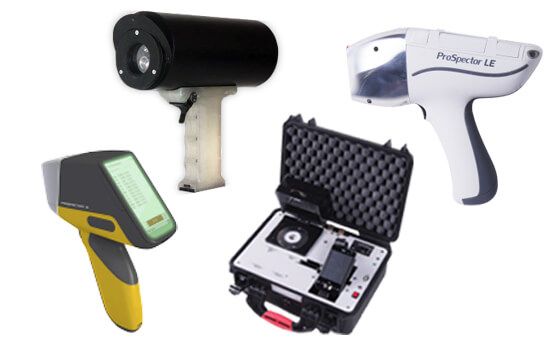 ProSpector Handheld XRF: Complete Analyzer Lineup
Handheld metal analysis demands portable instruments delivering laboratory-quality elemental composition in seconds...Einzelheiten
ProSpector Handheld XRF: Complete Analyzer Lineup
Handheld metal analysis demands portable instruments delivering laboratory-quality elemental composition in seconds...Einzelheiten -
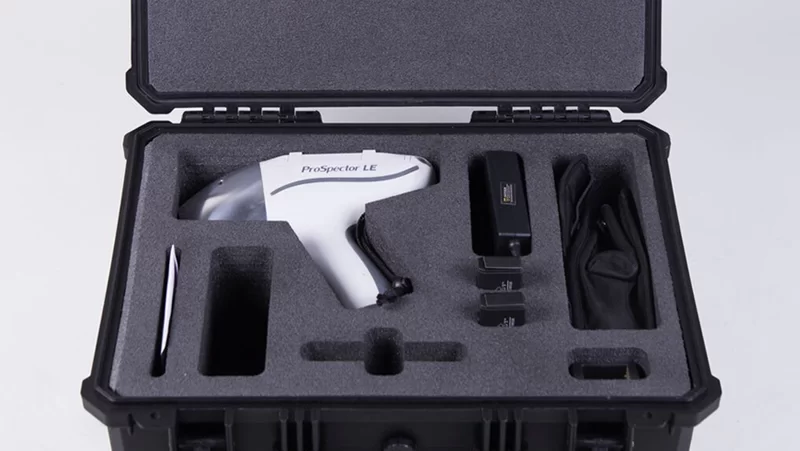 ProSpector 2 XRF: High CPS Portable Metal Analysis
Count rate speed fundamentally determines portable metal analyzer capability—high-performance detectors processing...Einzelheiten
ProSpector 2 XRF: High CPS Portable Metal Analysis
Count rate speed fundamentally determines portable metal analyzer capability—high-performance detectors processing...Einzelheiten -
 ProSpector 3: Fastest Handheld XRF >500k CPS
Speed represents the ultimate competitive advantage in portable metal analysis—instruments processing more X-ray...Einzelheiten
ProSpector 3: Fastest Handheld XRF >500k CPS
Speed represents the ultimate competitive advantage in portable metal analysis—instruments processing more X-ray...Einzelheiten -
 ProSpector 2 vs 3: Speed & Accuracy Comparison
Selecting an optimal handheld XRF analyzer requires understanding how competing models balance speed and accuracy...Einzelheiten
ProSpector 2 vs 3: Speed & Accuracy Comparison
Selecting an optimal handheld XRF analyzer requires understanding how competing models balance speed and accuracy...Einzelheiten -
 ProSpector Non-Destructive Alloy Analysis
Material value preservation determines critical difference between destructive and non-destructive analytical...Einzelheiten
ProSpector Non-Destructive Alloy Analysis
Material value preservation determines critical difference between destructive and non-destructive analytical...Einzelheiten