

Spectrometers: Complete Guide to XRF Spectroscopy Technology
What to Expect in This Section
This section provides exhaustive coverage of XRF spectrometry technology across all configurations and application domains. You'll discover detailed information about XRF Spectrometer: ElvaX Metal Analysis Solutions that deliver comprehensive analytical capabilities for diverse metallic materials and alloy systems. We examine the Portable XRF Spectrometer: ProSpector 3 High Speed and its breakthrough performance in field-portable spectroscopic analysis, demonstrating how modern technology brings laboratory accuracy to remote testing environments.
Our comprehensive XRF Spectrometers: Model Selection Guide helps professionals navigate the complex landscape of available instruments, comparing specifications, capabilities, and suitability for different applications. We explore Portable XRF Spectrometer: Field Applications spanning industries from construction and manufacturing to mining and environmental monitoring, illustrating real-world usage scenarios and best practices.
The Handheld XRF Spectrometer: ProSpector 2 receives detailed examination as an example of ergonomic portable spectrometry designed for industrial environments. For specialized applications, we cover the TXRF Spectrometer: ElvaX Thin Film Analysis technology that enables surface-sensitive measurements at trace concentration levels. Practical guidance on XRF Spectrometer: Buy Portable Metal Analyzer assists purchasing decisions with considerations beyond specifications.
Finally, we delve into XRF Spectroscopy: Fast Metal Spectral Analysis methodologies that transform traditional testing workflows through rapid, non-destructive elemental characterization. Throughout this section, you'll gain comprehensive understanding of how XRF spectrometry solves analytical challenges across diverse professional contexts.
Understanding XRF Spectrometry Principles
Fundamental Spectroscopic Concepts
X-ray fluorescence spectrometry exploits the unique relationship between atomic structure and electromagnetic radiation. When high-energy X-rays from a spectrometer's excitation source strike a sample, they eject inner-shell electrons from atoms within the material. As electrons from higher energy levels fill these vacancies, they emit characteristic fluorescent X-rays with energies precisely determined by the atomic number of each element. This atomic fingerprint enables unambiguous element identification.
The intensity of fluorescent X-rays correlates directly with element concentration, allowing quantitative analysis when appropriate calibration and mathematical modeling are applied. Modern spectrometers measure X-ray energies and intensities simultaneously across broad spectral ranges, enabling multi-element analysis in single measurement cycles. This parallel detection capability distinguishes XRF from sequential techniques, dramatically reducing analysis time while maintaining analytical rigor.
Energy Dispersive XRF Technology
Energy-dispersive X-ray fluorescence (EDXRF) spectrometry represents the dominant technology in modern portable and benchtop instruments. EDXRF spectrometers employ solid-state detectors, typically silicon drift detectors (SDD), that convert incoming X-ray photons directly into electrical pulses proportional to photon energy. Advanced digital signal processing electronics resolve these pulses into energy spectra showing characteristic peaks for each element present.
The simultaneous multi-element capability, compact design, and absence of moving parts make EDXRF ideal for both laboratory and field applications. Modern SDD technology delivers exceptional energy resolution, enabling clear separation of closely-spaced spectral peaks even in complex multi-element matrices. Count rates exceeding hundreds of thousands of counts per second ensure rapid data acquisition without sacrificing precision.
Portable Field Spectrometers
Advantages of Handheld Spectrometry
Portable XRF spectrometers revolutionize materials analysis by eliminating traditional laboratory bottlenecks. These rugged instruments withstand demanding field conditions including extreme temperatures, vibration, dust, and moisture while delivering analytical performance approaching benchtop laboratory standards. Battery-powered operation ensures complete independence from electrical infrastructure, enabling testing in remote locations from mining exploration sites to offshore platforms.
The immediate availability of analytical results transforms decision-making processes across industries. Manufacturing facilities verify incoming raw materials before accepting shipments, preventing production delays and quality issues. Construction inspectors confirm proper materials in structural applications, ensuring safety and code compliance. Scrap metal operations sort mixed materials accurately, optimizing recovery value through precise grade identification.
High-Speed Analysis Capabilities
Contemporary portable spectrometers achieve remarkable analysis speeds, delivering actionable results in seconds rather than minutes. Advanced X-ray tube designs provide powerful excitation across broad energy ranges, while large-area silicon drift detectors capture maximum fluorescent signal for rapid spectral accumulation. Sophisticated algorithms optimize measurement times dynamically based on sample characteristics and required precision levels.
This speed advantage enables high-throughput testing campaigns where hundreds or thousands of measurements occur daily. Quality control inspectors screen large production batches efficiently. Positive material identification (PMI) technicians verify critical components throughout industrial facilities. Environmental consultants map contamination distributions through intensive sampling programs. The combination of portability and speed makes field spectrometry indispensable across numerous professional disciplines.
Laboratory Benchtop Spectrometers
Enhanced Performance Characteristics
Benchtop XRF spectrometers offer significant analytical advantages for applications demanding maximum accuracy, sensitivity, and measurement flexibility. These instruments typically incorporate higher-power X-ray tubes operating at elevated voltages, enabling superior excitation of challenging elements and expanded elemental ranges. Voltage capabilities extending to 50kV or 60kV facilitate analysis of rare earth elements using their K-series lines, providing better accuracy than L-series measurements.
Larger detector areas and optimized geometric configurations maximize fluorescent photon collection, improving counting statistics and reducing detection limits. Advanced features like helium or vacuum purging eliminate atmospheric absorption of low-energy X-rays, dramatically enhancing sensitivity for light elements including sodium, magnesium, aluminum, silicon, phosphorus, and sulfur. These capabilities make benchtop spectrometers essential for comprehensive elemental characterization.
Automation and Sample Handling
High-throughput laboratory environments benefit from sophisticated sample handling automation. Motorized sample chambers accommodate diverse specimen sizes and geometries, from tiny jewelry components to large industrial parts. Automatic multi-position collimator changers optimize measurement spot sizes from sub-millimeter to several centimeters, balancing sensitivity against spatial resolution based on sample characteristics.
Robotic sample changers enable unattended batch processing of multiple specimens, dramatically increasing laboratory productivity. These systems load samples sequentially, execute predefined measurement protocols, and archive results automatically while laboratory personnel focus on interpretation and value-added activities. Integrated cameras provide visual documentation of sample positioning and appearance, supporting quality assurance and traceability requirements.
Specialized TXRF Technology
Total Reflection XRF Principles
Total Reflection X-ray Fluorescence (TXRF) spectrometry represents a specialized variant optimized for surface analysis and trace element detection. TXRF instruments direct the excitation beam at extremely shallow angles relative to flat sample surfaces, causing total external reflection of X-rays at the sample-air interface. This geometry dramatically reduces background scatter while enhancing signal from surface layers and thin films.
The exceptional signal-to-background ratios achieved through total reflection enable detection limits in the parts-per-billion range for many elements, orders of magnitude better than conventional EDXRF. This sensitivity makes TXRF invaluable for semiconductor wafer contamination analysis, thin film characterization, trace element monitoring in liquids, and ultra-clean materials assessment where minute impurities critically affect product performance.
Applications in Thin Film Analysis
Modern electronics, optics, and materials science rely heavily on precisely engineered thin films with thicknesses from nanometers to micrometers. TXRF spectrometry characterizes film composition non-destructively, preserving valuable samples while providing accurate elemental analysis of coatings, deposited layers, and surface treatments. The technique excels at detecting contamination on polished surfaces including semiconductor wafers, optical components, and precision mechanical parts.
Environmental and pharmaceutical applications utilize TXRF for trace metals analysis in solutions, requiring only microliter sample volumes. The combination of minimal sample requirements, exceptional sensitivity, and non-destructive nature positions TXRF as a powerful complementary technique to conventional XRF spectrometry for specialized analytical challenges.
Metal Analysis Applications
Alloy Identification and Verification
XRF spectrometry serves as the gold standard for rapid, non-destructive alloy identification across manufacturing, construction, and quality control applications. Comprehensive calibration libraries contain spectral signatures and compositional ranges for thousands of standardized alloy grades including stainless steels, aluminum alloys, copper alloys, titanium alloys, nickel-based superalloys, and specialty materials. Spectrometers match measured compositions against these libraries, identifying alloy grades with confidence levels supporting critical decision-making.
Positive material identification (PMI) programs employ XRF spectrometry to verify that installed materials match design specifications and purchase orders. This verification prevents catastrophic failures caused by material mix-ups, protects against counterfeit materials entering supply chains, and ensures regulatory compliance in industries from petrochemical processing to aerospace manufacturing.
Precious Metals Characterization
The jewelry industry, precious metals trading, and financial sectors depend on XRF spectrometry for accurate, non-destructive purity assessment. Spectrometers determine exact gold content in karats and percentages, distinguish between various silver alloys, identify platinum group metals, and detect common adulterants and base metal cores. The speed and non-destructive nature make XRF ideal for high-volume testing in retail stores, refineries, and authentication laboratories.
Advanced algorithms detect surface treatments including plating and coating that could mislead traditional testing methods. This fraud detection capability protects buyers from gold or silver-plated items misrepresented as solid precious metals, while authentication of historical artifacts and collectibles preserves irreplaceable items during compositional analysis.
Spectral Analysis Methodologies
Fundamental Parameters Approach
Modern XRF spectrometry employs sophisticated mathematical algorithms to convert measured X-ray intensities into accurate elemental concentrations. The Fundamental Parameters (FP) method calculates theoretical fluorescent intensities based on first-principles physics, accounting for matrix effects, inter-element absorption, and secondary fluorescence phenomena. This approach enables accurate analysis without extensive empirical calibration standards, particularly valuable for unusual matrices or novel materials where reference standards don't exist.
FP algorithms require knowledge of X-ray tube spectrum, detector efficiency, geometric factors, and fundamental atomic parameters including fluorescent yields and mass absorption coefficients. Contemporary spectrometers incorporate these parameters in comprehensive databases, enabling rapid method development and broad analytical flexibility across diverse sample types.
Empirical Calibration Methods
For routine analysis of similar materials, empirical calibration using certified reference standards often provides optimal accuracy. Regression algorithms establish mathematical relationships between measured X-ray intensities and known elemental concentrations in standard samples, then apply these calibrations to unknown specimens. This approach automatically corrects for systematic effects specific to particular sample types and measurement conditions.
Hybrid methods combining fundamental parameters with empirical corrections leverage advantages of both approaches, using FP calculations as baselines modified by empirical data from relevant standards. These flexible methodologies adapt to various analytical requirements, from rapid screening to precise quantitative certification.
Selecting the Right Spectrometer
Application-Driven Selection Criteria
Choosing optimal XRF spectrometry equipment begins with clearly defining analytical requirements. Consider target elements and concentration ranges you must measure, as these determine necessary excitation energies and detector performance. Evaluate typical sample types, sizes, and physical forms the instrument must accommodate. Assess whether field portability represents a critical requirement or whether benchtop laboratory operation suffices.
Required measurement speed and daily sample throughput influence instrument configuration and automation features. Budget considerations encompass initial acquisition costs, ongoing operational expenses, calibration maintenance, and potential service requirements. Training complexity and ease of use affect which staff members can operate instruments effectively and how quickly new personnel become productive.
Comparing Specifications and Capabilities
Key technical specifications for comparison include X-ray tube voltage and current, determining elemental range coverage and analytical sensitivity. Detector type, active area, and energy resolution directly impact spectral quality and measurement speed. Excitation filter options, collimator selections, and atmospheric control capabilities affect analytical flexibility for different sample types.
Software features including calibration libraries, method development tools, data management capabilities, and connectivity options influence long-term instrument utility and integration with quality management systems. Vendor reputation, technical support quality, warranty terms, and calibration service availability represent important practical considerations beyond published specifications.
Future Developments in XRF Spectrometry
XRF spectrometry technology continues advancing through improvements in detectors, X-ray sources, and analytical algorithms. Silicon drift detector performance steadily improves with better energy resolution and higher maximum count rates. Novel X-ray tube designs explore alternative anode materials and optimized geometries for enhanced excitation efficiency. Artificial intelligence and machine learning algorithms enhance spectral interpretation, enabling more accurate analysis of complex matrices and overlapping spectral peaks.
Miniaturization trends promise even more compact portable spectrometers without performance sacrifices, while benchtop instruments expand capabilities toward lighter elements and lower detection limits. Integration of complementary analytical techniques creates hybrid instruments providing multifaceted material characterization. Cloud connectivity and advanced data analytics transform individual measurements into comprehensive materials intelligence across entire supply chains and product lifecycles.
Conclusion
XRF spectrometers represent indispensable analytical tools across scientific research, industrial quality control, precious metals trading, environmental monitoring, and numerous other professional domains. From comprehensive XRF Spectrometer: ElvaX Metal Analysis Solutions serving diverse analytical needs to the cutting-edge Portable XRF Spectrometer: ProSpector 3 High Speed delivering unprecedented field performance, modern spectrometry offers solutions for virtually any elemental analysis challenge.
Our XRF Spectrometers: Model Selection Guide helps navigate complex decisions, while Portable XRF Spectrometer: Field Applications demonstrates real-world utility across industries. The Handheld XRF Spectrometer: ProSpector 2 exemplifies ergonomic portable design, while TXRF Spectrometer: ElvaX Thin Film Analysis addresses specialized surface-sensitive applications. Professionals considering acquisition can explore XRF Spectrometer: Buy Portable Metal Analyzer options informed by comprehensive understanding of XRF Spectroscopy: Fast Metal Spectral Analysis capabilities.
Whether your requirements involve rapid field testing, high-throughput laboratory analysis, precious metals authentication, or specialized thin film characterization, the right XRF spectrometer delivers immediate value through improved efficiency, reduced costs, enhanced quality assurance, and expanded analytical capabilities. This section provides the comprehensive knowledge needed to understand XRF spectrometry technology and select optimal solutions for your specific analytical requirements.
Related posts
-
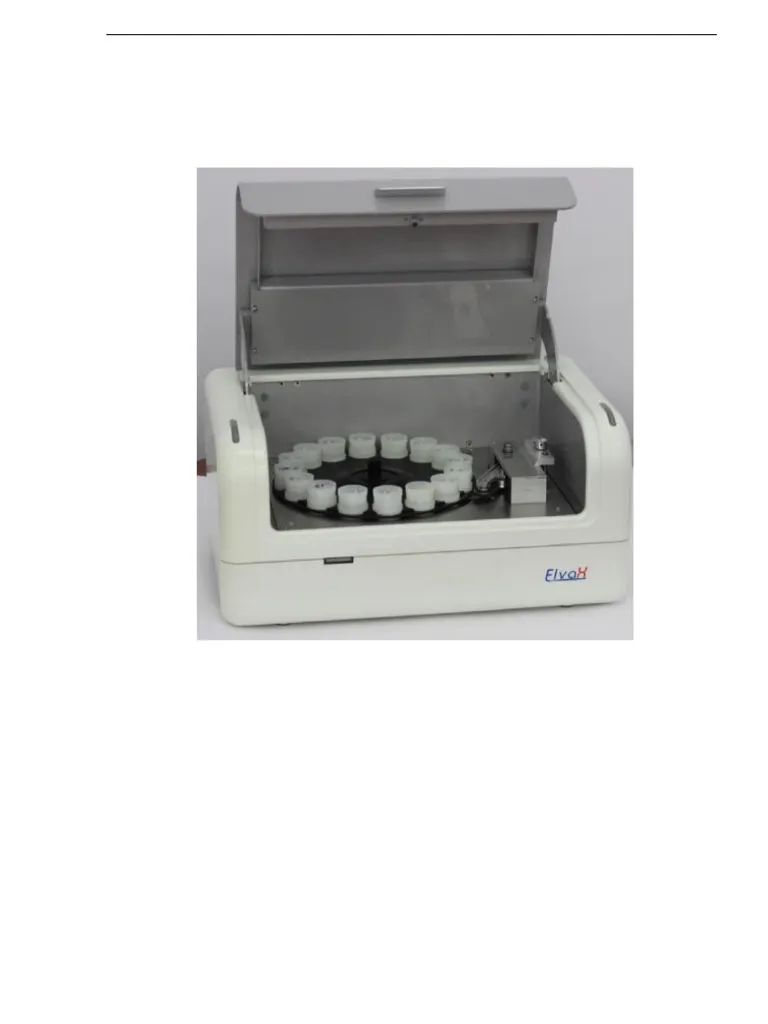 XRF Spectrometer: ElvaX Metal Analysis Solutions
Metal analysis drives quality control, material verification, and production excellence across manufacturing...Einzelheiten
XRF Spectrometer: ElvaX Metal Analysis Solutions
Metal analysis drives quality control, material verification, and production excellence across manufacturing...Einzelheiten -
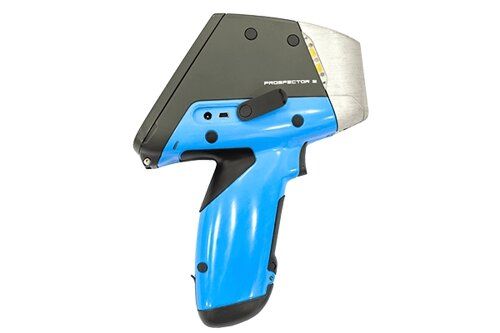 Portable XRF Spectrometer: ProSpector 3 High Speed
Speed defines competitive advantage in modern materials testing. The ProSpector 3 portable XRF spectrometer...Einzelheiten
Portable XRF Spectrometer: ProSpector 3 High Speed
Speed defines competitive advantage in modern materials testing. The ProSpector 3 portable XRF spectrometer...Einzelheiten -
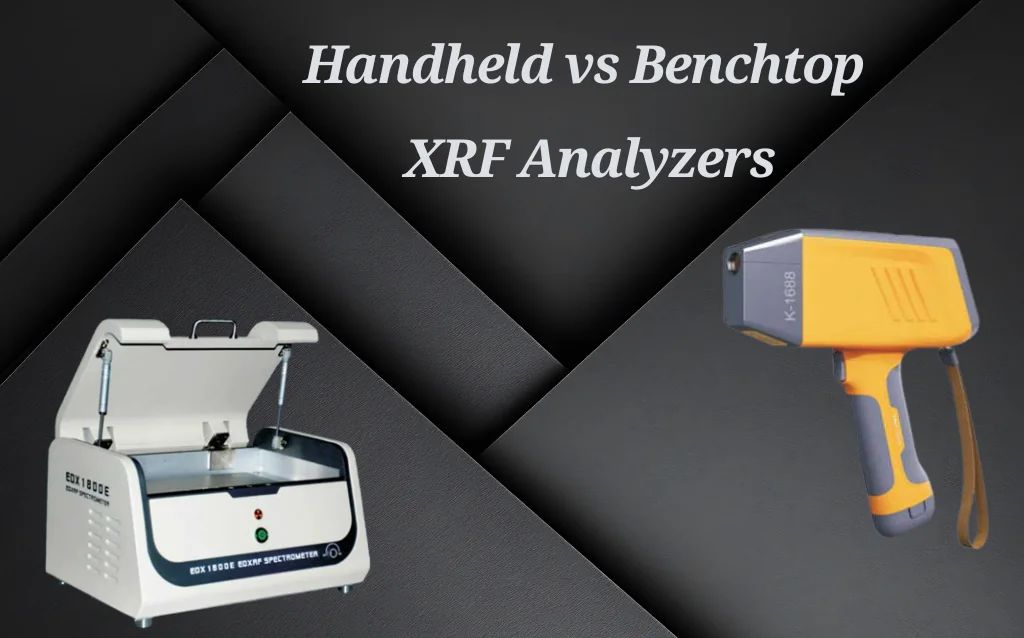 XRF Spectrometers: 2026 Model Selection Guide
Selecting the right XRF spectrometer requires matching instrument capabilities to your specific analytical...Einzelheiten
XRF Spectrometers: 2026 Model Selection Guide
Selecting the right XRF spectrometer requires matching instrument capabilities to your specific analytical...Einzelheiten -
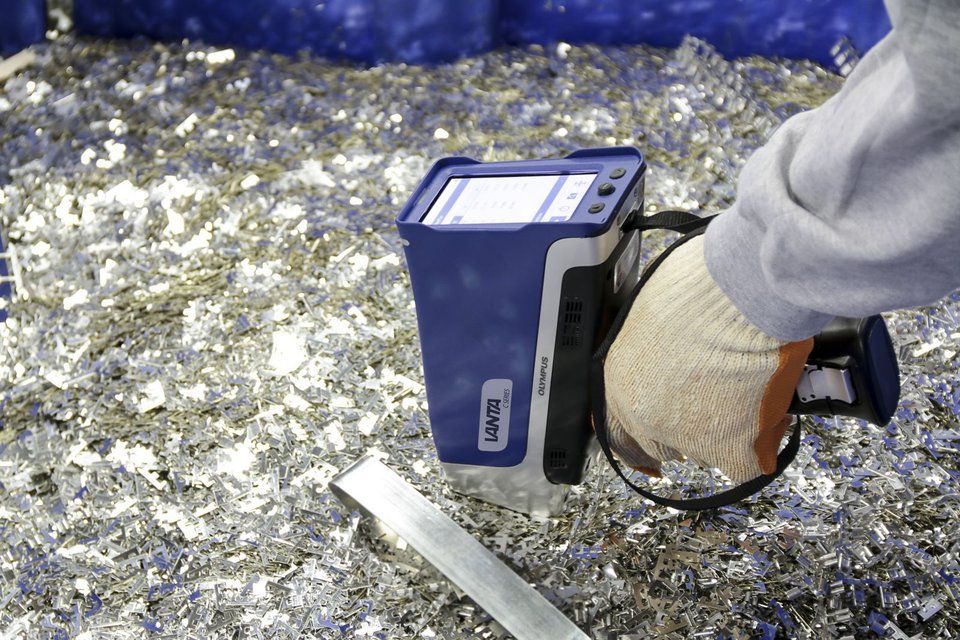 Portable XRF Spectrometer: Field Applications
Portable XRF spectrometers have transformed materials testing by bringing laboratory-quality elemental analysis...Einzelheiten
Portable XRF Spectrometer: Field Applications
Portable XRF spectrometers have transformed materials testing by bringing laboratory-quality elemental analysis...Einzelheiten -
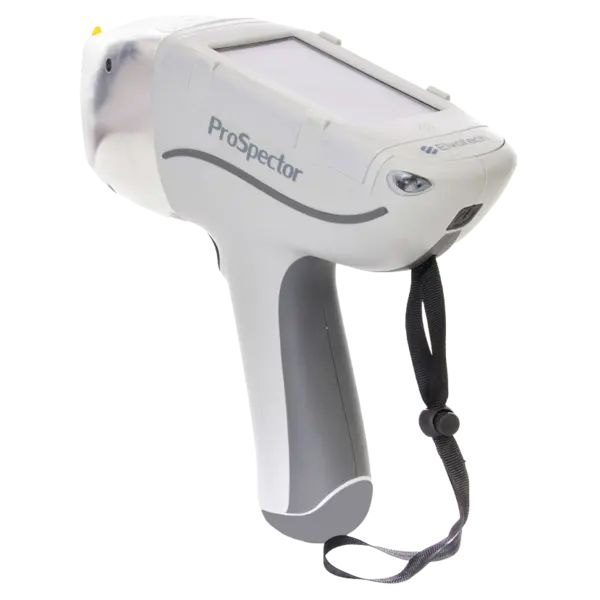 Handheld XRF Spectrometer: ProSpector 2
The ProSpector 2 handheld XRF spectrometer represents proven technology trusted by thousands of users worldwide for...Einzelheiten
Handheld XRF Spectrometer: ProSpector 2
The ProSpector 2 handheld XRF spectrometer represents proven technology trusted by thousands of users worldwide for...Einzelheiten