
WDS X-Ray Spectroscopy: High-Resolution Analysis
How WDS Spectroscopy Works
The Crystal Diffraction Principle
WDS spectroscopy separates X-rays by wavelength rather than energy, using the principle of crystal diffraction described by Bragg's Law. When characteristic X-rays emitted from a sample strike an analyzing crystal at a specific angle, only X-rays with wavelengths satisfying Bragg's equation (nλ = 2d sin θ) are reflected toward the detector. Here, λ represents the X-ray wavelength, d is the crystal lattice spacing, θ is the incident angle, and n is the diffraction order.
By precisely controlling the angle between the sample, analyzing crystal, and detector, the WDS system selects which wavelength (and therefore which element) reaches the detector at any given moment. Different crystals with varying lattice spacings cover different wavelength ranges, enabling analysis across the full spectrum from light elements like beryllium through heavy elements like uranium.
The sample, analyzing crystal, and detector must maintain precise geometric relationships defined by the Rowland circle—a focusing geometry ensuring efficient X-ray collection. As the crystal position changes to select different wavelengths, both the crystal and detector move along curved paths to maintain this optimal focusing configuration.
Sequential Element Measurement
Unlike energy-dispersive systems that detect all elements simultaneously, WDS analyzes elements sequentially. The system positions the analyzing crystal and detector to select the wavelength characteristic of the first element of interest, measures the X-ray intensity for that element, then repositions the crystal to measure the next element, and so forth.
This sequential approach requires longer total analysis times compared to simultaneous techniques, but delivers dramatically superior spectral resolution. Modern WDS systems employ multiple spectrometers (often 4-6) working in parallel, each with different analyzing crystals optimized for specific wavelength ranges, significantly reducing total analysis time while maintaining excellent resolution.
Superior Spectral Resolution
Resolution Performance
The defining characteristic of WDS spectroscopy is its exceptional spectral resolution, typically achieving 5-20 eV compared to 130-150 eV for energy-dispersive systems. This order-of-magnitude improvement enables WDS to distinguish between X-ray peaks separated by just a few electron volts—overlapping lines that appear as a single broad peak in energy-dispersive spectra resolve into distinct, well-separated peaks in WDS analysis.
This superior resolution proves critical when analyzing elements with closely spaced emission lines. Manganese Kβ (6.490 keV) and chromium Kα (5.415 keV) can interfere in energy-dispersive analysis, but WDS clearly separates them. Sulfur Kα and molybdenum Lα, lead Mα and sulfur Kα, barium Lα and titanium Kα—all these problematic overlaps resolve cleanly with WDS.
The high resolution also dramatically reduces spectral background, improving signal-to-noise ratios. Sharp, well-defined peaks rise clearly above minimal background, enhancing both detection limits and quantitative accuracy.
Trace Element Detection
Superior resolution combined with low background noise gives WDS exceptional sensitivity for trace element detection. Detection limits typically reach 10-100 ppm (parts per million) compared to 0.1-0.5% (1,000-5,000 ppm) for energy-dispersive systems—a two-order-of-magnitude improvement in sensitivity.
This enhanced sensitivity enables detection and quantification of minor and trace constituents critical to material properties but present at very low concentrations. Trace sulfur in steels affecting machinability, low-level chromium in aluminum alloys influencing corrosion resistance, or minor rare earth elements in geological samples—WDS detects these elements reliably where other techniques fail.
The ability to measure trace elements accurately supports stringent quality control in advanced manufacturing, detailed geological characterization, and materials science research requiring complete compositional information.
Applications Demanding WDS Precision
Geological and Mineralogical Analysis
WDS spectroscopy, typically integrated into electron probe microanalyzers (EPMA), serves as an essential tool in geological research and mineral exploration. The technique quantifies major, minor, and trace elements in minerals with exceptional accuracy, supporting mineral identification, petrogenesis studies, and ore characterization.
Geologists analyze microscopic mineral grains, measuring precise compositional variations across zoning patterns in crystals or determining partitioning of trace elements between coexisting minerals. This detailed information reveals formation conditions, metamorphic histories, and resource potential.
The superior light element sensitivity of WDS enables accurate measurement of oxygen, fluorine, sodium, magnesium, and aluminum—elements critical to silicate mineralogy but challenging for other analytical techniques. Vacuum or helium-atmosphere operation eliminates air absorption of low-energy X-rays from these light elements.
Metals and Alloys Quality Control
Advanced metallurgical applications require WDS precision for certifying alloy compositions to tight specifications. Aerospace alloys, nuclear materials, high-performance steels, and electronic materials demand accurate measurement of both major constituents and critical trace elements affecting properties.
WDS distinguishes similar alloy grades separated by minor compositional differences—differentiating stainless steel 304 from 304L based on carbon content proxies, or identifying specific aluminum alloy series from subtle variations in alloying elements. The technique measures restricted elements like sulfur and phosphorus in steels at parts-per-million levels, ensuring compliance with stringent specifications.
High-value specialty alloys justify WDS analysis costs through the assurance of meeting exact compositional requirements. Certification laboratories, alloy manufacturers, and quality control departments rely on WDS for producing documented analytical results with traceability to international standards.
Glass and Ceramics Manufacturing
Glass production requires precise control of major oxide compositions (SiO₂, Na₂O, CaO, Al₂O₃) plus critical minor components affecting optical properties, color, and durability. WDS provides the accuracy and light element sensitivity needed for measuring these constituents reliably, supporting formulation development and batch-to-batch quality control.
Ceramic manufacturers similarly depend on WDS for characterizing raw materials and finished products. Technical ceramics for electronics, bioceramics for medical implants, and structural ceramics for engineering applications all require verified compositions meeting exact specifications.
The excellent long-term stability and reproducibility of WDS systems make them ideal for production quality control where consistent, comparable results over months and years are essential for process control and certification.
Cement and Construction Materials
Cement production involves precise blending of limestone, clay, iron ore, and other components to achieve target chemistry for different cement types. WDS analysis measures the major oxides (CaO, SiO₂, Al₂O₃, Fe₂O₃) and minor constituents (MgO, SO₃, K₂O, Na₂O) throughout production, from raw materials through finished clinker.
The rapid turnaround (typically 5-10 minutes per sample for full oxide analysis) and high accuracy support real-time process adjustments, optimizing product quality while minimizing energy consumption and raw material waste. Cement laboratories worldwide rely on WDS as the standard analytical technique for quality assurance and regulatory compliance.
WDS vs. Energy-Dispersive Systems
Key Performance Differences
Understanding when WDS advantages justify the higher cost and complexity requires comparing performance characteristics. WDS delivers 5-20 eV resolution versus 130-150 eV for energy-dispersive systems—enabling resolution of overlapping peaks and reducing spectral interferences. Detection limits reach 10-100 ppm with WDS compared to 1,000-5,000 ppm for energy-dispersive analysis.
Energy-dispersive systems measure all elements simultaneously in seconds, while WDS requires sequential measurement taking minutes to complete multi-element analysis. However, WDS quantitative accuracy typically achieves 0.1-0.5% relative for major elements versus 1-2% for energy-dispersive methods.
Light element (F, O, Na, Mg, Al, Si) detection is superior with WDS, particularly under vacuum or helium atmosphere. Energy-dispersive systems struggle with elements below sodium, while WDS reliably measures down to beryllium with appropriate configuration.
Choosing the Right Technique
Energy-dispersive XRF excels for rapid screening, field analysis with portable instruments, and applications where speed outweighs ultimate accuracy. The lower cost, simpler operation, and simultaneous multi-element capability make it suitable for many industrial and environmental applications.
WDS becomes essential when analytical requirements demand superior resolution, trace element sensitivity, or highest quantitative accuracy. Applications involving complex matrices with potential spectral overlaps, light element measurement, or certification to stringent specifications justify WDS investment.
Many analytical laboratories maintain both capabilities, using energy-dispersive systems for routine screening and high-volume testing, then applying WDS for challenging samples, referee analysis, and applications requiring documented high-accuracy results.
Instrumentation and Operation
Analyzing Crystal Selection
WDS systems employ multiple analyzing crystals with different lattice spacings optimized for specific wavelength ranges. Lithium fluoride (LiF) crystals provide excellent resolution for shorter wavelengths (heavier elements like iron, copper, zinc). Pentaerythritol (PET) and thallium acid phthalate (TAP) crystals cover intermediate ranges. Layered synthetic microstructures (LSM) and specialized crystals extend coverage to longer wavelengths for light elements.
Each spectrometer contains a crystal carousel or changer allowing automated selection of the optimal crystal for each element measured. This flexibility enables analysis across the full elemental range from beryllium through uranium within a single instrument configuration.
Sample Preparation Requirements
WDS analysis demands careful sample preparation to achieve optimal results. Samples must present flat, polished surfaces to maintain the precise Rowland circle geometry—surface irregularities exceeding about 10 micrometers degrade focusing and reduce measured intensities.
For solid samples, metallographic polishing produces the required surface quality. Powdered materials are typically pressed into pellets or fused into glass discs using flux, creating homogeneous, flat samples suitable for analysis. Liquid samples can be analyzed in specialized cells with thin windows.
The preparation requirements represent additional effort compared to energy-dispersive systems that tolerate rougher surfaces, but the investment in proper sample preparation ensures WDS delivers its full analytical potential.
Best Practices for WDS Analysis
Optimize WDS performance through proper calibration using certified reference materials closely matching sample compositions. Matrix-matched standards minimize errors from matrix effect corrections, supporting highest quantitative accuracy.
Select appropriate analyzing crystals and measurement conditions for each element. Longer counting times improve counting statistics for trace elements, while major constituents require shorter measurements. Balance total analysis time against required precision.
Maintain vacuum systems or helium purging for light element analysis. Even small air leaks dramatically degrade performance for elements below sodium by absorbing their low-energy X-rays before reaching the detector.
Regular instrument maintenance including crystal cleaning, detector calibration, and alignment verification ensures consistent long-term performance. WDS systems deliver exceptional stability when properly maintained, supporting comparative measurements over months and years.
Conclusion
WDS X-ray spectroscopy represents the premium analytical approach for applications demanding ultimate spectral resolution, trace element sensitivity, and quantitative accuracy. The technique's ability to resolve overlapping spectral lines, detect elements at parts-per-million levels, and deliver certified analytical results with exceptional precision makes it indispensable in advanced materials characterization, geological analysis, and quality control for critical applications.
While WDS requires higher capital investment, longer analysis times, and more careful sample preparation compared to energy-dispersive alternatives, the superior analytical performance justifies these requirements when applications demand the best possible data quality. The technique's excellent long-term stability and reproducibility provide particular value in production quality control environments requiring consistent results over extended periods.
As materials become more complex and specifications more stringent, WDS spectroscopy continues serving as the analytical gold standard—delivering the high-resolution elemental analysis that supports advanced manufacturing, scientific research, and quality assurance across industries where precision matters most.
Related posts
-
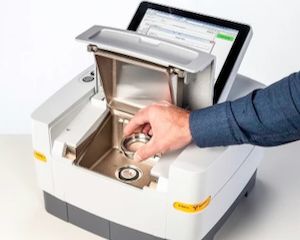 XRF Spectroscopy: X-Ray Fluorescence Principles
X-ray fluorescence (XRF) spectroscopy stands as one of the most powerful analytical techniques for determining...Einzelheiten
XRF Spectroscopy: X-Ray Fluorescence Principles
X-ray fluorescence (XRF) spectroscopy stands as one of the most powerful analytical techniques for determining...Einzelheiten -
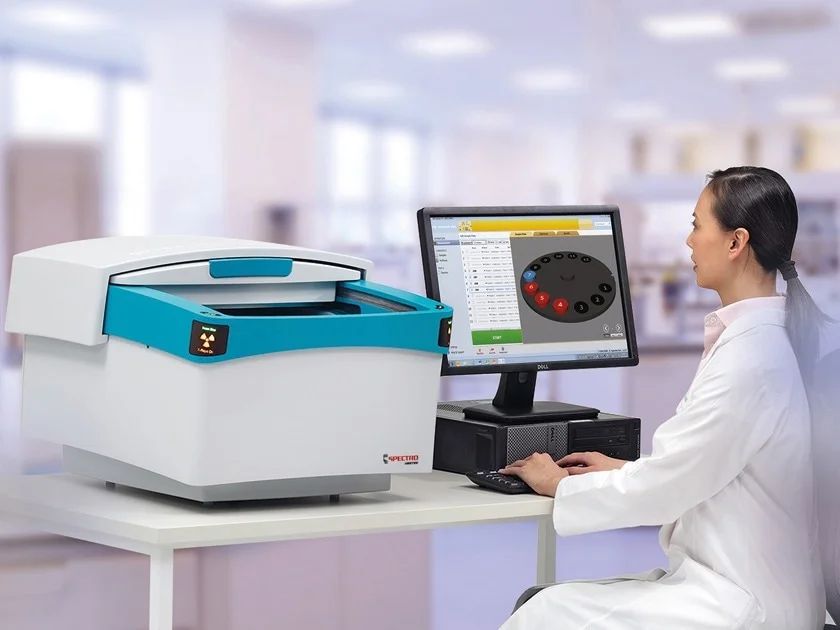 XRF Spectroscopy Equipment & Instrumentation
XRF spectroscopy equipment transforms the principles of X-ray fluorescence into practical analytical tools capable...Einzelheiten
XRF Spectroscopy Equipment & Instrumentation
XRF spectroscopy equipment transforms the principles of X-ray fluorescence into practical analytical tools capable...Einzelheiten -
 XRF Spectrometer: Professional Fluorescence Analyzer
Professional XRF spectrometers represent the pinnacle of non-destructive elemental analysis technology, combining...Einzelheiten
XRF Spectrometer: Professional Fluorescence Analyzer
Professional XRF spectrometers represent the pinnacle of non-destructive elemental analysis technology, combining...Einzelheiten -
 Environmental Monitoring
ElvaX ProSpector is a fast, precise, and user-friendly handheld XRF analyzer designed for non-destructive...Einzelheiten
Environmental Monitoring
ElvaX ProSpector is a fast, precise, and user-friendly handheld XRF analyzer designed for non-destructive...Einzelheiten