
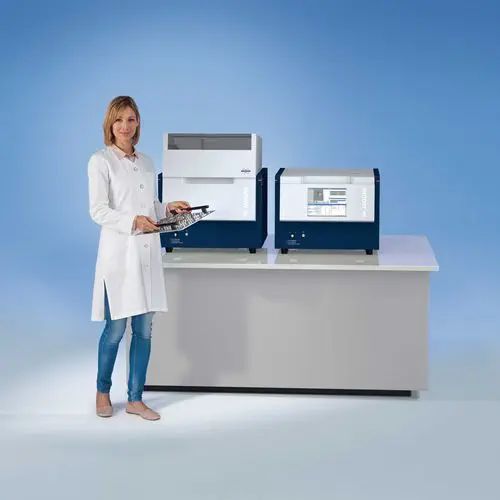
XRF Spectrometer: Professional Fluorescence Analyzer
Defining Professional-Grade XRF Spectrometers
Professional XRF spectrometers differ fundamentally from entry-level instruments through superior hardware components, advanced analytical capabilities, and comprehensive software features designed for demanding applications. These systems incorporate high-power X-ray sources (typically 50-4,000 watts), state-of-the-art silicon drift detectors with exceptional energy resolution (125-135 eV), and precision sample handling systems that ensure reproducible measurements.
The distinction extends beyond raw specifications to encompass analytical flexibility, calibration sophistication, regulatory compliance capabilities, and long-term stability. Professional spectrometers support diverse sample types—solids, powders, liquids, thin films—across concentration ranges spanning major constituents down to trace elements at parts-per-million levels. This versatility enables a single instrument to serve multiple applications and analytical requirements.
Advanced features include automated sample changers accommodating 8-40 samples for unattended operation, multiple measurement positions for different sample geometries, vacuum or helium atmosphere operation extending light element capabilities, and comprehensive quality control tools supporting ISO, ASTM, and other international standards. Professional systems deliver not just analytical results, but complete analytical solutions backed by robust quality systems and full documentation traceability.
Core Capabilities of Professional XRF Analyzers
Wide Elemental Range and Sensitivity
Professional XRF spectrometers analyze elements from sodium (atomic number 11) through uranium (92), with helium purging or vacuum operation extending capabilities down to fluorine (9) or even lighter elements. This comprehensive elemental coverage enables complete characterization of complex materials containing both light and heavy elements.
Detection limits vary by element and matrix but typically reach 1-10 ppm for most elements under optimal conditions, with some systems achieving sub-ppm sensitivity for favorable element-matrix combinations. This trace element capability supports applications requiring detection of minor constituents, contaminants, or restricted substances at regulatory threshold levels.
The wide dynamic range—spanning ppm-level traces through 100% pure elements—allows simultaneous quantification of major, minor, and trace constituents from a single measurement. Advanced detector systems with high count rate capacity (exceeding 1,500,000 counts per second) maintain excellent resolution even at maximum throughput, ensuring accurate results across the full concentration range.
Multi-Application Versatility
Professional spectrometers accommodate diverse sample forms and analytical requirements through configurable hardware and extensive calibration libraries. Solid samples ranging from millimeters to centimeters in diameter, pressed powder pellets, fusion beads, liquids in specialized cells, thin films, and coatings—all undergo analysis with appropriate sample preparation and methodology.
Pre-configured application packages provide ready-to-use calibrations for common analytical tasks: metal alloys, geological materials, cement and building materials, petroleum products, polymers and plastics, environmental samples, and pharmaceutical materials. These factory-calibrated applications enable immediate productive use while allowing customization for specific requirements.
The ability to develop custom calibrations for specialized materials or unique requirements extends analytical capabilities beyond standard applications. Professional systems include comprehensive calibration development tools, supporting empirical standards-based approaches and theoretical fundamental parameters methods.
Speed and Throughput Optimization
Professional XRF spectrometers balance analytical quality with operational efficiency, delivering complete multi-element analysis in timeframes ranging from 30 seconds to 5 minutes depending on required precision and element list. High-power X-ray sources and efficient detector systems maximize fluorescent signal collection, reducing analysis times while maintaining excellent counting statistics.
Automated sample changers transform single-sample instruments into high-throughput systems capable of processing 100+ samples per shift with minimal operator intervention. The spectrometer automatically loads samples, executes pre-programmed measurement sequences, performs quality control checks, calculates results, and generates reports—enabling overnight or weekend operation that multiplies effective laboratory capacity.
Sample spinner/rotator accessories improve measurement representativeness for heterogeneous materials like pressed powder pellets or mineral samples, averaging compositional variations through continuous rotation during analysis. This feature enhances precision and accuracy for challenging samples without requiring longer measurement times.
Advanced Software and Data Management
Sophisticated Analytical Algorithms
Professional XRF software employs advanced quantitative methods including empirical influence coefficient corrections and fundamental parameters (FP) calculations to achieve accurate results across diverse matrices. The FP approach models X-ray physics theoretically, automatically correcting for matrix effects—absorption and enhancement phenomena where one element's presence affects measured intensities of others.
This theoretical modeling enables analysis of samples without matrix-matched calibration standards, greatly expanding analytical flexibility. When standards are available, hybrid approaches combining empirical calibration with FP refinements optimize accuracy by leveraging both measured reference data and theoretical corrections.
Spectral deconvolution algorithms resolve overlapping peaks that would confuse simpler systems, separating closely-spaced emission lines through mathematical fitting. This capability enables accurate quantification even in complex multi-element matrices where spectral interferences challenge direct measurement.
Quality Control and Compliance Features
Professional spectrometers incorporate comprehensive quality control tools supporting regulated industries and accredited laboratories. Automated drift monitoring tracks instrument performance over time using control samples, alerting operators to calibration shifts before they affect results. Statistical process control (SPC) charts visualize trends and variations, supporting continuous quality improvement.
User access management with multi-level permissions controls who can operate the instrument, modify calibrations, or approve results—essential for maintaining data integrity in quality systems. Audit trails automatically log all actions, creating complete documentation of measurements, calibrations, and system changes required for ISO 17025 laboratory accreditation and regulatory compliance.
Built-in compliance checking compares results against specifications, automatically flagging out-of-specification materials with pass/fail indicators. This real-time verification prevents incorrect materials from advancing in production workflows or enables immediate corrective actions when deviations occur.
Data Integration and Connectivity
Modern professional XRF spectrometers function as networked analytical platforms rather than standalone instruments. Ethernet connectivity enables integration with Laboratory Information Management Systems (LIMS), automatically transferring results to databases and quality management systems without manual data entry.
Cloud connectivity supports remote monitoring, enabling laboratory managers to track instrument utilization, review results, and assess system health from anywhere. Data backup to secure cloud storage protects valuable analytical results and calibrations against local hardware failures.
Export capabilities in multiple formats (CSV, Excel, XML, PDF) support data sharing with customers, incorporation into reports, or statistical analysis using external software. Some systems offer Application Programming Interfaces (APIs) enabling custom integration with enterprise resource planning (ERP) systems or specialized analytical workflows.
Key Applications for Professional Spectrometers
Quality Control in Manufacturing
Manufacturing industries including metals, glass, ceramics, cement, and electronics rely on professional XRF spectrometers for ensuring product quality and consistency. These systems verify raw material compositions before production, monitor in-process chemistry during manufacturing, and certify finished products meet specifications before shipping.
The combination of accuracy, speed, and automated operation makes professional XRF ideal for high-volume production environments where quality verification must keep pace with manufacturing throughput. Results linked to batch numbers and production records provide complete traceability supporting quality management systems and customer certification requirements.
Regulatory Compliance Testing
Professional XRF analyzers support compliance with environmental regulations (RoHS, WEEE, REACH) restricting hazardous substances in consumer products and electronics. The systems detect and quantify restricted elements like lead, cadmium, mercury, and chromium at regulatory threshold levels, providing documented evidence of compliance.
Pharmaceutical, food, and consumer product industries use professional spectrometers to verify that materials and finished products meet safety standards for heavy metal contaminants. The non-destructive nature permits 100% inspection without product waste, while comprehensive documentation supports regulatory submissions and audits.
Research and Development
Research laboratories in academia, government, and industry employ professional XRF spectrometers for materials characterization supporting new product development, process optimization, and fundamental research. The analytical versatility, accuracy, and ability to develop custom calibrations for novel materials make these systems invaluable research tools.
Archaeologists, conservation scientists, and forensic laboratories use professional XRF to characterize historical artifacts, artworks, and evidentiary materials non-destructively. The ability to analyze irreplaceable items without sampling or alteration makes XRF uniquely suited to these applications.
Selecting a Professional XRF Spectrometer
Choosing the right professional XRF spectrometer requires careful assessment of analytical requirements, sample types, throughput needs, and budget constraints. Consider the primary applications and elements of interest—light element capability may justify vacuum or helium purging systems, while trace element requirements influence detector and source power selections.
Evaluate whether energy-dispersive (EDXRF) speed and flexibility or wavelength-dispersive (WDXRF) superior resolution and sensitivity better match your needs. Many professional systems combine both technologies, offering optimal performance across diverse applications.
Assess software capabilities, calibration options, and manufacturer support. Professional spectrometers represent long-term investments—systems often provide 15-20 years of service with proper maintenance. Select manufacturers offering comprehensive training, application support, calibration services, and upgrade pathways ensuring your investment remains current as analytical needs evolve.
Conclusion
Professional XRF spectrometers represent sophisticated analytical platforms delivering laboratory-grade elemental analysis with the speed, versatility, and reliability demanded by modern quality control, research, and regulatory compliance applications. These advanced fluorescence analyzers combine powerful hardware—high-performance X-ray sources, state-of-the-art detectors, precision sample handling—with comprehensive software supporting diverse analytical methods, quality management, and data integration.
The investment in professional XRF instrumentation returns value through accurate analytical results that prevent quality failures, ensure regulatory compliance, accelerate research and development, and support operational excellence. Whether analyzing hundreds of routine samples daily or characterizing complex research materials, professional XRF spectrometers deliver the analytical capabilities that drive informed decision-making across industries.
As analytical requirements become more stringent and operational demands increase, professional XRF spectrometers stand ready as proven solutions combining time-tested X-ray fluorescence principles with cutting-edge technology. From metals manufacturing to pharmaceutical quality control, from geological research to environmental monitoring, these versatile analyzers provide the elemental analysis foundation supporting quality, compliance, and innovation in the modern analytical laboratory.
Related posts
-
 XRF Spectroscopy: X-Ray Fluorescence Principles
X-ray fluorescence (XRF) spectroscopy stands as one of the most powerful analytical techniques for determining...Einzelheiten
XRF Spectroscopy: X-Ray Fluorescence Principles
X-ray fluorescence (XRF) spectroscopy stands as one of the most powerful analytical techniques for determining...Einzelheiten -
 WDS X-Ray Spectroscopy: High-Resolution Analysis
Wavelength-dispersive X-ray spectroscopy (WDS or WDXRF) represents the pinnacle of precision in elemental analysis,...Einzelheiten
WDS X-Ray Spectroscopy: High-Resolution Analysis
Wavelength-dispersive X-ray spectroscopy (WDS or WDXRF) represents the pinnacle of precision in elemental analysis,...Einzelheiten -
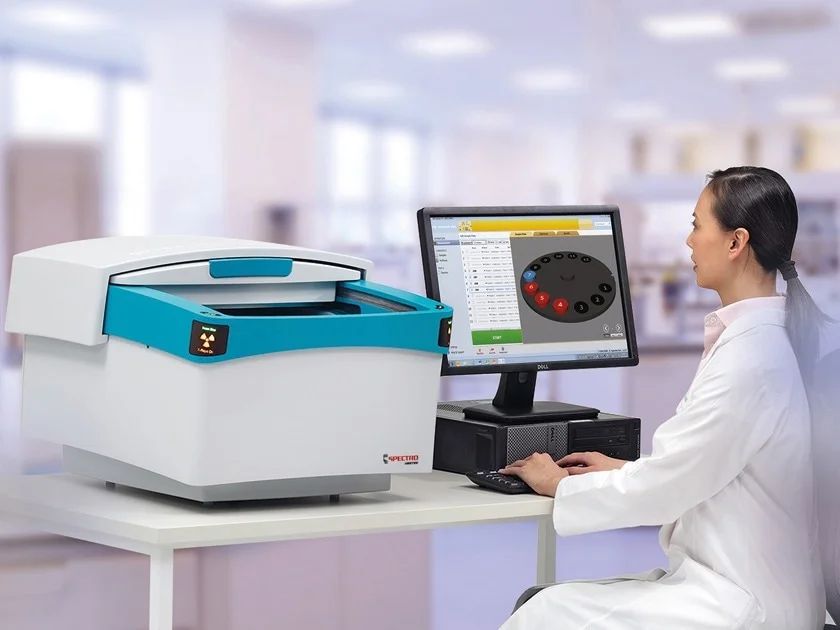 XRF Spectroscopy Equipment & Instrumentation
XRF spectroscopy equipment transforms the principles of X-ray fluorescence into practical analytical tools capable...Einzelheiten
XRF Spectroscopy Equipment & Instrumentation
XRF spectroscopy equipment transforms the principles of X-ray fluorescence into practical analytical tools capable...Einzelheiten -
 Environmental Monitoring
ElvaX ProSpector is a fast, precise, and user-friendly handheld XRF analyzer designed for non-destructive...Einzelheiten
Environmental Monitoring
ElvaX ProSpector is a fast, precise, and user-friendly handheld XRF analyzer designed for non-destructive...Einzelheiten