
XRF Scanner: Chemical Composition Metal Detection
Understanding Chemical Composition Detection
Chemical composition describes the elemental makeup of materials—which elements are present and in what quantities. For metals, composition determines classification into alloy families, defines mechanical and physical properties, and dictates suitable applications. Stainless steel's corrosion resistance comes from chromium content. Aluminum alloy strength derives from precise ratios of magnesium, silicon, copper, and zinc. Titanium aerospace performance requires controlled aluminum and vanadium additions.
Traditional compositional analysis consumed hours or days through wet chemistry—dissolving samples, performing chemical separations, and measuring concentrations through lengthy instrumental procedures. Each element required separate determinations. The process destroyed samples, created bottlenecks, and delayed critical decisions waiting for laboratory results.
XRF scanners transform compositional analysis into instant, non-destructive field detection. Point the scanner at any metal surface, pull the trigger, and receive complete multi-element chemical composition in 2-30 seconds. The technology detects elements from magnesium (atomic number 12) through uranium (92)—covering virtually every commercially significant element in a single rapid measurement.
The speed and convenience enable applications impossible with traditional analysis. Test thousands of samples in hours rather than dozens in weeks. Verify materials on-site without sample transport. Analyze finished products and installed equipment non-destructively. Make immediate decisions based on real-time compositional data.
XRF Chemical Detection Technology
X-Ray Fluorescence Physics
XRF scanners detect chemical composition through characteristic X-ray emission unique to each element. High-energy primary X-rays from the scanner strike metal samples, displacing inner-shell electrons from atoms. This creates temporarily unstable atomic configurations. As outer electrons cascade down filling inner vacancies, they release energy as fluorescent X-rays at element-specific energies.
Iron atoms always fluoresce at 6.40 keV. Chromium produces 5.41 keV emission. Nickel fluoresces at 7.48 keV. Molybdenum emits at 17.48 keV. These characteristic energies create elemental fingerprints—detecting fluorescent X-ray energy positively identifies which element produced it. No other technique or ambiguity exists—energy uniquely determines element.
Fluorescence intensity correlates directly with element concentration. More atoms produce stronger signals. Trace quantities generate weak but detectable emissions. By measuring both fluorescent energies (identifying elements) and intensities (quantifying concentrations), XRF scanners create complete chemical composition profiles from single measurements.
Advanced Detector Technology
Silicon drift detectors in modern XRF scanners convert fluorescent X-rays into electrical signals proportional to photon energies. These sophisticated sensors achieve energy resolution around 125-145 eV—performance enabling clear distinction between closely-spaced elemental peaks in complex alloy spectra containing dozens of elements simultaneously.
Count rate capabilities exceeding 100,000-500,000 photons per second enable rapid compositional data accumulation. Higher throughput collects statistically reliable measurements faster, supporting the seconds-scale analysis speeds that make field chemical detection practical. Continuous detector technology improvements promise even faster, more sensitive compositional analysis in future XRF generations.
Digital signal processors convert detector outputs into energy spectra displaying fluorescent intensity versus photon energy. Sophisticated algorithms identify spectral peaks, match energies to elemental fingerprints from databases, calculate concentrations through calibration models, and compare results against alloy composition libraries containing thousands of specifications. The complete workflow from X-ray emission through compositional determination happens in real-time during measurement.
Elements Detected in Metal Composition
Major Alloying Elements
XRF scanners excel at detecting and quantifying major alloying elements that define metal classifications. In stainless steels, chromium (typically 10-30%) provides corrosion resistance, nickel (0-35%) stabilizes austenitic structure, and molybdenum (0-8%) enhances pitting resistance. Iron forms the base matrix. Manganese, copper, silicon, and other additions modify properties.
Aluminum alloys contain magnesium, silicon, copper, manganese, zinc, and chromium in carefully controlled ratios differentiating wrought series and cast compositions. Titanium alloys incorporate aluminum and vanadium defining aerospace grades. Copper alloys combine zinc (brass), tin (bronze), nickel (cupronickel), and specialty elements creating diverse compositions.
XRF chemical detection measures these major constituents with precision typically better than 0.3% relative, sufficient for alloy identification, specification verification, and quality control applications across metal industries.
Minor and Trace Elements
Beyond major constituents, XRF scanners detect minor alloying additions and trace elements affecting material properties and processability. Titanium and niobium additions at tenths-percent levels stabilize stainless steels preventing intergranular corrosion. Vanadium, molybdenum, and tungsten strengthen tool steels. Rare earth elements modify aluminum casting characteristics.
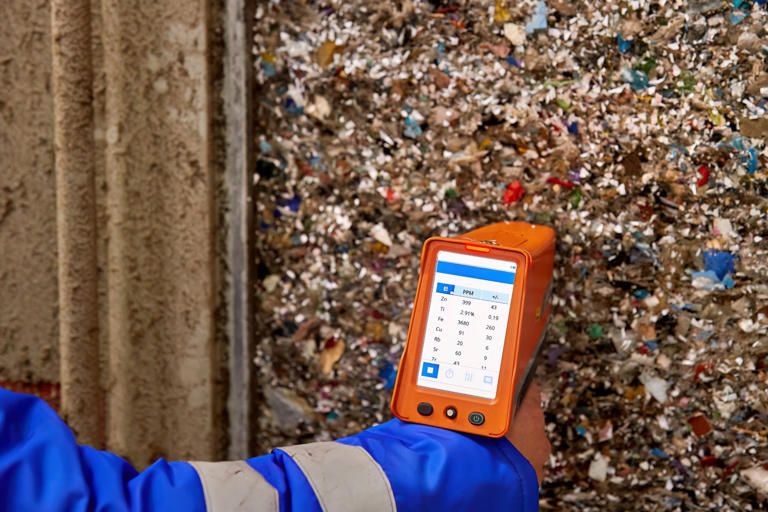
Trace element detection supports contamination screening and regulatory compliance. Lead, cadmium, mercury, and chromium in restricted substance regulations require reliable detection at parts-per-million levels. XRF scanners achieve detection limits enabling compliance verification for RoHS, REACH, and similar regulations restricting hazardous substances in consumer products, electronics, and manufactured goods.
The multi-element simultaneity delivers complete compositional profiles in single measurements. Where traditional analysis requires separate determinations for each element—multiplying time and cost proportionally—XRF detection reveals 20-40 elements from one scan in seconds.
Critical Chemical Detection Applications
Alloy Grade Identification and Verification
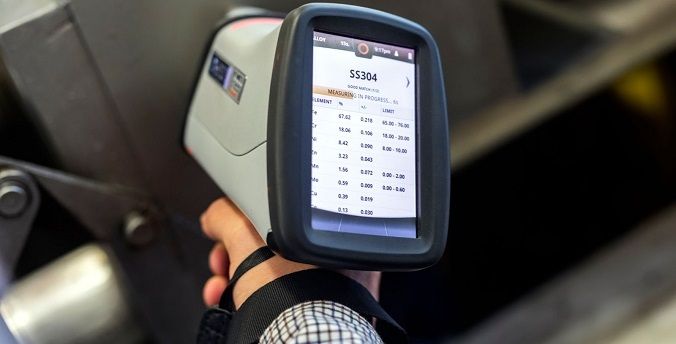
Manufacturing quality control employs XRF scanners for rapid alloy grade verification ensuring received materials match purchase specifications before entering production. The chemical composition detection identifies specific grades—304 versus 316 stainless, 6061 versus 7075 aluminum, Grade 5 versus Grade 2 titanium—preventing costly material mix-ups that cause product failures or performance deficiencies.
Built-in alloy libraries containing thousands of international specifications compare measured compositions against tabulated grade limits, automatically identifying matching grades and flagging out-of-specification materials. The instant grade identification typically completes within 2-5 seconds, enabling 100% incoming inspection rather than statistical sampling that accepts some risk of errors.
Scrap Metal Chemical Analysis
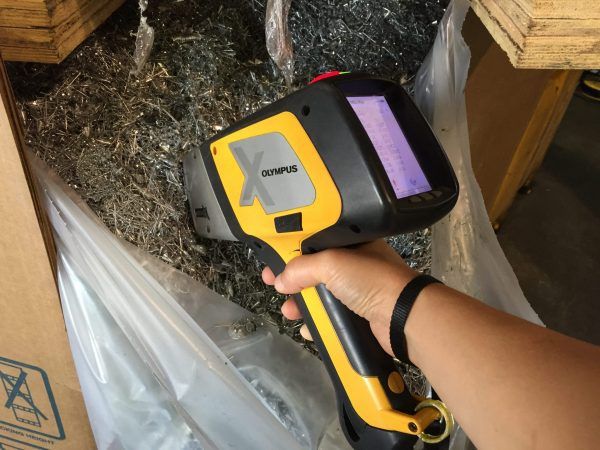
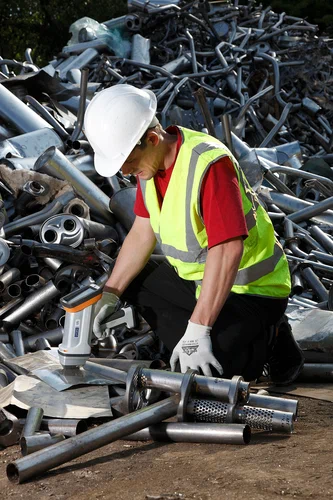
Scrap recycling profitability depends on accurate compositional segregation. XRF scanners enable rapid chemical detection of mixed scrap, classifying materials into compositionally homogeneous lots commanding premium prices. Stainless steel grades, aluminum series, copper alloy families, and specialty metals each represent distinct value categories invisible to visual inspection but revealed instantly through XRF composition analysis.
The seconds-scale detection enables sorting 500-1000 pieces per shift—throughput impossible with laboratory analysis. Chemical composition determines material value directly—316 stainless (with 2-3% molybdenum) commands higher prices than 304 (no molybdenum). Accurate XRF detection maximizes recycling revenues through precise compositional classification.
Positive Material Identification
Critical infrastructure construction implements comprehensive PMI programs verifying that installed piping, vessels, valves, and components match engineering specifications through chemical composition detection. XRF scanners test materials in place non-destructively, preventing installations of wrong alloys that could cause equipment failures, safety incidents, or corrosion problems in petrochemical facilities, power plants, and industrial complexes.
The portable detection capability enables testing elevated piping runs, assembled vessels, and welded structures without disassembly. Inspectors verify thousands of components during construction or maintenance turnarounds with immediate chemical composition confirmation supporting acceptance decisions and creating complete quality documentation.
Precious Metal Analysis
Jewelry, refining, and precious metal industries use XRF scanners for instant purity determination through chemical composition detection. Gold karat verification, silver fineness assessment, platinum group metal analysis, and gemstone metal identification all benefit from rapid non-destructive XRF detection. The technology analyzes finished jewelry, raw materials, and electronic scrap for precious metal recovery without damaging valuable items.
Advantages of XRF Chemical Detection
Non-Destructive Analysis
XRF scanning requires no sample removal, cutting, or destructive preparation. X-rays penetrate surfaces, excite characteristic fluorescence, and exit without altering materials. Test expensive aerospace components, finished products, installed equipment, or irreplaceable artifacts repeatedly without damage. The preservation proves essential where destructive sampling would compromise functionality, appearance, or value.
Rapid Results
Chemical composition results appear in 2-30 seconds depending on required precision and element list. Grade identification completes in 2-5 seconds. Comprehensive quantitative analysis finishes in 10-30 seconds. Extended trace element detection may require up to 60 seconds. Even "slow" XRF measurements deliver results hundreds of times faster than traditional laboratory techniques consuming hours or days per sample.
The speed transforms feasible testing economics and volumes. Laboratory analysis costing hundreds per sample becomes impractical for routine verification. XRF detection costing pennies per measurement enables comprehensive testing—transitioning from statistical sampling to 100% inspection dramatically improving quality assurance effectiveness.
Field Portability
Handheld XRF scanners weigh 1-2 kilograms, operate 8-16 hours on rechargeable batteries, withstand harsh environments through IP54-IP67 protection, and function across temperature ranges from -20°C to +50°C. This rugged portability brings laboratory-quality chemical detection to scrap yards, construction sites, manufacturing floors, mines, and anywhere metals require testing—eliminating sample transport delays and multi-day laboratory turnaround completely.
Multi-Element Simultaneity
Single XRF measurements detect and quantify 20-40 elements simultaneously—iron, chromium, nickel, molybdenum, manganese, copper, titanium, aluminum, zinc, and dozens of others from one scan. Techniques requiring sequential single-element determinations multiply analysis time proportionally with element count. XRF delivers complete chemical composition profiles in time traditional methods need for one or two elements.
Selecting XRF Chemical Detection Capability
Match scanner capabilities to compositional detection requirements. Applications prioritizing ferrous and non-ferrous alloys function well with standard magnesium-to-uranium elemental range. Light element detection (aluminum, magnesium, silicon in aluminum alloys) may require advanced detectors with helium purge or vacuum operation minimizing atmospheric absorption of low-energy X-rays.
Detection limits matter for trace element analysis and contamination screening. Standard handheld scanners achieve 10-100 ppm detection for most elements—sufficient for alloy analysis and many regulatory applications. Ultra-trace detection to parts-per-million or parts-per-billion levels may require benchtop systems with more powerful sources and specialized conditions.
Analysis speed requirements guide selection between models. Scrap sorting prioritizes fastest detection—1-2 second grade identification. Certification applications justify extended measurements accumulating better statistics. Balance speed needs against precision requirements and budget constraints.
Conclusion
XRF scanners revolutionize chemical composition metal detection by transforming laboratory procedures into instant field analysis through non-destructive X-ray fluorescence technology. The characteristic elemental emissions enable positive identification and accurate quantification of 20-40 elements simultaneously in seconds—delivering complete compositional profiles impossible to obtain quickly through traditional analytical methods.
From manufacturing quality control verifying alloy specifications, through scrap recycling maximizing material values via precise compositional segregation, to critical infrastructure PMI ensuring installed materials meet engineering requirements, XRF chemical detection provides the immediate data modern metal industries demand for confident decisions, regulatory compliance, and operational excellence.
The combination of non-destructive preservation, seconds-scale analysis speed, multi-element simultaneity, and rugged field portability creates unprecedented capability for compositional verification and quality assurance. For organizations requiring reliable chemical composition detection, instant alloy identification, and field-deployable analytical capability, XRF scanner technology delivers proven solutions supporting material quality, process control, and competitive success across metal industries worldwide.
Related posts
-
 Portable XRF: Handheld Metallurgy Analyzer
Metallurgical testing has evolved from laboratory-bound procedures to instant field analysis through portable XRF...Einzelheiten
Portable XRF: Handheld Metallurgy Analyzer
Metallurgical testing has evolved from laboratory-bound procedures to instant field analysis through portable XRF...Einzelheiten -
 XRF Gun: ElvaX Alloy Analysis Pistol Scanner
The XRF gun revolutionizes metal analysis by putting laboratory-quality alloy identification directly in your hand....Einzelheiten
XRF Gun: ElvaX Alloy Analysis Pistol Scanner
The XRF gun revolutionizes metal analysis by putting laboratory-quality alloy identification directly in your hand....Einzelheiten -
 XRF Fluorescence Gun: Portable Metal Scanner
The XRF fluorescence gun transforms metal identification from laboratory procedure to instant field scanning...Einzelheiten
XRF Fluorescence Gun: Portable Metal Scanner
The XRF fluorescence gun transforms metal identification from laboratory procedure to instant field scanning...Einzelheiten -
 XRF Machine: ProSpector Element Analysis Device
Element analysis drives quality control across industries where material composition determines performance,...Einzelheiten
XRF Machine: ProSpector Element Analysis Device
Element analysis drives quality control across industries where material composition determines performance,...Einzelheiten -
 Handheld XRF: Mobile Fluorescence Analyzer
Mobility transforms analytical capability from laboratory limitation to field advantage. Handheld XRF mobile...Einzelheiten
Handheld XRF: Mobile Fluorescence Analyzer
Mobility transforms analytical capability from laboratory limitation to field advantage. Handheld XRF mobile...Einzelheiten