
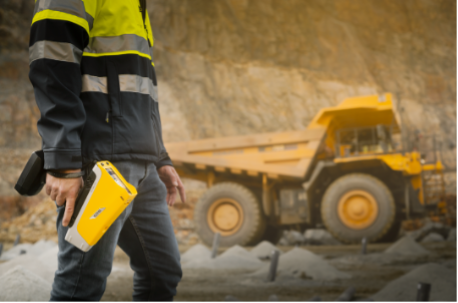
Portable XRF Spectrometer: Mining Applications
XRF Technology Transforming Mining Operations
Portable XRF spectrometers employ X-ray fluorescence spectroscopy detecting and quantifying elements from magnesium through uranium in geological materials. High-energy X-rays excite atoms in rock samples, causing characteristic fluorescent emission at element-specific energies. Advanced detectors capture these emissions, creating spectral signatures identifying present elements and their concentrations within seconds.
The mining-critical capability lies in multi-element simultaneity—single measurements detect 20-40 elements including major ore constituents, pathfinder elements indicating mineralization, and deleterious components affecting ore value. Copper, zinc, lead, nickel, gold, silver, iron, sulfur, and dozens of other elements reveal themselves from one rapid scan. This comprehensive analysis guides exploration targeting, resource delineation, and extraction optimization throughout mining lifecycles.
The field portability proves transformative. Analyzers weighing 1-2 kilograms operate 8-16 hours on rechargeable batteries, withstand harsh mining environments through IP54-IP67 protection, and function across temperature extremes from arctic to desert conditions. This rugged mobility brings laboratory capabilities to remote exploration camps, active mine faces, and field locations where traditional laboratory analysis creates insurmountable logistical challenges and time delays.
Exploration and Discovery
Rapid Geochemical Mapping
Exploration programs employ portable XRF for comprehensive geochemical mapping across prospective terrains. Field geologists scan rock outcrops, soil samples, and stream sediments generating immediate elemental data revealing mineralization patterns, alteration zones, and geochemical anomalies indicating subsurface deposits. The real-time analysis enables tactical exploration adjustments during field campaigns—identifying promising areas for detailed investigation while eliminating barren ground from consideration.
The speed transforms survey efficiency. Traditional exploration collecting samples for laboratory analysis generates results weeks or months after fieldwork completes—too late for tactical adjustments optimizing exploration effectiveness. Portable XRF delivers results during surveys, enabling same-day decisions about where to focus effort, where to extend coverage, and where anomalies warrant immediate follow-up sampling or drilling.
Built-in GPS integration automatically tags analytical results with geographic coordinates. The spatial data links geochemistry to locations, supporting geochemical mapping software generating contour plots, 3D visualizations, and statistical analyses identifying exploration targets. The comprehensive spatial geochemistry guides drill targeting, reducing expensive drilling on low-potential areas while concentrating resources on highest-probability locations.
Drill Core Logging and Analysis
Drill programs integrate portable XRF for immediate core analysis guiding drilling decisions in real-time. Core loggers scan freshly-split drill core at field camps or core shacks, generating down-hole geochemical profiles revealing mineralized intersections, alteration patterns, and lithological boundaries. The immediate feedback enables tactical drilling adjustments—extending holes intercepting mineralization, abandoning holes encountering unfavorable geology, or adjusting subsequent hole positions based on observed trends.
The core analysis identifies elements indicating specific mineral assemblages. Elevated copper, molybdenum, and gold suggest porphyry mineralization. Nickel, chromium, and platinum group elements indicate ultramafic-hosted deposits. Lead, zinc, and silver characterize volcanogenic massive sulfides. The multi-element patterns provide diagnostic fingerprints guiding geological interpretation and targeting strategies.
Portable XRF enables comprehensive core coverage—scanning entire core length at regular intervals creates complete geochemical profiles impossible through selective laboratory sampling constrained by cost. The detailed profiles reveal subtle variations, alteration halos, and mineralization extents supporting accurate resource modeling and geological understanding.
Resource Definition and Grade Control
Ore Body Delineation
Resource definition drilling employs portable XRF for rapid grade determination supporting resource modeling. The handheld analysis generates high-density geochemical data defining ore body geometry, grade distributions, and mineralization continuity. Immediate results enable adaptive drilling strategies—infill drilling areas requiring additional definition, extending coverage into potential extensions, and optimizing hole spacing balancing data density against drilling costs.
The multi-element capability characterizes ore variability critical for metallurgical planning. Identifying deleterious elements affecting processing—arsenic in gold ores, mercury in base metals, phosphorus in iron ores—enables early assessment of metallurgical challenges and processing requirements. The comprehensive geochemistry supports accurate resource classification and mine planning.
Production Grade Control
Active mining operations utilize portable XRF for ore grade control optimizing extraction strategies and mill feed management. Blast hole cuttings undergo rapid analysis before blasting, enabling selective mining decisions—high-grade material directs to processing, marginal ore stockpiles for blending, waste routes to dumps. The immediate grade knowledge maximizes resource recovery while minimizing processing costs.
Mine face scanning provides real-time grade information guiding excavation boundaries. Underground operations analyze development faces and stope walls defining ore limits. Open pit mining scans bench faces and blast patterns optimizing dig sequences. The portable analysis enables precision mining impossible with delayed laboratory results arriving after excavation decisions are made.
Run-of-mine stockpile management benefits from portable XRF blending control. Different ore grades stockpile separately, then portable analysis guides blending ratios creating consistent mill feed meeting processing specifications. This active grade management optimizes metallurgical performance, improves recovery, and stabilizes plant operations through consistent feed quality.
Specific Commodity Applications
Base Metal Exploration
Copper, lead, zinc, and nickel exploration programs depend heavily on portable XRF for pathfinder element detection and direct ore grade assessment. The analyzers detect primary ore metals plus associated elements indicating mineralization styles—elevated copper with molybdenum and gold suggests porphyry systems, lead-zinc with silver and barium indicates epithermal or sediment-hosted deposits, nickel with chromium and cobalt characterizes ultramafic-hosted mineralization.
The rapid analysis enables high-density sampling strategies. Exploration teams scan hundreds of samples daily, creating detailed geochemical datasets revealing subtle anomalies traditional sampling might miss. The comprehensive coverage improves targeting accuracy and discovery rates.
Precious Metal Applications
Gold and platinum group element exploration faces analytical challenges—low concentrations requiring sensitive detection, nugget effects causing sample variability. While XRF cannot directly detect gold at typical ore grades in raw rocks, the technology identifies pathfinder elements and alteration minerals associated with precious metal mineralization. Elevated arsenic, antimony, bismuth, tellurium, or silver indicate potential gold systems warranting detailed laboratory follow-up.
For concentrated samples—gravity concentrates, flotation products, or prepared standards—portable XRF quantifies precious metal contents supporting process control and quality verification in processing plants and refineries.
Iron Ore and Industrial Minerals
Iron ore operations employ portable XRF for rapid Fe content determination and penalty element detection. The immediate analysis identifies deleterious phosphorus, sulfur, aluminum, and silica affecting ore value and processing requirements. Grade control using portable XRF enables selective mining maximizing high-grade production while segregating lower-quality material.
Industrial mineral operations—phosphate, rare earths, lithium, bauxite—utilize portable XRF for rapid compositional assessment. The multi-element analysis characterizes mineral assemblages, identifies contaminants, and supports quality control throughout extraction and processing workflows.
Advantages in Mining Workflows
Eliminated Laboratory Delays
Traditional mining analysis sends samples to laboratories requiring days to weeks for results—time during which drilling continues consuming budget without current data, excavation proceeds on assumptions rather than knowledge, and critical decisions wait. Portable XRF eliminates this delay entirely. Results appear in seconds enabling same-shift, same-day, or real-time decisions that laboratory-dependent operations cannot achieve.
The time compression multiplies throughout projects. Exploration programs complete faster with tactical adjustments during rather than after fieldwork. Resource definition drilling optimizes based on current results rather than historical data. Grade control responds immediately to mining conditions. The accumulated time savings often recover XRF investment costs within single field seasons.
Increased Sampling Density
Laboratory analysis costs hundreds per sample, constraining sampling density to economically-justified minimum coverage. Portable XRF testing costs pennies per measurement in operator time, enabling dramatic increases in sampling frequency. Exploration scans hundreds of locations per day. Drill core analysis tests every meter rather than selective intervals. Grade control samples every blast hole rather than statistical patterns.
This comprehensive coverage improves geological understanding, reduces sampling uncertainty, catches variations statistical sampling might miss, and supports confident decisions based on actual data rather than interpolation between sparse measurements.
Field Decision Authority
Portable XRF empowers field teams with analytical data supporting autonomous decisions without waiting for laboratory results and home office approvals. Exploration geologists adjust programs based on discovered anomalies. Drill supervisors optimize hole depths and positions based on real-time mineralization intercepts. Mine geologists direct excavation boundaries based on observed grades. The field autonomy improves efficiency and responsiveness impossible with centralized laboratory-dependent workflows.
Best Practices for Mining XRF
Sample preparation quality affects portable XRF accuracy in geological materials. Freshly-broken surfaces provide best results—break rocks to expose clean faces, avoid weathered surfaces, clean dust from drill core. For quantitative analysis, crushing samples to fine powders and pressing into standard pellets improves reproducibility approaching laboratory quality.
Calibration for geological matrices requires appropriate standards. Mine-specific calibrations using site reference materials characterized by certified laboratories optimize accuracy for local ore types. Regular calibration checks maintain analytical quality under field conditions.
Comprehensive documentation including GPS coordinates, photographs, sample descriptions, and analytical data creates complete records supporting resource calculations, regulatory compliance, and long-term geological understanding. Modern analyzers automate documentation through integrated GPS, cameras, and data management systems.
Conclusion
Portable XRF spectrometers have transformed mining operations by delivering immediate, comprehensive elemental analysis directly at exploration sites, drill locations, and active mine faces. The elimination of laboratory delays, dramatic increases in sampling density, and field decision authority enabled by portable analysis drive measurable improvements in exploration efficiency, resource confidence, and grade control optimization.
From initial exploration discovering new deposits through geochemical mapping and drill targeting, to resource definition supporting accurate modeling, to production grade control maximizing extraction value, portable XRF provides the real-time geochemical data modern mining demands. The technology's evolution continues—improved sensitivity, enhanced light element capabilities, better data integration—promising even greater value for mining operations.
For mining companies seeking competitive advantages through faster discovery, more efficient resource definition, and optimized production, portable XRF spectrometers deliver proven technology supporting confident decisions, improved profitability, and operational excellence throughout mining lifecycles. The immediate analytical capability anywhere materials exist represents not just convenience but fundamental transformation of mining workflows and competitive positioning in an industry where analytical speed determines financial success.
Related posts
-
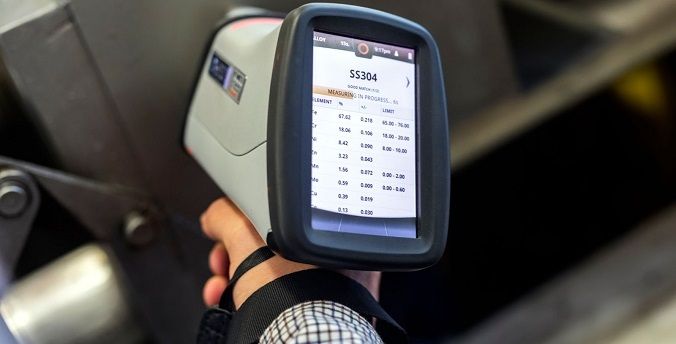 Portable XRF: Handheld Metallurgy Analyzer
Metallurgical testing has evolved from laboratory-bound procedures to instant field analysis through portable XRF...Einzelheiten
Portable XRF: Handheld Metallurgy Analyzer
Metallurgical testing has evolved from laboratory-bound procedures to instant field analysis through portable XRF...Einzelheiten -
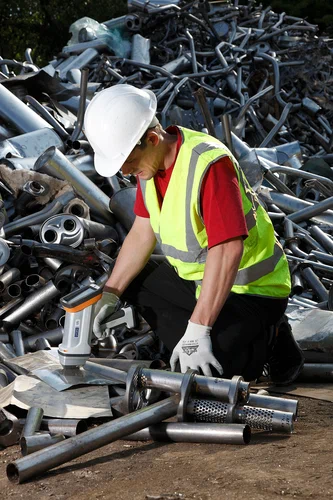 XRF Gun: ElvaX Alloy Analysis Pistol Scanner
The XRF gun revolutionizes metal analysis by putting laboratory-quality alloy identification directly in your hand....Einzelheiten
XRF Gun: ElvaX Alloy Analysis Pistol Scanner
The XRF gun revolutionizes metal analysis by putting laboratory-quality alloy identification directly in your hand....Einzelheiten -
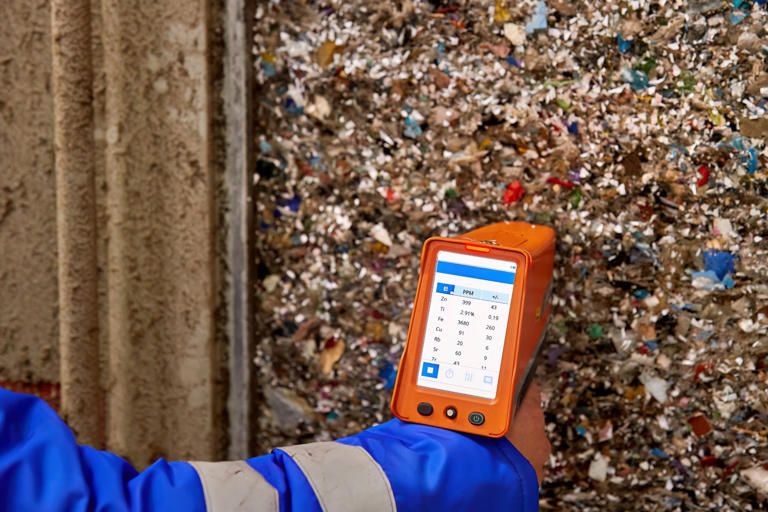 XRF Fluorescence Gun: Portable Metal Scanner
The XRF fluorescence gun transforms metal identification from laboratory procedure to instant field scanning...Einzelheiten
XRF Fluorescence Gun: Portable Metal Scanner
The XRF fluorescence gun transforms metal identification from laboratory procedure to instant field scanning...Einzelheiten -
 XRF Scanner: Chemical Composition Metal Detection
Chemical composition determines every critical property of metal materials—strength, corrosion resistance,...Einzelheiten
XRF Scanner: Chemical Composition Metal Detection
Chemical composition determines every critical property of metal materials—strength, corrosion resistance,...Einzelheiten -
 XRF Machine: ProSpector Element Analysis Device
Element analysis drives quality control across industries where material composition determines performance,...Einzelheiten
XRF Machine: ProSpector Element Analysis Device
Element analysis drives quality control across industries where material composition determines performance,...Einzelheiten