

Portable XRF Spectrometers for Metal Analysis and Scrap Sorting
Alloy Bases Detectable in Scrap Metal Identification
Handheld X-ray fluorescence spectrometers can reliably identify and distinguish all common steels along with a broad spectrum of alloy families, including:
- Aluminum
- Magnesium
- Titanium
- Cobalt
- Nickel
- Copper
- Zinc
- Precious metals
- Rare-earth elements
- Niobium
- Lead
- Tin
This coverage handles the vast majority of metal types encountered in scrap yards, making portable XRF devices highly effective for comprehensive material sorting and valuation.
Sample Preparation Needs for Accurate XRF Metal Testing
Portable XRF metal analyzers demand very little in the way of preparation, which is one of their biggest practical advantages. The key factor for reliable readings is ensuring a clean, flat surface free of contaminants. Surface dirt, oxidation, paint, grease, or residues can skew results — particularly when measuring lighter elements like aluminum or silicon.
Best practice involves lightly abrading the test area with a dedicated metal file or grinder to expose fresh material. Crucially, use separate tools for different alloy types (e.g., one for aluminum, another for steels) to prevent cross-contamination from residual particles that could distort the analysis. Beyond this simple cleaning step, no further preparation — such as cutting, polishing, or chemical treatment — is typically needed for accurate field measurements.
What Data Does XRF Provide for Metals?
These handheld spectrometers deliver precise quantitative elemental composition, revealing the percentages of major, minor, and trace elements present in the sample. This allows for confident alloy grade identification, detection of tramp elements, and verification against specifications.
However, XRF focuses solely on elemental makeup and cannot directly assess microstructural features (like grain structure or phases) — though users can often infer some structural insights from the chemistry. A notable limitation is that elements with atomic numbers below 11 (such as carbon, nitrogen, or boron) are not detectable due to the physics of X-ray fluorescence, so carbon content in steels, for instance, remains outside its scope. Despite this, most practical scrap sorting and metal verification tasks do not require light-element data, keeping XRF highly valuable.
On the positive side, many models can detect and even estimate the thickness of surface coatings or platings down to fractions of a micron, adding another layer of utility for quality checks.
Advantages of Handheld XRF Analyzers for Scrap Sorting
Modern portable XRF devices excel in scrap metal environments thanks to several standout features:
- Extremely lightweight and ergonomic designs for all-day field use without fatigue
- Blazing-fast analysis speeds that enable high-throughput sorting
- Rugged construction with dust, water, and impact resistance for tough yard conditions
- Broad material libraries covering hundreds of alloy grades and bases
- Cost-efficient options that deliver strong return on investment through reduced mis-sorts and faster processing
By equipping your team with a reliable handheld XRF spectrometer, identifying valuable alloys, avoiding costly mix-ups, and optimizing scrap value becomes straightforward and routine — no matter the volume or location
Related posts
-
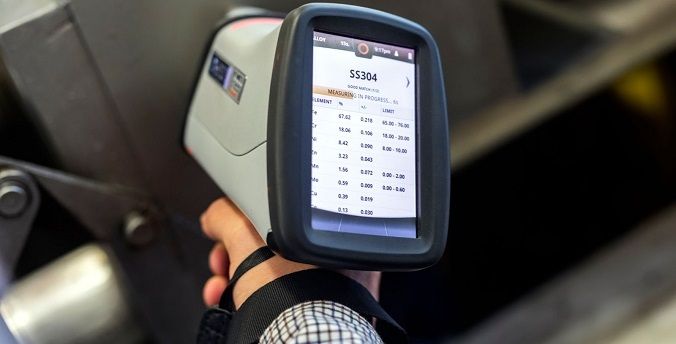 Portable XRF: Handheld Metallurgy Analyzer
Metallurgical testing has evolved from laboratory-bound procedures to instant field analysis through portable XRF...Einzelheiten
Portable XRF: Handheld Metallurgy Analyzer
Metallurgical testing has evolved from laboratory-bound procedures to instant field analysis through portable XRF...Einzelheiten -
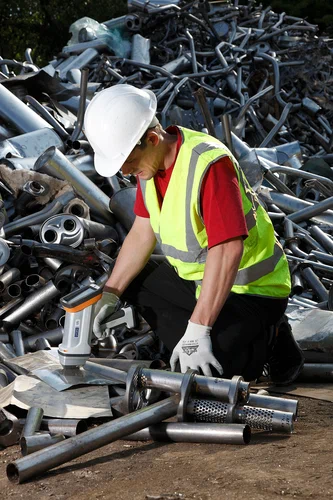 XRF Gun: ElvaX Alloy Analysis Pistol Scanner
The XRF gun revolutionizes metal analysis by putting laboratory-quality alloy identification directly in your hand....Einzelheiten
XRF Gun: ElvaX Alloy Analysis Pistol Scanner
The XRF gun revolutionizes metal analysis by putting laboratory-quality alloy identification directly in your hand....Einzelheiten -
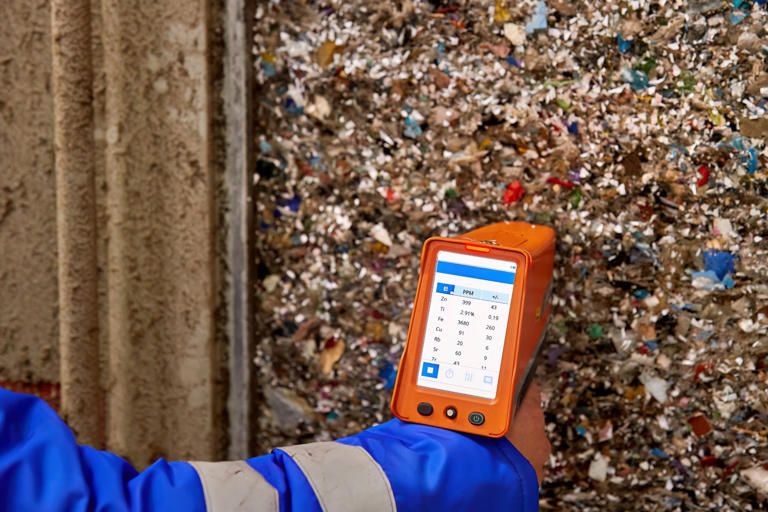 XRF Fluorescence Gun: Portable Metal Scanner
The XRF fluorescence gun transforms metal identification from laboratory procedure to instant field scanning...Einzelheiten
XRF Fluorescence Gun: Portable Metal Scanner
The XRF fluorescence gun transforms metal identification from laboratory procedure to instant field scanning...Einzelheiten -
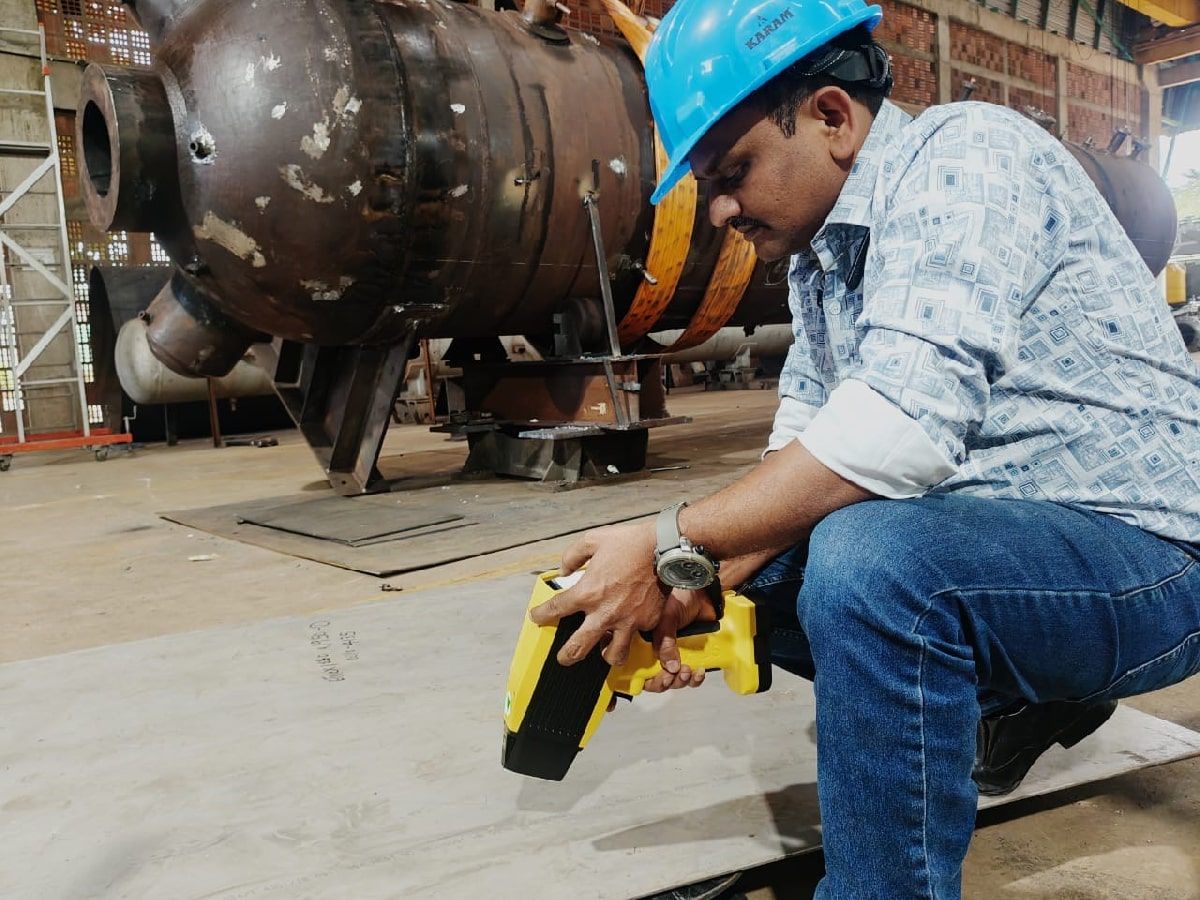 XRF Scanner: Chemical Composition Metal Detection
Chemical composition determines every critical property of metal materials—strength, corrosion resistance,...Einzelheiten
XRF Scanner: Chemical Composition Metal Detection
Chemical composition determines every critical property of metal materials—strength, corrosion resistance,...Einzelheiten -
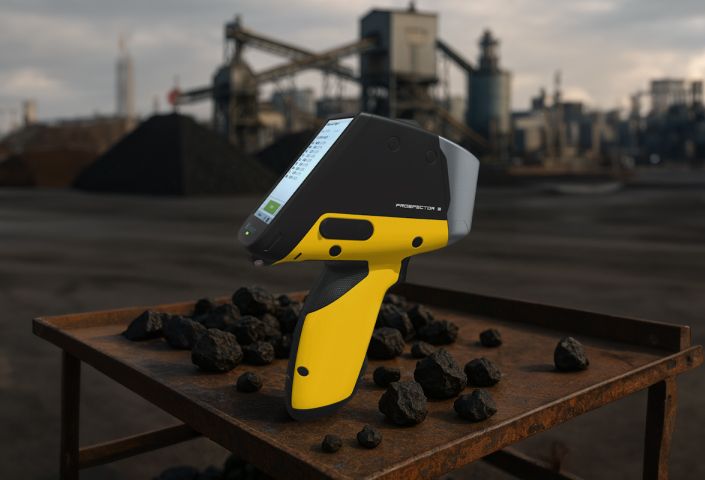 XRF Machine: ProSpector Element Analysis Device
Element analysis drives quality control across industries where material composition determines performance,...Einzelheiten
XRF Machine: ProSpector Element Analysis Device
Element analysis drives quality control across industries where material composition determines performance,...Einzelheiten