
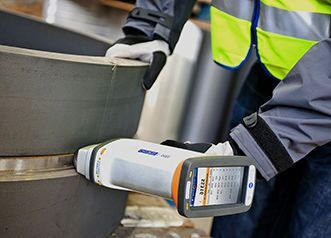
XRF Fluorescence Analysis: Metals & Alloys Testing
Understanding XRF Fluorescence in Metal Analysis
XRF fluorescence analysis operates on a straightforward principle: when high-energy X-rays strike metal atoms, they excite inner-shell electrons, causing them to be ejected. Electrons from higher energy levels immediately fill these vacancies, releasing energy as fluorescent X-rays. Each metallic element produces fluorescent X-rays at characteristic energies unique to that element, creating spectral signatures that enable precise identification and quantification.
For metals and alloys, this process reveals both major constituents and trace elements critical to material performance. Iron, chromium, nickel, molybdenum, copper, manganese, and dozens of other alloying elements emit distinct fluorescent signals that XRF detectors measure simultaneously. The intensity of each fluorescent signal correlates directly with elemental concentration, allowing analyzers to calculate precise compositional percentages.
Modern XRF instruments equipped with silicon drift detectors achieve exceptional spectral resolution, separating closely spaced emission lines that might otherwise overlap. This capability ensures accurate analysis even in complex alloy systems containing ten or more significant elements.
Critical Advantages for Metals Testing
Non-Destructive Analysis
The most compelling advantage of XRF fluorescence analysis is its completely non-destructive nature. Expensive machined components, finished products, or irreplaceable samples undergo testing without any alteration whatsoever. The X-ray beam penetrates only tens to hundreds of microns into metal surfaces—iron or copper to about 100 microns, denser materials like gold or lead to just 10-50 microns.
This shallow penetration depth means surface condition matters, but it also enables testing of parts in any condition—on shelves, in assemblies, within structures, or during fabrication. Unlike wet chemistry that destroys samples or optical emission spectroscopy that burns material, XRF leaves no marks, creates no waste, and permits immediate use after testing.
Rapid Results Enable Real-Time Decisions
XRF fluorescence analysis delivers complete alloy identification in 2-5 seconds for most applications. Comprehensive compositional analysis including trace elements typically requires 10-30 seconds. This speed transforms quality control workflows from statistical sampling to 100% inspection capability.
Production supervisors verify incoming metal shipments instantly at receiving docks. Welders confirm filler metal grades before starting critical joints. Machine shops test stock before expensive machining operations. Fabricators inspect completed assemblies before shipping. The rapid turnaround eliminates waiting for laboratory results, preventing production delays and enabling immediate corrective actions.
Multi-Element Detection Capability
XRF fluorescence instruments simultaneously detect and quantify elements from magnesium (atomic number 12) through uranium (atomic number 92). For metal analysis, this encompasses all commercially significant alloying elements—chromium, nickel, molybdenum, vanadium, titanium, copper, aluminum, silicon, manganese, and many others.
A single XRF measurement reveals the complete elemental profile: base metal composition, intentional alloying additions, trace impurities, and contamination elements. This comprehensive analysis supports precise alloy grade identification, differentiating similar grades like 304 versus 316 stainless steel, or distinguishing aluminum 6061 from 6063.
Metal and Alloy Applications
Stainless Steel Analysis
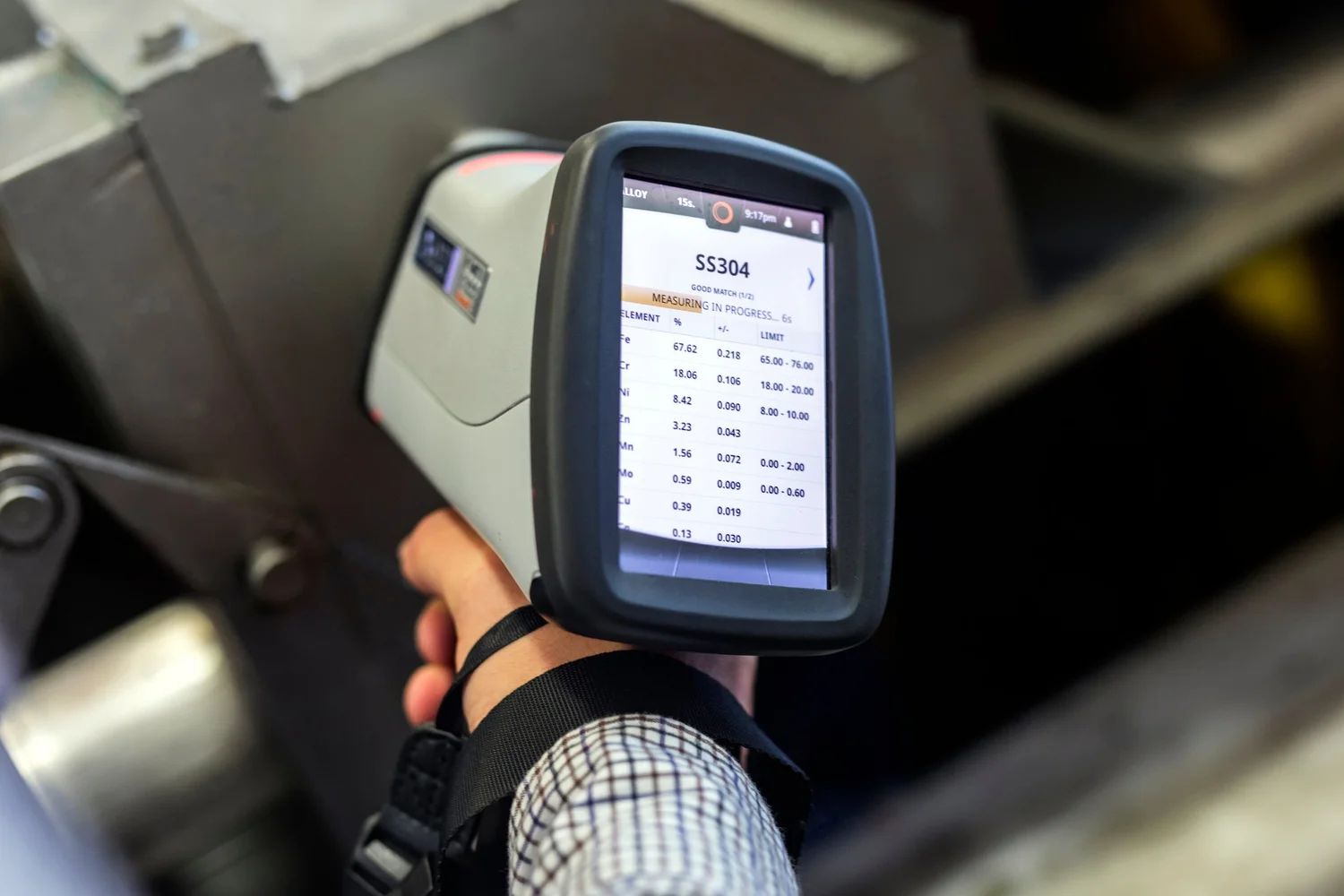
Stainless steel represents one of the most common XRF testing applications. The technology accurately measures iron as the base element, plus critical alloying elements including chromium (typically 16-26%), nickel (0-35%), molybdenum (0-7%), and trace additions of manganese, silicon, nitrogen, and copper. These compositional variations define hundreds of stainless steel grades with vastly different corrosion resistance, mechanical properties, and costs.
XRF fluorescence analysis identifies austenitic grades (300 series), ferritic grades (400 series), duplex stainless steels, precipitation-hardening varieties, and exotic high-alloy compositions. This capability prevents catastrophic material mix-ups in chemical processing, marine environments, and high-temperature applications where specific grades are mandated.
Aluminum Alloy Identification
Aluminum alloy testing challenges XRF systems because aluminum is a relatively light element, and many alloying additions occur at low percentages. However, modern instruments reliably identify aluminum series and specific grades by accurately measuring silicon, magnesium, copper, manganese, zinc, chromium, and other alloying elements.
The 2xxx series (copper-bearing), 5xxx series (magnesium-bearing), 6xxx series (magnesium-silicon), and 7xxx series (zinc-bearing) aluminum alloys each serve distinct applications in aerospace, automotive, and structural engineering. XRF verification ensures correct alloy selection for strength, weldability, and corrosion resistance requirements.
Copper Alloys: Brass and Bronze
Copper-based alloys including brasses (copper-zinc), bronzes (copper-tin), and specialized alloys containing aluminum, silicon, or nickel benefit from XRF analysis. The technology measures copper content plus alloying additions that determine mechanical properties, machinability, and corrosion resistance.
Marine hardware, plumbing fittings, electrical connectors, and bearing materials all require specific copper alloy compositions. XRF testing verifies that purchased materials match specifications and prevents substitution of inferior grades.
Titanium and Specialty Alloys
Aerospace and medical applications frequently employ titanium alloys requiring precise compositional control. XRF fluorescence analysis measures titanium base composition plus aluminum, vanadium, molybdenum, and other additions that define specific grades. Commercial pure titanium (Grades 1-4) and alloys like Ti-6Al-4V are distinguished reliably.
Nickel-based superalloys (Inconel, Hastelloy, Monel), cobalt alloys, and tool steels also undergo XRF testing for compositional verification. These high-value materials demand accurate analysis to ensure performance in extreme temperature, corrosive, or wear environments.
Positive Material Identification (PMI)
PMI programs using XRF fluorescence analysis prevent material mix-ups that could cause equipment failures, safety incidents, or regulatory violations. Industrial facilities test incoming materials, in-process components, and installed equipment to verify alloy grades match project specifications and certifications.
Critical applications in oil and gas, chemical processing, power generation, and nuclear facilities mandate PMI testing throughout fabrication and construction. XRF analyzers verify that piping, pressure vessels, heat exchangers, and structural components use specified corrosion-resistant alloys capable of withstanding service conditions.
The speed and portability of handheld XRF instruments make PMI practical and cost-effective. Inspectors test thousands of components per project, documenting results for quality records and regulatory compliance. This comprehensive verification prevents the catastrophic failures that occur when ordinary carbon steel substitutes for stainless steel, or when insufficient alloy grades compromise safety margins.
Quality Control in Metal Manufacturing
Metal producers integrate XRF fluorescence analysis throughout manufacturing operations. Foundries test each heat during production to verify chemistry before casting. If compositional adjustments are needed, alloying additions can be made while metal remains molten, preventing scrapped batches.
Finished product testing ensures that produced alloys meet customer specifications and industry standards. Certification programs require documented chemical analysis, which XRF provides rapidly and accurately. The technology supports compliance with ASTM, ASME, EN, JIS, and other metallurgical standards governing composition tolerances.
Fabrication shops verify raw material chemistry before machining expensive components. If incorrect material is detected during receiving inspection, it can be returned to suppliers before value-added processing occurs. This early detection prevents costly scrap and production delays.
Scrap Metal Recycling and Sorting
The recycling industry relies heavily on XRF fluorescence analysis for efficient scrap sorting. Different alloy families command vastly different market values—stainless steels, aluminum alloys, copper alloys, and specialty metals each have distinct pricing. Rapid XRF testing enables profitable separation of high-value materials from lower-grade scrap.
Handheld XRF analyzers allow operators to test hundreds or thousands of pieces per shift, identifying alloy grades and segregating materials accordingly. This sorting capability increases material recovery rates, reduces contamination in recycled feedstocks, and maximizes revenues from scrap operations.
Limitations and Complementary Techniques
While XRF fluorescence excels at analyzing most metallic elements, it cannot directly measure carbon content—a critical element in steel classifications. Carbon's low atomic number produces weak fluorescent signals that standard XRF detectors cannot reliably quantify. Distinguishing low-carbon grades (304L, 316L stainless) from standard carbon varieties requires complementary techniques like optical emission spectroscopy (OES).
Surface conditions significantly affect XRF accuracy since the analysis occurs in the top 10-100 microns. Paint, coatings, heavy oxidation, plating, or contamination must be removed to ensure representative results. Light grinding or wire brushing prepares surfaces adequately for testing.
For ultimate trace element sensitivity below 10 ppm, or for complete compositional analysis including carbon, nitrogen, and oxygen, laboratories may employ inductively coupled plasma techniques (ICP-OES or ICP-MS) or combustion analyzers. XRF serves as the primary screening and verification tool, with laboratory methods confirming critical or unusual results.
Selecting XRF Equipment for Metal Testing
Choosing between handheld portable and benchtop XRF systems depends on application requirements. Portable analyzers offer maximum flexibility for field testing, incoming inspection, and production floor verification. Battery operation provides 8-12 hours of continuous use without external power, ideal for on-site PMI and scrap sorting.
Benchtop wavelength-dispersive XRF (WDXRF) systems deliver superior precision for laboratory environments, achieving accuracy within 0.01% for major elements and excellent trace element sensitivity. These instruments support high-volume testing with automated sample handling and comprehensive calibration libraries.
Consider your typical sample types, required accuracy, testing volume, and mobility needs when selecting equipment. Consulting with XRF manufacturers and arranging demonstrations with your actual materials ensures the chosen solution meets performance expectations.
Related posts
-
 XRF Analysis: Precise Metal Composition Testing
X-ray fluorescence (XRF) analysis has revolutionized metal composition testing across industries, offering...Einzelheiten
XRF Analysis: Precise Metal Composition Testing
X-ray fluorescence (XRF) analysis has revolutionized metal composition testing across industries, offering...Einzelheiten -
 XRF Analysis: Fast Material Composition Scanner
In today's fast-paced industrial environment, waiting days or weeks for laboratory results is no longer acceptable....Einzelheiten
XRF Analysis: Fast Material Composition Scanner
In today's fast-paced industrial environment, waiting days or weeks for laboratory results is no longer acceptable....Einzelheiten -
 XRF Analyzer: Accurate Element Identification
Accurate element identification forms the foundation of quality control, material verification, and compliance...Einzelheiten
XRF Analyzer: Accurate Element Identification
Accurate element identification forms the foundation of quality control, material verification, and compliance...Einzelheiten -
 XRF Testing: On-Site Metal Analysis Solutions
Traditional metal analysis required shipping samples to distant laboratories and waiting days or weeks for results....Einzelheiten
XRF Testing: On-Site Metal Analysis Solutions
Traditional metal analysis required shipping samples to distant laboratories and waiting days or weeks for results....Einzelheiten -
 XRF Gold Testing: Precious Metals Verification
X-ray fluorescence (XRF) technology has revolutionized how professionals verify gold purity and authenticate precious...Einzelheiten
XRF Gold Testing: Precious Metals Verification
X-ray fluorescence (XRF) technology has revolutionized how professionals verify gold purity and authenticate precious...Einzelheiten