
XRF Testing: On-Site Metal Analysis Solutions
The On-Site Testing Revolution
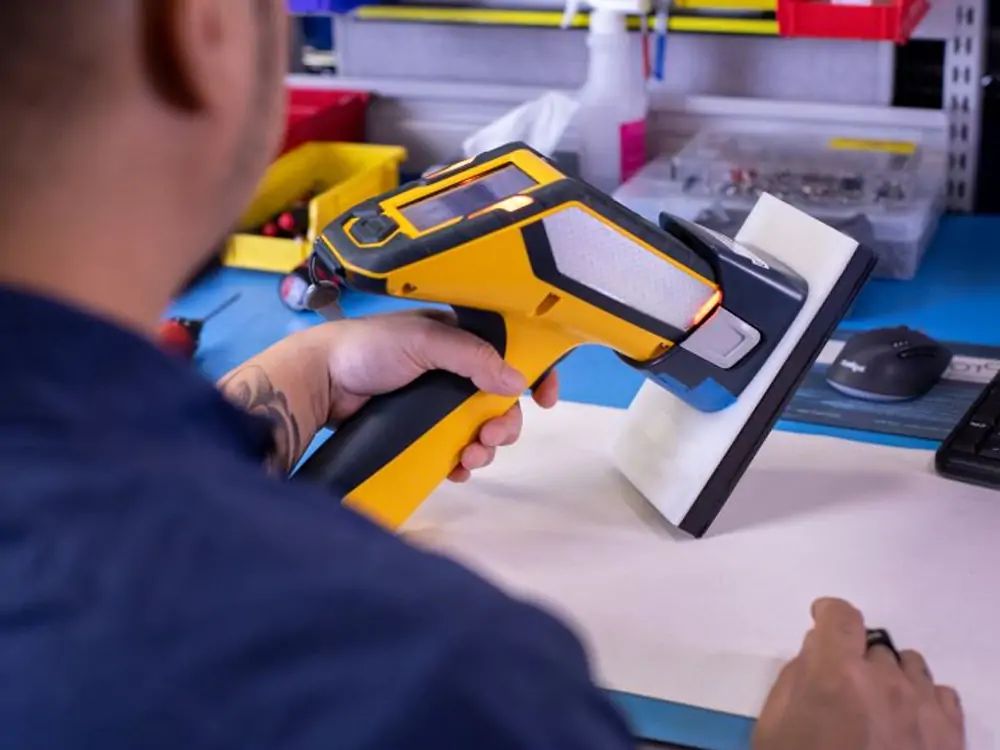
On-site XRF testing eliminates the logistical challenges and delays associated with traditional laboratory analysis. Portable handheld analyzers weigh just 1-2 kilograms and operate on rechargeable batteries, providing 8-12 hours of continuous field use without external power. This mobility transforms metal testing from a scheduled event requiring sample collection and transport into an instant verification process performed exactly where materials exist.
Field technicians, quality inspectors, welders, and purchasing agents can test metals immediately upon delivery, during fabrication, or after installation. Results appear on the analyzer screen within seconds, showing complete elemental composition and alloy grade identification. This real-time capability supports instant accept/reject decisions, preventing incorrect materials from entering production or construction workflows.
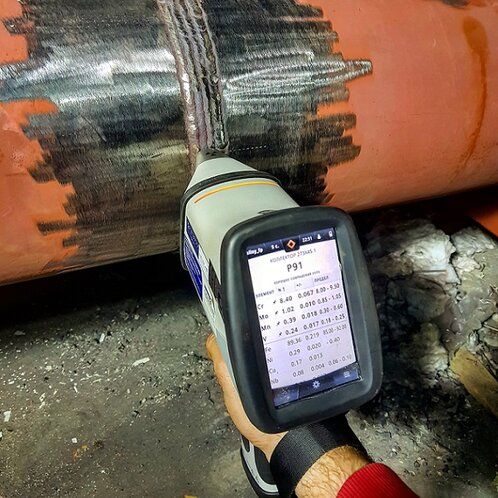
The portability advantage extends beyond convenience—it enables testing of large structures, installed equipment, and components impossible to transport to laboratories. Pipeline systems, pressure vessels, structural steel, and machinery undergo in-place verification without disassembly or removal.
Key Applications for On-Site XRF Metal Testing
Manufacturing Quality Control
Manufacturing facilities integrate portable XRF testing throughout production operations. Receiving inspection verifies that incoming metal shipments match certifications and specifications before materials enter inventory. Inspectors test random samples from each lot, identifying incorrect alloys immediately so suppliers can replace them before production delays occur.
During fabrication, on-site testing confirms that operators select correct materials for each job. Machine shops verify stock before expensive machining operations. Fabricators test components between process steps, catching material mix-ups early when corrections are least costly. Final inspection before shipping provides documented verification that finished products meet customer specifications.
The instant results from on-site XRF testing support lean manufacturing principles by eliminating wait times for laboratory reports. Production teams receive immediate feedback, enabling real-time process adjustments and continuous quality improvement.
Construction and PMI Testing
Construction projects for oil and gas facilities, chemical plants, power stations, and industrial complexes require extensive Positive Material Identification (PMI) testing. Specifications mandate specific alloy grades for piping, pressure vessels, structural components, and process equipment based on service conditions like temperature, pressure, and corrosive environments.
On-site XRF analyzers allow inspectors to verify thousands of components during construction, testing welds, flanges, fittings, and fabricated assemblies in place. This comprehensive verification prevents the catastrophic failures that occur when carbon steel substitutes for stainless steel in corrosive service, or when materials with insufficient temperature resistance are installed in high-heat applications.
The portability enables testing in confined spaces, at heights, and in challenging field conditions where transporting samples would be impractical. Inspectors document results electronically, creating quality records required for regulatory compliance and project acceptance.
Scrap Metal Sorting and Recycling
Scrap recycling operations depend heavily on rapid on-site XRF testing for profitable material segregation. Different alloy families command vastly different market values—stainless steels, aluminum alloys, copper alloys, titanium, and exotic superalloys each have distinct pricing structures. Accurate sorting directly impacts recycling facility revenues.
Operators equipped with handheld XRF analyzers test thousands of scrap pieces per shift, identifying specific alloy grades and segregating materials accordingly. Stainless steels separate into austenitic (300 series), ferritic (400 series), and duplex categories. Aluminum sorts by series (2xxx, 5xxx, 6xxx, 7xxx). Copper alloys distinguish between brasses, bronzes, and specialty compositions.
This precision sorting maximizes material value, reduces contamination in recycled feedstocks, and improves metal recovery rates. The on-site capability eliminates any need for laboratory confirmation before making purchase decisions or processing materials.
Mining and Geological Exploration
Mining companies use portable XRF analyzers for on-site ore analysis during exploration and production. Geologists test rock samples and drill cores immediately in the field, generating real-time geochemical data that guides drilling programs and resource estimation.
Rapid on-site results allow immediate adjustments to exploration strategies based on detected mineralization patterns. Instead of waiting weeks for laboratory assays, exploration teams receive instant feedback that optimizes resource discovery while controlling costs. Ore grade control during mining operations uses XRF to distinguish economically viable material from waste rock, maximizing resource recovery.
The rugged construction of field-grade XRF analyzers withstands harsh mining environments—dust, moisture, temperature extremes, and physical impacts—enabling reliable testing under challenging conditions.
Advantages of On-Site XRF Testing
Immediate Results Drive Faster Decisions
On-site XRF testing delivers complete alloy analysis in 2-5 seconds for grade identification, or 10-30 seconds for comprehensive compositional data including trace elements. This speed eliminates the multi-day waiting periods required for laboratory analysis, enabling same-moment decision-making.
Production supervisors decide instantly whether to accept or reject material shipments. Construction managers verify component suitability before installation begins. Purchasing agents confirm supplier accuracy during receiving inspection. These immediate decisions prevent downstream problems and keep operations flowing smoothly.
Cost Savings from Multiple Angles
On-site testing eliminates laboratory fees that typically range from $30-100 per sample. For operations testing hundreds or thousands of samples monthly, the savings accumulate rapidly. Equipment investment recovers quickly through avoided laboratory costs alone.
Additional savings come from preventing material mix-ups before they cause expensive problems. Catching incorrect alloys during receiving inspection costs only the material return shipping. Discovering the same error after machining, welding, or installation multiplies costs by factors of ten or more through wasted labor, scrapped components, and project delays.
Transportation and logistics savings add further value—no sample packaging, courier fees, or shipping delays. Results obtained on-site mean decisions happen immediately without waiting for samples to reach laboratories or results to return.
Non-Destructive Testing Preserves Value
XRF analysis leaves samples completely intact and unmarked. Expensive finished products, precision machined components, and valuable materials undergo testing without any alteration. The non-destructive nature permits 100% inspection rather than statistical sampling, because every component can be tested without creating waste.
Installed equipment and large structures benefit particularly from non-destructive on-site testing. Verifying pipeline metallurgy, pressure vessel construction, or structural steel integrity requires no material removal, drilling, or cutting. Testing occurs on finished surfaces without preparation beyond basic cleaning.
Choosing On-Site XRF Testing Equipment
Handheld Analyzer Features
Modern portable XRF analyzers combine powerful analytical capabilities with user-friendly operation. Silicon drift detectors (SDD) provide excellent energy resolution for accurate element identification in complex alloys. Built-in alloy grade libraries automatically compare measured compositions against international standards (ASTM, EN, JIS, GB), identifying specific grades instantly.
Rugged construction protects electronics in challenging field environments. Drop-resistant housings, sealed components against dust and moisture ingress, and temperature-tolerant designs ensure reliable operation across industrial settings. Battery technology provides full-shift operation on single charges, with spare batteries extending field time indefinitely.
Wireless connectivity enables data transfer to computers, tablets, or cloud storage for documentation and reporting. Integrated GPS tags results with location data, valuable for construction PMI programs tracking component positions. Cameras photograph test locations, linking images to analytical results for comprehensive quality records.
Application-Specific Considerations
Select analyzers optimized for your primary applications. Metal analysis configurations include extensive alloy libraries and calibrations for ferrous and non-ferrous materials. Mining/geological models emphasize light element detection and ore-forming minerals. Environmental versions focus on soil contaminants and heavy metals.
Detection range requirements matter—if trace element measurement below 10 ppm is critical, benchtop systems may be necessary. For typical industrial PMI and quality control at concentration levels above 0.01%, handheld analyzers deliver excellent performance.
Consider testing volume and operator skill levels. High-volume facilities may need multiple analyzers to support inspection throughput. Simple point-and-shoot operation allows minimally-trained operators to achieve reliable results, expanding testing capabilities throughout organizations.
Best Practices for On-Site Testing
Optimize on-site XRF testing accuracy through proper techniques. Clean test surfaces with wire brushes or light grinding to remove oxidation, coatings, or contamination. Ensure sample stability during measurement—handheld analyzers require firm contact with test surfaces for consistent results.
Test multiple points on large or heterogeneous samples to verify compositional uniformity. Use appropriate measurement times—shorter analyses for grade identification, longer periods when trace element accuracy is critical. Regular calibration verification with certified reference standards maintains measurement quality.
Document results systematically, recording sample identification, test locations, dates, operators, and measurement data. Modern analyzers automate documentation, but maintaining organized records supports quality programs and regulatory compliance.
Conclusion
On-site XRF testing has fundamentally transformed metal analysis from a laboratory-dependent process into immediate field verification. The combination of laboratory-quality accuracy, instant results, complete portability, and non-destructive testing makes XRF the essential solution for modern quality control, construction verification, scrap sorting, and mining operations.
Organizations implementing on-site XRF testing gain competitive advantages through faster decision-making, reduced costs, prevented material errors, and comprehensive quality documentation. Whether testing a single component or thousands of samples daily, portable XRF analyzers deliver reliable elemental analysis exactly where and when decisions need to be made.
As industries demand faster quality verification and stricter material compliance, on-site XRF testing stands ready as the proven technology that brings analytical power directly to the point of need. The investment in portable XRF equipment pays returns through avoided errors, eliminated delays, reduced laboratory fees, and the confidence that comes from instant verification of material quality.
Related posts
-
 XRF Analysis: Precise Metal Composition Testing
X-ray fluorescence (XRF) analysis has revolutionized metal composition testing across industries, offering...Einzelheiten
XRF Analysis: Precise Metal Composition Testing
X-ray fluorescence (XRF) analysis has revolutionized metal composition testing across industries, offering...Einzelheiten -
 XRF Analysis: Fast Material Composition Scanner
In today's fast-paced industrial environment, waiting days or weeks for laboratory results is no longer acceptable....Einzelheiten
XRF Analysis: Fast Material Composition Scanner
In today's fast-paced industrial environment, waiting days or weeks for laboratory results is no longer acceptable....Einzelheiten -
 XRF Analyzer: Accurate Element Identification
Accurate element identification forms the foundation of quality control, material verification, and compliance...Einzelheiten
XRF Analyzer: Accurate Element Identification
Accurate element identification forms the foundation of quality control, material verification, and compliance...Einzelheiten -
 XRF Fluorescence Analysis: Metals & Alloys Testing
X-ray fluorescence (XRF) analysis has transformed metals and alloys testing from a time-consuming laboratory process...Einzelheiten
XRF Fluorescence Analysis: Metals & Alloys Testing
X-ray fluorescence (XRF) analysis has transformed metals and alloys testing from a time-consuming laboratory process...Einzelheiten -
 XRF Gold Testing: Precious Metals Verification
X-ray fluorescence (XRF) technology has revolutionized how professionals verify gold purity and authenticate precious...Einzelheiten
XRF Gold Testing: Precious Metals Verification
X-ray fluorescence (XRF) technology has revolutionized how professionals verify gold purity and authenticate precious...Einzelheiten